The Glass Protégé
Park 90
17 April 2015
2 Stars
New writing for the theatre needs champions. That has always been the case and in the 21st Century, when attention spans are short, reality television pleases millions, and there is no encouragement of attendance at the theatre to experience new writing, it is truer than ever. Urgent even. The sad truth is that revivals of classics (and disasters) readily attract more audiences more easily than new writing does.
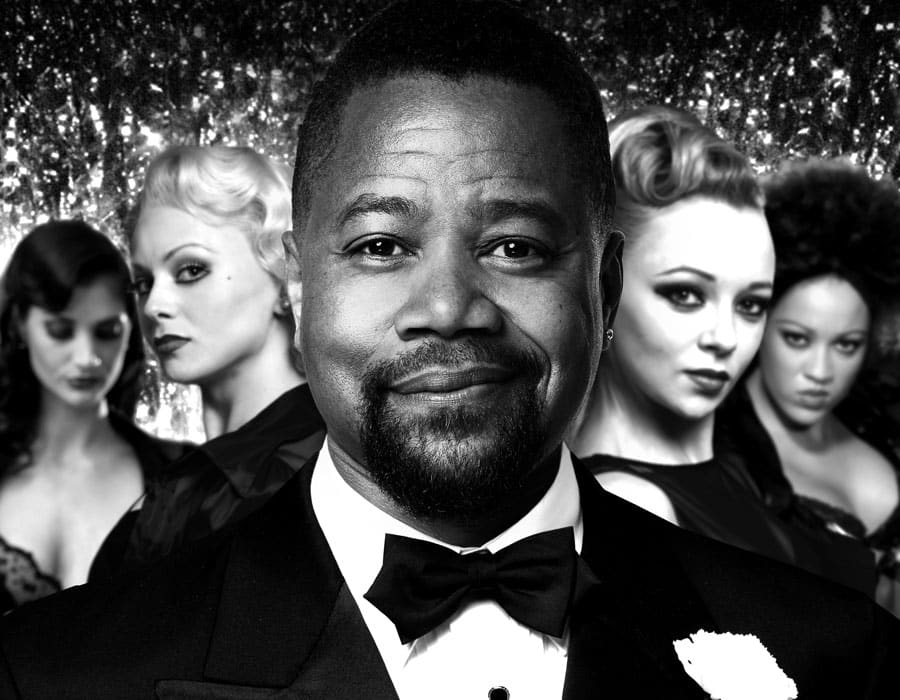
Often, producers try to solve this problem by casting stars, people they think will attract audiences. Other times, the publicity images serve as the inducement. That is certainly the case with The Glass Protégé, now playing at Park 90. For some time, a stark image of two good looking men locked in a romantic embrace, in Hollywood film-noir style, has been the herald for Giant Cherry Productions' UK premiere of the reworking of Dylan Costello's 2010 play, Secret Boulevard.
The trouble is that the image undermines the inherent drama of the play. The whole of the first act of Costello's play is devoted to laying the foundations, establishing the parameters, suggesting the consequences of the carnal relationship between two Hollywood actors in 1949. The moment when the pursued lunges into the arms, and onto the lips of the pursuer, is meant to be the climax of the First Act. But the publicity images, the programme cover itself, have already played that card.
The summary of the play in the programme reads as follows: "Hollywood 1949. A time when the movies were king and the movie stars merely pawns for the studio bosses. A time when passion was lauded but sex never discussed. So when young British actor, Patrick Glass, embarks on a scandalous homosexual love affair with his famous co-star, he starts to feel the full force of the studio's career-destroying muscle. Forty years later, as the truths of the past are uncovered, the true consequences of this "unacceptable" romance come to light."
Together with the publicity image, that summary suggests that the play is going to be about Glass' difficulties with the studio bosses because of his sexuality and that there will be unexpected consequences decades later. The reality is rather different.
Indeed, having seen the play, one is not entirely sure what it's purpose is, what point the author is making or what story he wants to tell. No insights into the life of late Forties Hollywood are revealed; no insights into human relationships or the consequences of power abuse are revealed. The dialogue is not crisp enough or lyrical enough to be worthy in its own right; nothing about the presentation creates a shroud of revelation or a moonbeam of candour. There is nothing new here.
It is true that the production is uncompromising in its depiction of male on male seduction, but it is not clear that that is sufficient justification for the presentation of a drama. But perhaps that is the point? Perhaps productions of works like The Glass Protégé need to be produced, just as countless curious/dull/worthless plays about heterosexual love have been produced. Because unless they are, routinely, the great ones will never be written?
That said, the chief difficulty with this production is that the direction, the concept of the production, is so weak that whatever interest the text may hold is submerged entirely in a muddled cloud of inconsequentiality. Director Matthew Gould has not made an impression on the play and his production does little to sell its worth or potential. The play is performed like a bad episode of Eastenders Goes To Hollywood. You can almost hear the "doof-doof" sound at the end of some scenes.
The dialogue does not assist. Pearlers such as "If you live in the closet, at some point you start coughing up mothballs" have to be delivered as serious observations, not a retort from Blanche in The Golden Girls. At the climax of the 1949 storyline, this exchange occurs:
"You Asshole!
You're the one who fucks them"
Trite does not begin to do justice to the clunking of the dialogue.
The plot could be mistaken for a far off Galaxy it has so many Black Holes. Young handsome Oxford lad, Patrick, guilty that his parents died during the war (a bomb) on a night he was out, accepts an offer to play a bit part in a Hollywood blockbuster. When he arrives, evil manipulative Hollywood mogul tells him that he has the co-starring role now, because the actor who had it has been exposed in a three girls and cocaine scandal. Patrick accepts and meets his co-star, the ruggedly handsome matinée idol, Jackson, a philanderer and hedonist who likes sex with men.
Before long Jackson has flashed his penis at Patrick to gauge interest, but Patrick maintains his disinterest. However, a friendship develops and, after a party, in the wake of alcohol and cigarettes, Patrick kisses Jackson and they have sex. Four times. Then they have a little fight and have sex again. They each profess to have found real love, instantly, on the spot.
Their jealous and drunk female co-star sort of betrays them to a Cow who is a Gossip Columnist (a kind of mixture of Ming The Merciless, Hedda Hopper and Louella Parsons) and the Cow betrays her, so she kills herself. Then the Cow blackmails the Mogul, showing him pictures of both Patrick and Jackson in flagrante delicti. Yes, that's right - pictures of them both.
But the Mogul only fires Jackson. Distraught, he and Patrick make plans to run away together and live in bliss. But when Patrick goes to tell the Mogul what he thinks, the Mogul offers him the lead in the movie and promises to marry him to a woman and have them with child within the year. For reasons never articulated, Patrick quickly forgets about his instant, true love. Or does he?
There is another whole plot line, forty years into the future of that sorry tale. It involves another arranged marriage and the older version of Patrick and the grown up contractual son. It too is tediously predictable, although there is one moment of genuine interest, a twist of kinds, which at least is something.
Unfortunately, for the most part the acting is as unlikely and unbelievable as the narrative. One dimension cliche is the general rule of thumb.
The exceptions, thankfully, are the two leads. Despite everything the writing puts in his way, Alexander Hulme is intriguing and charismatic as Jackson and you see a glimpse of what a tortured beauty trapped in another man's world can suffer. He plays the redneck well, also the lothario, but there is a fragility about him, a vulnerability hidden by the artifice of stardom, that makes Jackson the most complex character we see.
David R Butler is at his best as Patrick in his scenes with Hulme, and together they chart the intimacy of the friendship which turns to lust and then love very well. With others, Butler is oddly stilted, which may be deliberate, a way of underlining his attraction and interest in Jackson.
Both men have good speaking voices and are at ease with the sensual kissing and the full frontal nudity. The most believable scene of the evening occurs in the haze of their first round of love making.
If the 1989 plot is to remain in the piece, it needs substantial editing and clearer focus. As it stands, only the 1949 plot has any real interest and that is more about the chemistry and skill of the actors than the text.
A large four poster bed dominates Jean Grey's set, putting the act of sex front and centre literally as well as metaphorically. This seemed heavy handed, although the Hollywood sign above it (complete with the word "land" which was removed in 1949 - who knew?) was a clever framing device. The costumes range from delicious to bizarre, but the sense of period is abundant in both time lines.
This play has already had a previous life and a reception in Chicago which might have sent wiser minds back to a workshop. This run, hopefully, will allow the writer to get a clear handle on what works and what needs to be rethought. There is an interesting play swimming around the murky waters here. With perseverance, Costello may find it.
The Park Theatre is a champion of new work - long may it thrive. The Glass Protégé runs until May 9, 2015 at the Park Theatre - Book Here
Stephen Collins is a contributor at British Theatre, covering West End productions, London theatre news, casting updates, and UK stage trends.
Stay in the spotlight
Get the latest theatre news, reviews and exclusive offers straight to your inbox.