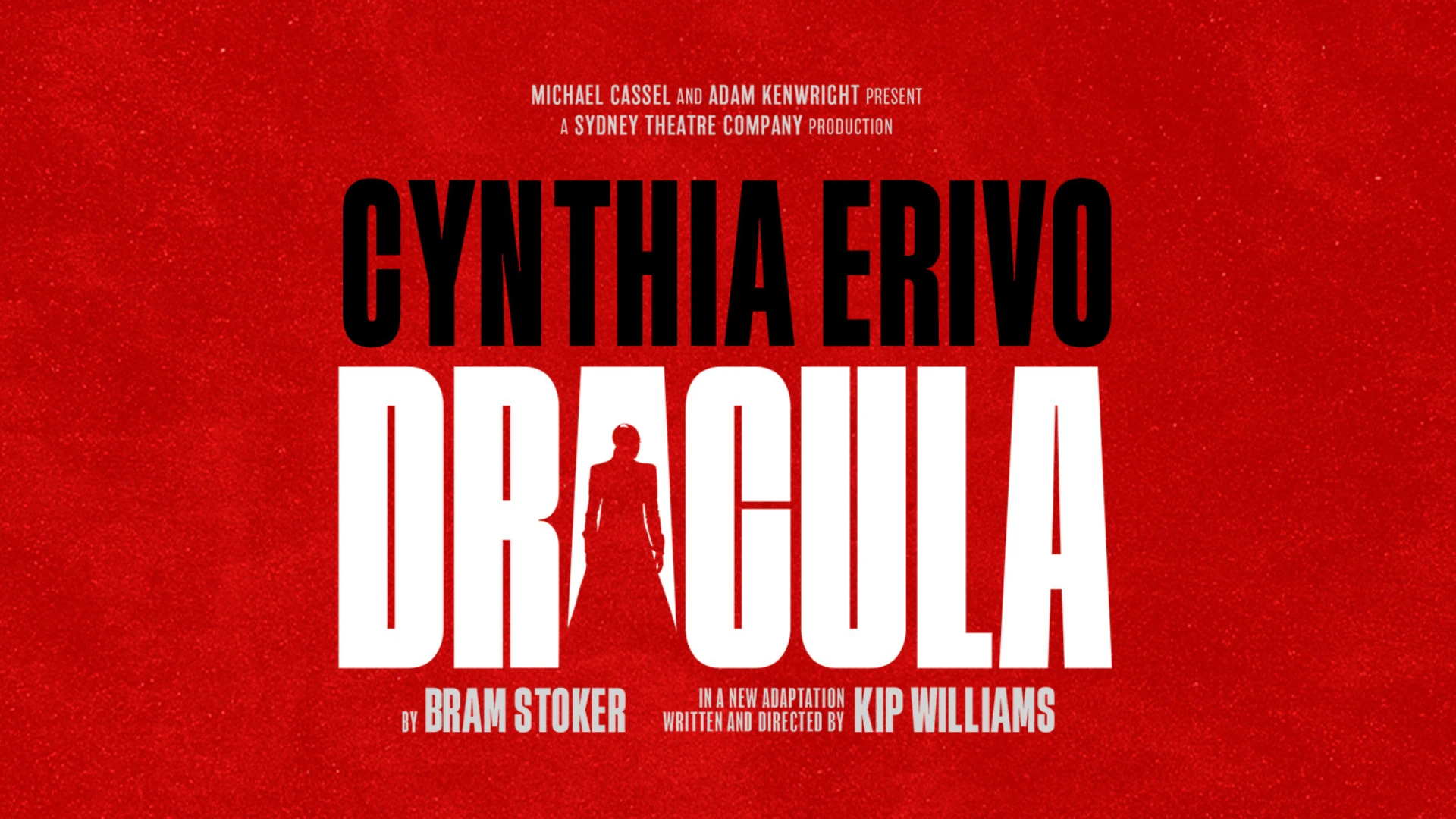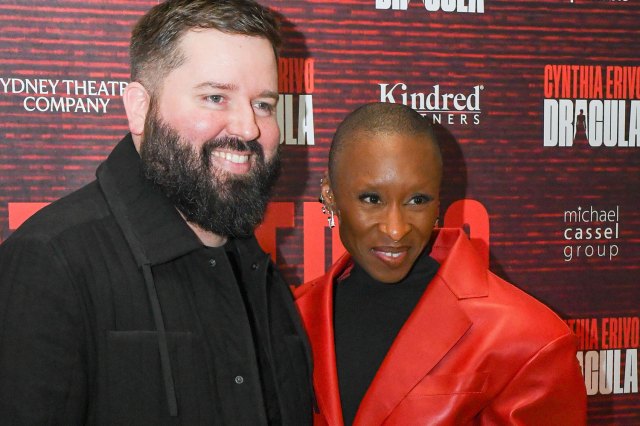
Kip Williams doesn't watch horror films. "I get horrendous nightmares," the Tony-nominated director admits. So why has he chosen to sink his teeth into one of the most famous gothic horror stories ever written? The answer, it turns out, has very little to do with blood and gore, and everything to do with the world we live in right now.
Williams' ambitious new stage adaptation of Dracula, starring Cynthia Erivo, represents the latest instalment in his groundbreaking cinetheatre trilogy. Following the Olivier Award-winning The Picture of Dorian Gray, this production fuses live performance with real-time film-making to reimagine Bram Stoker's 1897 novel as a strikingly contemporary exploration of identity, surveillance, and the masks we wear in public life.
Why Dracula, and Why Now?
For Williams, the appeal of Stoker's source material was never about vampiric terror. Instead, it was the social and cultural upheaval of the late Victorian period that drew him in. "I was drawn to the social, cultural and scientific progress of the era, as well as the puritanical push back it encountered," he explained. "It questions the values and paradigms that are seemingly having their apotheosis today."
That sense of a society in flux, caught between progress and reaction, resonated deeply with the Australian director. Stoker wrote Dracula at a time when new technologies like the typewriter and the phonograph were transforming how people communicated and recorded their lives. Williams sees a direct parallel with our own era of smartphones, social media, and constant digital self-presentation.
"All of Stoker's characters are caught in complex acts of self-curation and censorship, in a way that mirrors our lives today," Williams noted. "I'm interested in the way they struggle to embrace their authentic self, and for me, part of what makes that challenging today is the fear that we are being watched by those who will not accept us."
What Is Cinetheatre and How Does It Work?
If you haven't encountered Williams' work before, his cinetheatre approach is a genuinely innovative form that blurs the boundaries between live stage performance and cinema. Actors perform on stage while being filmed by live cameras. The footage is projected in real time onto giant screens, creating a simultaneous cinematic experience that exists alongside the theatrical one. The audience watches both at once: the physical performer in front of them, and the close-up, intensely intimate screen version overhead.
For Dracula, this technique serves a specific narrative purpose. Stoker's novel is epistolary in structure, told through diary entries, letters, newspaper clippings, and phonograph recordings. The characters are almost always confessing something private, sharing their innermost thoughts in forms they believe to be intimate and secure.
Williams seized on this quality. "I was drawn in part to using cameras to establish a very intimate act of confession between character and audience," he said. "And, in turn, to allow the camera to be an extension of the audience's act of peering into the minds of these characters, as each battles to hide from or confront the complex truths that exist within them."
The result is a production where the camera becomes both a tool of intimacy and a symbol of surveillance. It draws you closer to the characters even as it reminds you that they, like us, are always being watched.
Directing Cynthia Erivo for Stage and Screen Simultaneously
One of the most fascinating creative challenges of the cinetheatre form is that it demands a performance style unlike anything else in theatre. Actors must be compelling in close-up, where the camera catches every micro-expression and flicker of emotion, while simultaneously projecting enough energy and presence to hold a 900-seat auditorium.
Williams revealed that he and Erivo spent significant time discussing the question of scale. "Cynthia and I often spoke about playing with when she might explore being smaller to accentuate the tension of Stoker's ghost story, and when the scale might become more operatic as the emotions of the characters boil over," he explained.
The production also involved pre-recorded film elements, which had to seamlessly match the live performances that would follow months later. Williams described the meticulous process of constantly reminding themselves, while shooting pre-recorded sections, how the scale of the projected image would sit within the theatre proscenium. Every creative decision had to serve two masters: the intimacy of cinema and the grandeur of live theatre.
For Erivo, a performer who has already proven herself across both mediums with an Oscar nomination, a Tony Award, and a starring role in the Wicked film, this dual demand is a natural fit. But Williams' direction ensures that the technology never overshadows the human performance at the production's heart.
Technology as an Ancient Storytelling Tradition
It would be easy to view Williams' use of cameras and screens as a gimmick, a flashy layer of spectacle laid over a classic story. Williams firmly rejects that characterisation, positioning his approach within a lineage that stretches back to the earliest forms of human storytelling.
"I think the technology I use sits firmly within the ancient tradition of storytellers using technology to create imaginary worlds, which is something we've been doing since we used fire to create shadow puppets," he said. "The technology I use always comes from trying to find a theatrical form that is in itself a mirror to or expression of the story I am telling."
This philosophy is central to understanding why his productions feel so different from other tech-heavy theatrical experiences. The cameras in Dracula aren't there simply to dazzle. They are woven into the thematic fabric of the piece. In a novel about characters who document, record, and surveil one another, the presence of cameras watching the performers becomes a dramaturgical choice rather than a purely aesthetic one.
Williams also invoked Shakespeare's concept of holding the mirror up to nature. "It is impossible as a contemporary artist to not be grappling with the way this technology is infiltrating so much of our lives," he observed. In an age when we perform to cameras daily, sometimes hourly, and spend the rest of our time watching others perform, the tools of digital image-making feel less like an intrusion into theatre and more like an honest reflection of how we actually experience the world.
The Cinetheatre Trilogy: From Dorian Gray to Dracula
Williams' journey to Dracula has been shaped by the extraordinary success of his earlier cinetheatre work. The Picture of Dorian Gray, which originated at Sydney Theatre Company, became an international sensation, winning the 2024 Olivier Award for Best Entertainment or Comedy and transferring to stages around the world. That production used a similar fusion of live performance and real-time film to explore Oscar Wilde's tale of vanity, image, and moral corruption.
The thematic connections between Wilde's and Stoker's works are striking. Both novels were published in the 1890s. Both grapple with the tension between public respectability and private desire. Both feature protagonists haunted by hidden selves. For Williams, the move from one to the other feels like a natural progression, deepening his investigation into performance, identity, and the dangerous gap between who we are and who we pretend to be.
Dracula completes a trilogy that has established Williams as one of the most exciting and innovative directors working in world theatre today. His Tony nomination and Olivier Award success confirm that audiences and critics alike have responded to his vision of what 21st-century theatre can be.
Should You Book?
If you're intrigued by the idea of theatre that genuinely pushes the boundaries of the form, Dracula is an essential booking. Williams' track record with The Picture of Dorian Gray suggests a production that will be visually stunning, intellectually ambitious, and deeply theatrical all at once. The addition of Cynthia Erivo, one of the most acclaimed performers of her generation, raises the stakes even further.
This is not a conventional retelling of a familiar story. It is a production designed to make you think about how you present yourself to the world, what you hide, and what it means to live in an age of constant observation. For theatre fans who want to see the art form evolving in real time, Williams' Dracula promises to be one of the most talked-about productions of the year.
Tickets for Dracula are available now. Browse our full list of London shows for more of what's on, or explore our plays section for more dramatic productions currently running in the West End and beyond.
Susan Novak has a lifelong passion for theatre. With a degree in English, she brings a deep appreciation for storytelling and drama to her writing. She also loves reading and poetry. When not attending shows, Susan enjoys exploring new work and sharing her enthusiasm for the performing arts, aiming to inspire others to experience the magic of theatre.
Stay in the spotlight
Get the latest theatre news, reviews and exclusive offers straight to your inbox.