The printed theatre programme is one of the older forms of theatrical publication, and in an era when much information is available digitally, it retains a particular function as both a reference document and a souvenir of a specific performance. For audiences new to theatre, the programme can initially appear dense: long lists of credits, photographs, essays and advertisements combine to produce a document that requires some guidance to navigate effectively. This guide explains what the different elements of a typical West End programme contain, who the key people listed are and how to use the programme to deepen the experience of a performance.
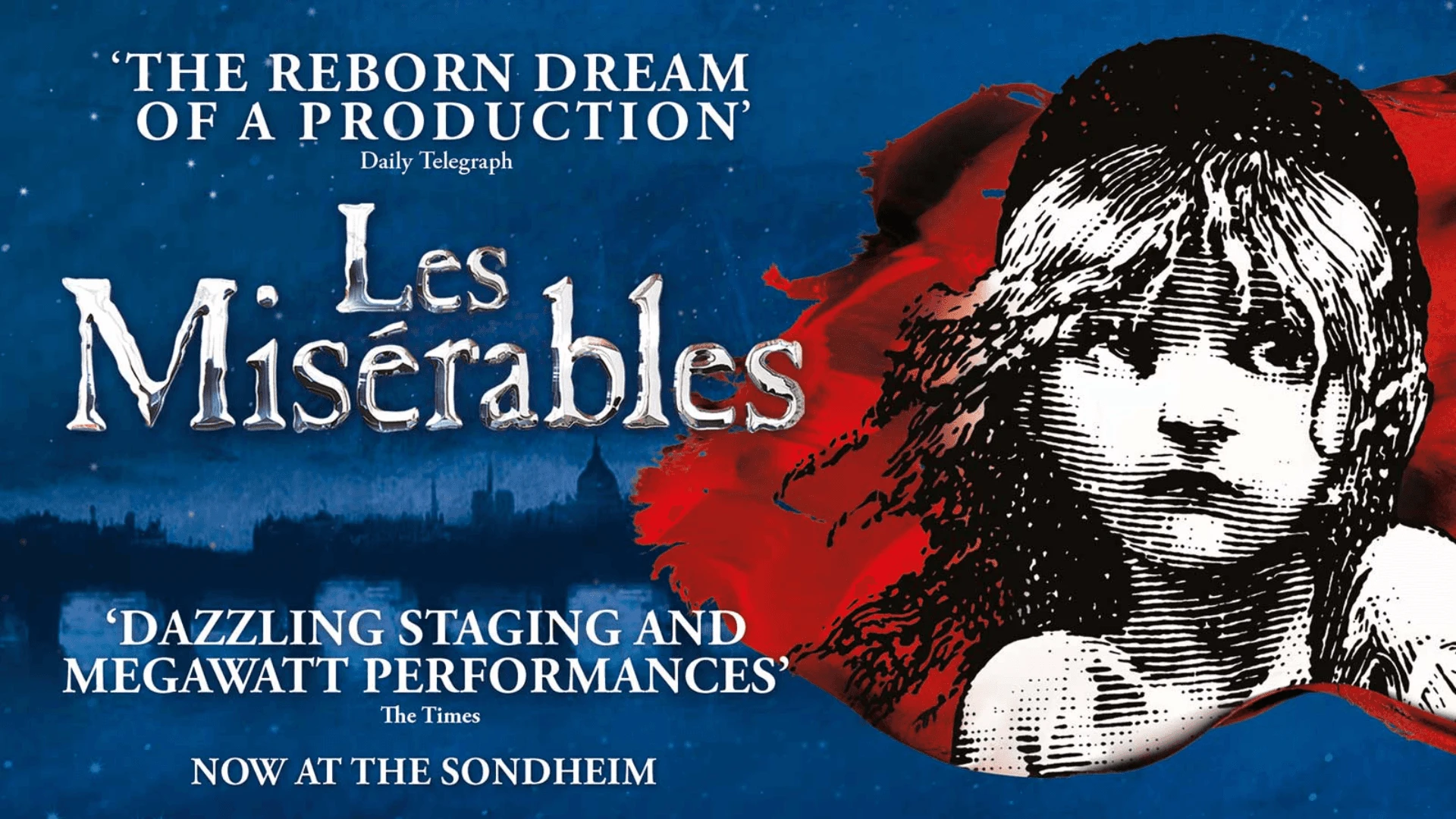
The most immediately useful part of a theatre programme is the cast list, which identifies which performer is playing which character. In a production like Hamilton with a large ensemble, or Les Misérables with its multiple principal characters and chorus, the cast list is practically necessary for keeping track of who is who on stage, particularly in productions where characters undergo significant changes in costume or age across the narrative.
The cast list is typically supplemented by brief biographical notes on each performer, which provide context about their previous work. These biographies allow you to understand where a performer has come from, what other productions they have appeared in, and what training they have undertaken. For audience members with existing knowledge of the theatrical world, cast biographies can reveal connections to other productions and demonstrate the trajectory of a performer's career.
Beyond the cast, the programme lists the creative team: the director, choreographer, designer, lighting designer, sound designer, musical director and other senior creatives responsible for the production's conception and realisation. Understanding who did what is useful both for appreciating the production as a collaborative work and for building familiarity with the names of practitioners whose work you may encounter in other productions.
Following the creative team, the programme typically includes a full list of production credits: the stage management team, the production management team, producers, co-producers and investors, and the various technical specialists who contributed to realising the design. This section can seem overwhelming in length for a large commercial West End production, but it provides a genuine insight into how many people are involved in putting a major show on stage.
For audience members interested in the industry, the credits section is a window into the professional structure of theatrical production. Producers who recur across multiple productions, companies that supply specific technical services, and practitioners who specialise in areas like automation, pyrotechnics or wigs all appear in this section, and following their careers provides a thread into the wider world of theatre-making.
Many programmes include notes from the director, the writer or other members of the creative team, as well as commissioned essays that contextualise the production. These vary considerably in their accessibility and usefulness. Directorial notes often address the production's concept or the creative team's approach to the material, and they provide a way of understanding choices made in the staging that might otherwise seem arbitrary.
Essays may cover the historical context of the material, the biographical background of the play's subject, the creative history of the show or the literary and cultural context from which it emerges. For productions where the subject matter is unfamiliar, these essays can significantly enrich the experience of watching the production, and reading them before rather than after the performance provides a useful frame.
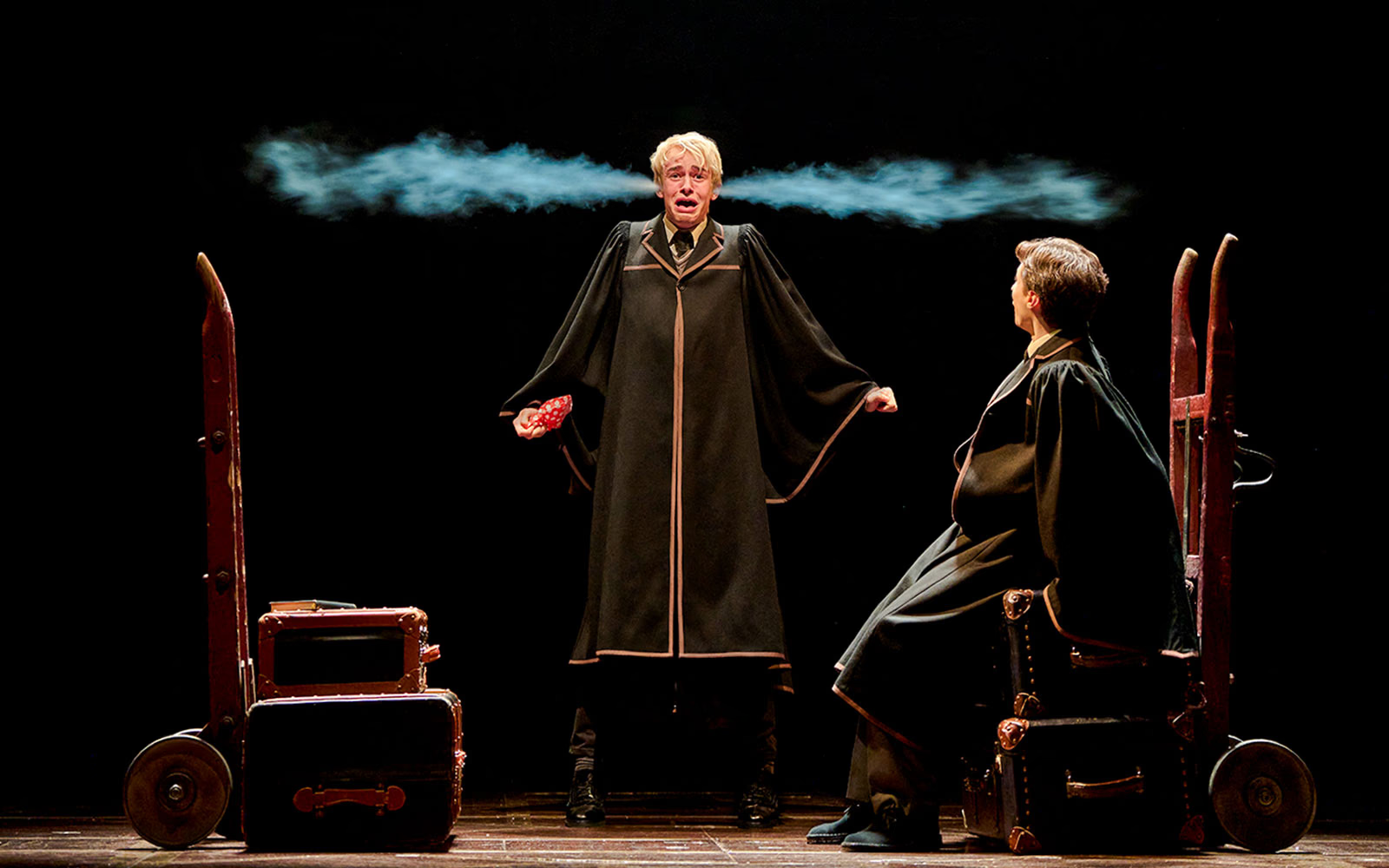
Most West End programmes include production photographs taken during rehearsal or in performance, and these provide a record of the production's visual world that is distinct from the live performance itself. For audience members who want to recollect specific moments or staging choices after the event, these photographs serve as a partial documentation of what was done.
Some programmes include design drawings, costume sketches or set model photographs that reveal the creative process behind the visual elements of the production. This material gives an insight into the translation from design concept to theatrical realisation that is otherwise invisible to the audience.
Beyond its function as an in-performance reference document, the programme serves as a souvenir of a specific theatrical occasion. Long-running productions have produced programmes that are now sought after by collectors, and for audience members with a sustained theatrical practice, a collection of programmes provides a documentary record of what has been seen across a career of theatregoing.
The programme is typically purchased before or during a performance from front of house staff or from sales points in the foyer. Prices vary between productions and venues, and the quality of the published document varies considerably: some productions invest in a well-produced publication, while others provide a simpler printed version.
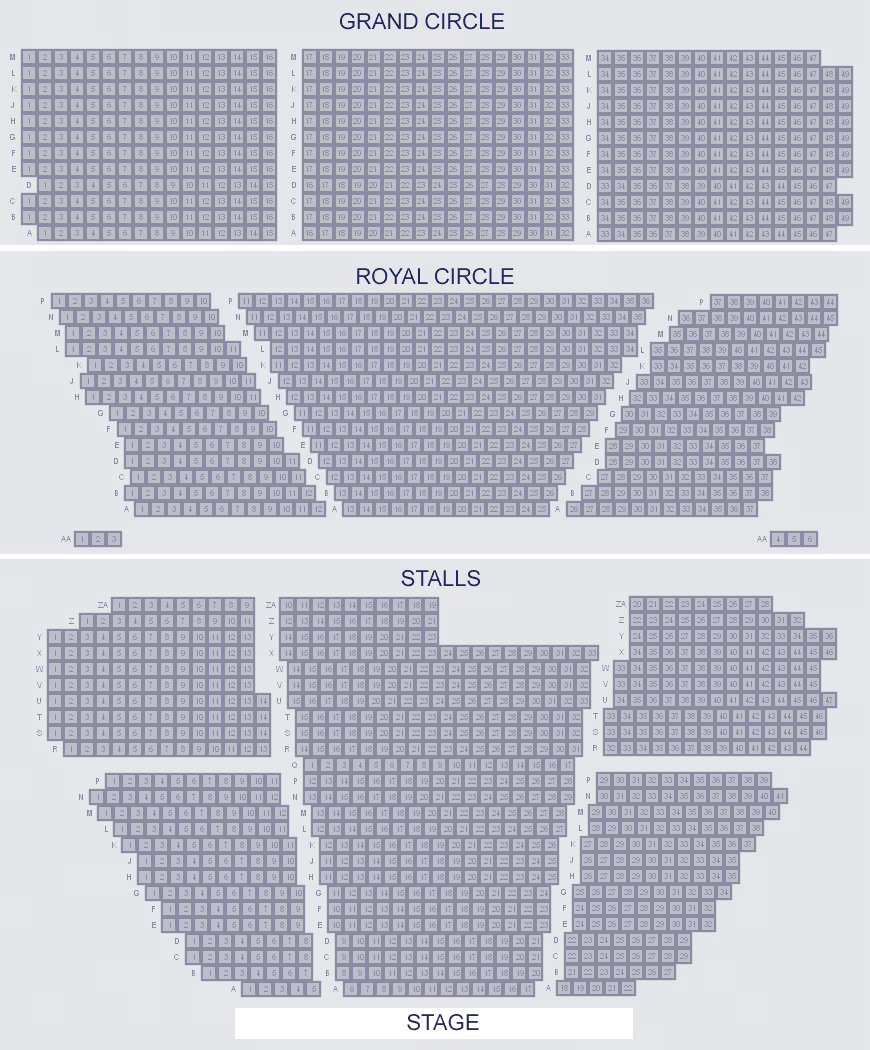
For tickets to the West End productions whose programmes reward this kind of close reading, tickadoo provides seat maps and pricing for all London theatre venues. The complete current West End programme is at BritishTheatre.com. tickadoo also offers theatre gift vouchers.
What is in a theatre programme? A typical West End programme contains the cast list with performer biographies, the full creative and production credits, notes from the director or writer, essays contextualising the production, production photographs, and advertising. The detail and quality varies between productions.
Do I need to buy a programme at a West End show? A programme is not required to follow a production, but it is useful for keeping track of characters in large-cast shows and for understanding the creative context. It also serves as a souvenir of the occasion. Many audiences buy a programme as a matter of course.
When should I read the programme notes? Programme notes and essays can be read before or after the performance. Reading before the show provides context that can inform your experience of the production; reading after allows you to reflect on what you saw without prior framing. Many audience members do both.
What is the difference between a cast list and a programme? A cast list is typically a free sheet distributed at the door that contains only the names of performers and their roles, often used when the cast has changed from that printed in the full programme. A programme is a more substantial published document covering the full production details and context.
Stay in the spotlight
Get the latest theatre news, reviews and exclusive offers straight to your inbox.