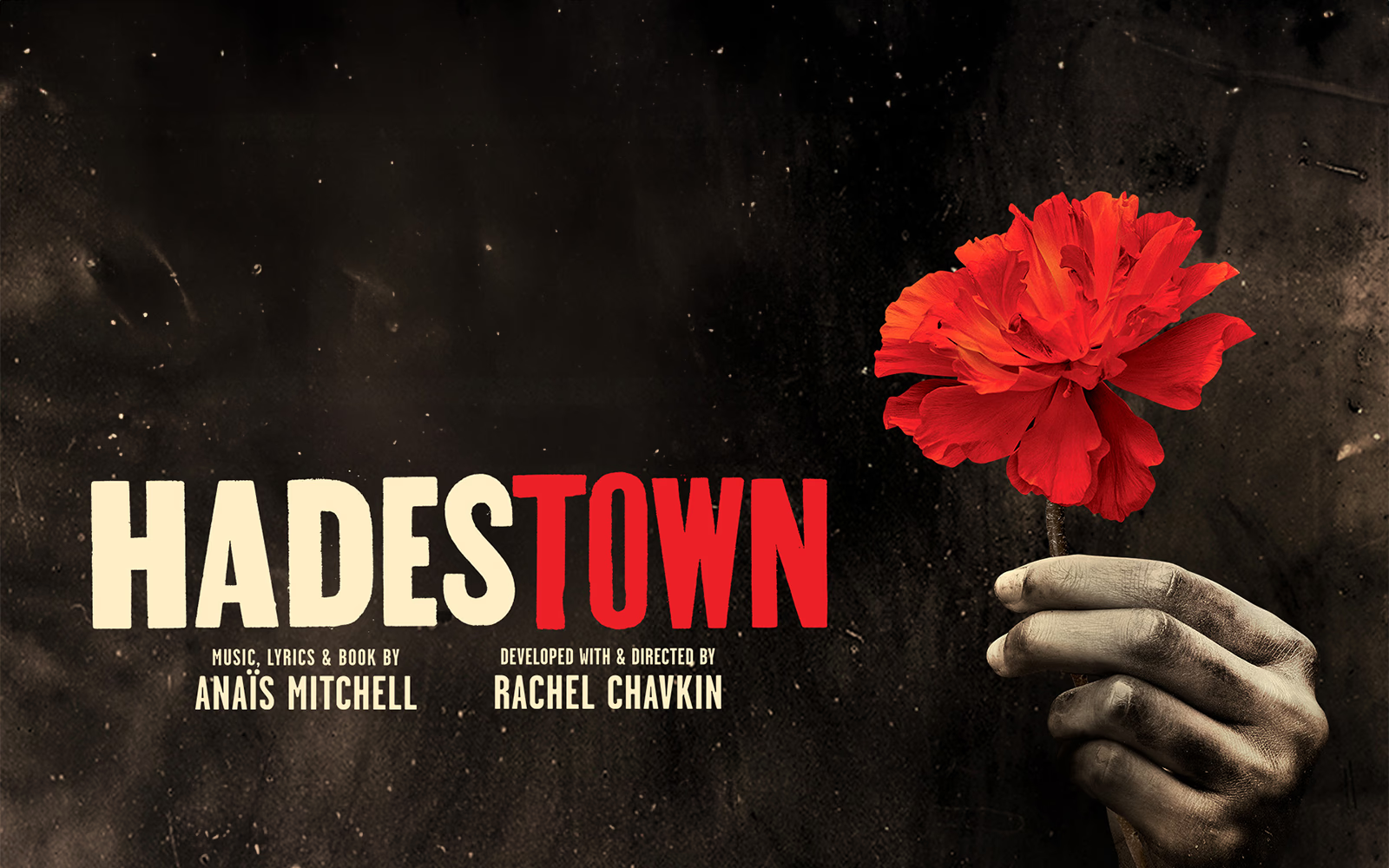
Hadestown at the Lyric Theatre is one of the most distinctive productions in the current West End programme. Winner of multiple Olivier and Tony Awards including Best Musical, the show adapts the ancient Greek myth of Orpheus and Eurydice into a folk-blues musical set in a world of railways, hard labour and a Depression-era American South reimagined in mythological terms. This guide covers the story of the show, what makes it distinctive, what to expect from the Lyric Theatre and how to choose the best seats.
Hadestown was written by Anaïs Mitchell, a Vermont-based folk singer-songwriter who began developing the show as a concept album in 2010. The stage musical developed over several years, including a production at the National Theatre in London before the Broadway premiere in 2019, where it won eight Tony Awards. The show represents an unusual path to mainstream musical theatre: a work conceived by a folk musician rather than by traditional Broadway writers, and one that retains the musical vocabulary of its origins across the full run of the commercial production.
The show is notable within the current West End programme for several reasons. Its source material draws on ancient mythology rather than contemporary storytelling, film adaptation or existing popular music. Its musical style occupies a folk-blues idiom that distinguishes it from the pop-influenced scores of Disney productions, the orchestral sweep of shows like Les Misérables, or the hip-hop vocabulary of Hamilton. And its narrative structure uses the Fates and the god Hermes as narrators who address the audience directly, creating a storytelling framework that is explicitly theatrical rather than cinematic.
Hadestown tells two stories simultaneously. The first is the myth of Orpheus and Eurydice: Orpheus is a young musician whose songs are beautiful enough to affect the world around him, and Eurydice is the young woman he loves. Their relationship is threatened by the poverty and hardship of the world they inhabit, and when Eurydice is lured to the underworld by promises of warmth and security, Orpheus follows her, intending to use his music to convince Hades to release her.
The second story is that of Hades and Persephone, whose marriage reflects the same tensions of power and desire that animate the younger couple's relationship. Hades is a powerful industrialist who controls Hadestown, the underworld, through fear and compulsion, keeping the dead at perpetual labour. Persephone moves between his world and the world above, and her absence from the upper world is the reason for its seasonal desolation.
The two stories illuminate each other. Orpheus's faith in the power of beauty and love is tested against Hades's conviction that work, walls and control are what hold the world together. The audience knows from the beginning how the myth ends, and the show is explicit about this: Hermes tells us from the start that it is a sad story and that we know how it goes. The emotional power of the show depends not on surprise but on watching the characters approach an ending that cannot be avoided.
Anaïs Mitchell's score for Hadestown is rooted in folk, blues, New Orleans jazz and American roots music traditions. The show's sound is warm and acoustic in character, with a live band that creates a musical texture unlike anything else in the West End programme. Songs including "Wait for Me," "Way Down Hadestown," "Road to Hell," and "Why We Build the Wall" are composed with the rhythmic and melodic directness of folk music rather than the more complex harmonic language of Broadway composition.
This musical identity means that Hadestown reaches an audience that may not typically attend the commercial West End. Audiences with an interest in American roots music, folk and blues will find the score accessible and recognisable in its vocabulary; audiences who know the show through its cast recording will find the live performance reveals the music's theatrical context in ways that a recording cannot capture.
The show's most striking musical moments involve the full ensemble, particularly in the Hadestown sequences where the labourers sing in unison against Hades's instructions. These sequences give the show a collective musical energy that is genuinely moving in live performance.
The Lyric Theatre on Shaftesbury Avenue opened in 1888 and is one of the older surviving Victorian theatres in the West End. It is a medium-sized house, with a capacity of approximately 900 seats across Stalls, Dress Circle and Upper Circle. This scale makes it more intimate than the large-scale houses like the Drury Lane or the Lyceum, and the closer relationship between performers and audience that this creates suits the character of Hadestown particularly well: the show's storytelling depends on a direct address to the audience, and the Lyric's size makes this feel personal rather than distant.
The interior of the Lyric retains its Victorian character, with ornate plasterwork and a warmth of atmosphere that complements the show's period aesthetic.
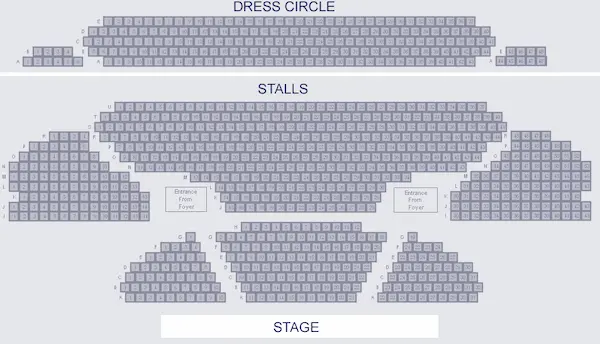
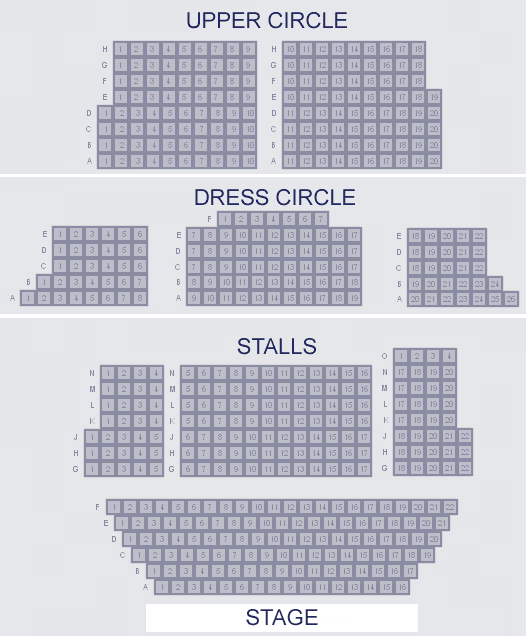
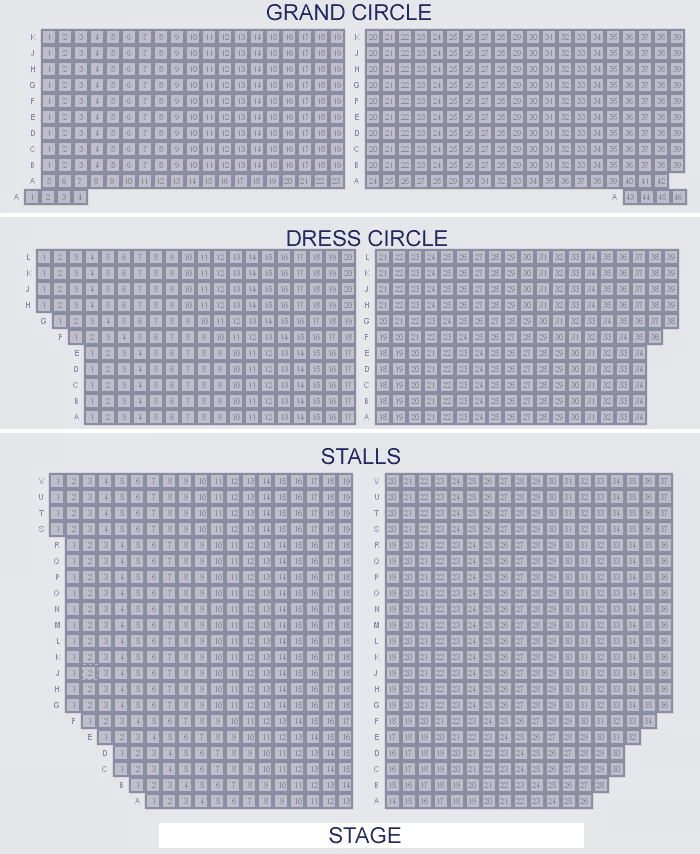
The Lyric has three levels: Stalls, Dress Circle and Upper Circle. At a venue of approximately 900 seats, the distance between any level and the stage is less than in the large-capacity West End houses, and all three levels offer a reasonable connection with the performance.
Stalls is the ground floor and provides the most direct engagement with the production. The mid-Stalls central block, from approximately rows D to N, gives the best balance of proximity and sightlines. The front rows are very close to the stage, which suits the show's direct address to the audience; the rear Stalls is further back but still within the intimate scale of the house.
Dress Circle provides the elevated view that suits productions where the staging extends across the full width of the stage. The front central rows of the Dress Circle are among the most sought-after positions in the house. The overview from the Dress Circle gives a clear perspective on the ensemble staging of the Hadestown sequences that the ground-level Stalls does not provide. For audiences attending the show for a second time, the Dress Circle often reveals aspects of the staging that were not apparent from the Stalls.
Upper Circle provides a panoramic view at greater distance. The central Upper Circle positions give clear sightlines to the full stage at a lower price than the levels below, and for a show where the music and storytelling are so central to the experience, the acoustic quality at this level is sufficient. For audiences where price is the primary consideration, the central Upper Circle is a practical choice.
Restricted-view side seats at any level cut off part of the stage for a production that uses the full playing area. Central seats at any level are preferable to side positions.
The Lyric Theatre is at Shaftesbury Avenue, London W1D 7ES. The nearest Underground station is Piccadilly Circus (Bakerloo and Piccadilly lines), approximately five minutes on foot. Leicester Square (Northern and Piccadilly lines) is also within five to seven minutes on foot. The area is within the London Congestion Charge zone; public transport is recommended for arriving close to show time.
Shaftesbury Avenue and the surrounding Soho and Covent Garden areas offer a wide range of pre-theatre dining at all price points within walking distance.
For tickets to Hadestown at the Lyric Theatre, tickadoo covers full seat availability with interactive seat maps and pricing at all levels. The production is in demand and the Lyric's limited capacity means good central seats book early; advance booking is recommended. For the full West End programme, BritishTheatre.com covers all current productions, and tickadoo also offers theatre gift vouchers.
What is Hadestown about? Hadestown tells the story of Orpheus and Eurydice, intertwined with the story of Hades and Persephone, in a Depression-era American setting. Orpheus follows Eurydice to the underworld and attempts to persuade Hades to release her using the power of his music.
Where is Hadestown playing in London? Hadestown is at the Lyric Theatre, Shaftesbury Avenue, London W1D 7ES.
What kind of music does Hadestown have? The show has a folk-blues score by Anaïs Mitchell, drawing on American roots music traditions including folk, blues and New Orleans jazz. The musical style is quite different from most West End musicals.
What are the best seats at the Lyric Theatre for Hadestown? The mid-Stalls central block and the front central rows of the Dress Circle provide the best combination of proximity and clear sightlines. Avoid restricted-view side seats at any level.
How long is Hadestown? The show runs for approximately two hours and thirty minutes with one interval.
Stay in the spotlight
Get the latest theatre news, reviews and exclusive offers straight to your inbox.