Some West End productions use their staging as an argument. The physical world of the show, its sets, lighting, flying sequences, costumes, and the demands it places on the performers' bodies, is part of what it is saying and not merely the environment in which it says something else. This guide covers the current and long-running West End productions that are most worth seeing for the ambition and achievement of their staging.
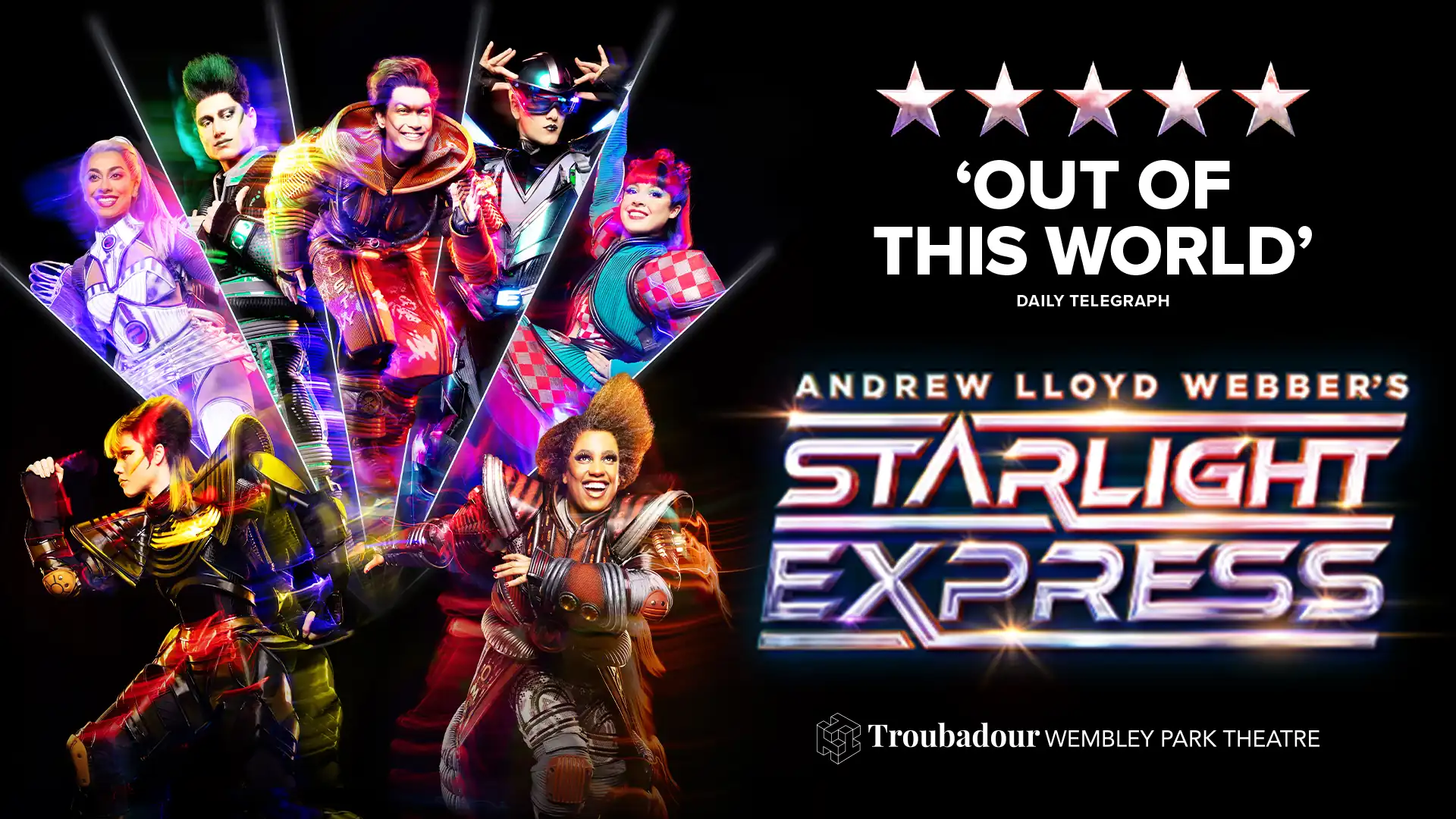
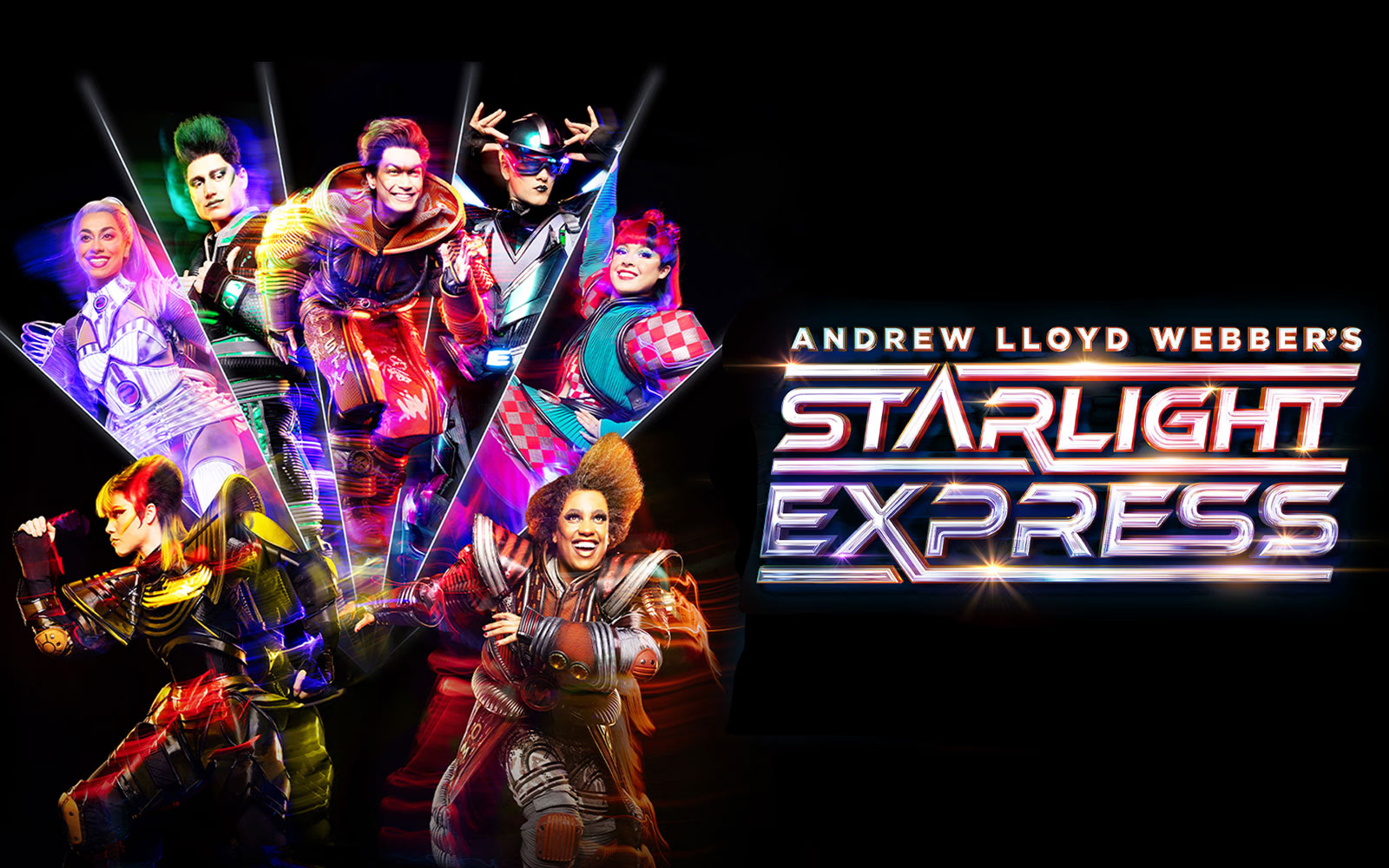
Starlight Express at the Troubadour Wembley Park Theatre is the most physically ambitious staging currently in the West End. The show features a cast performing entirely on roller skates, with a track configuration that extends around and above the audience rather than being confined to a single stage plane. Performers reach speeds and angles that would be implausible in any other theatrical context, and the design of the show is inseparable from the demands of the sport: the staging is not decorative but structural.
The original production, which opened in 1984, was already notable for its extraordinary physical and technical requirements. The 2025 revival updates the design and choreography while retaining the core concept of a roller-skating musical that uses the full three-dimensional space of the venue. For audiences interested in what theatre can do at the extreme end of physical performance and spatial design, this is a production that has to be seen rather than described.
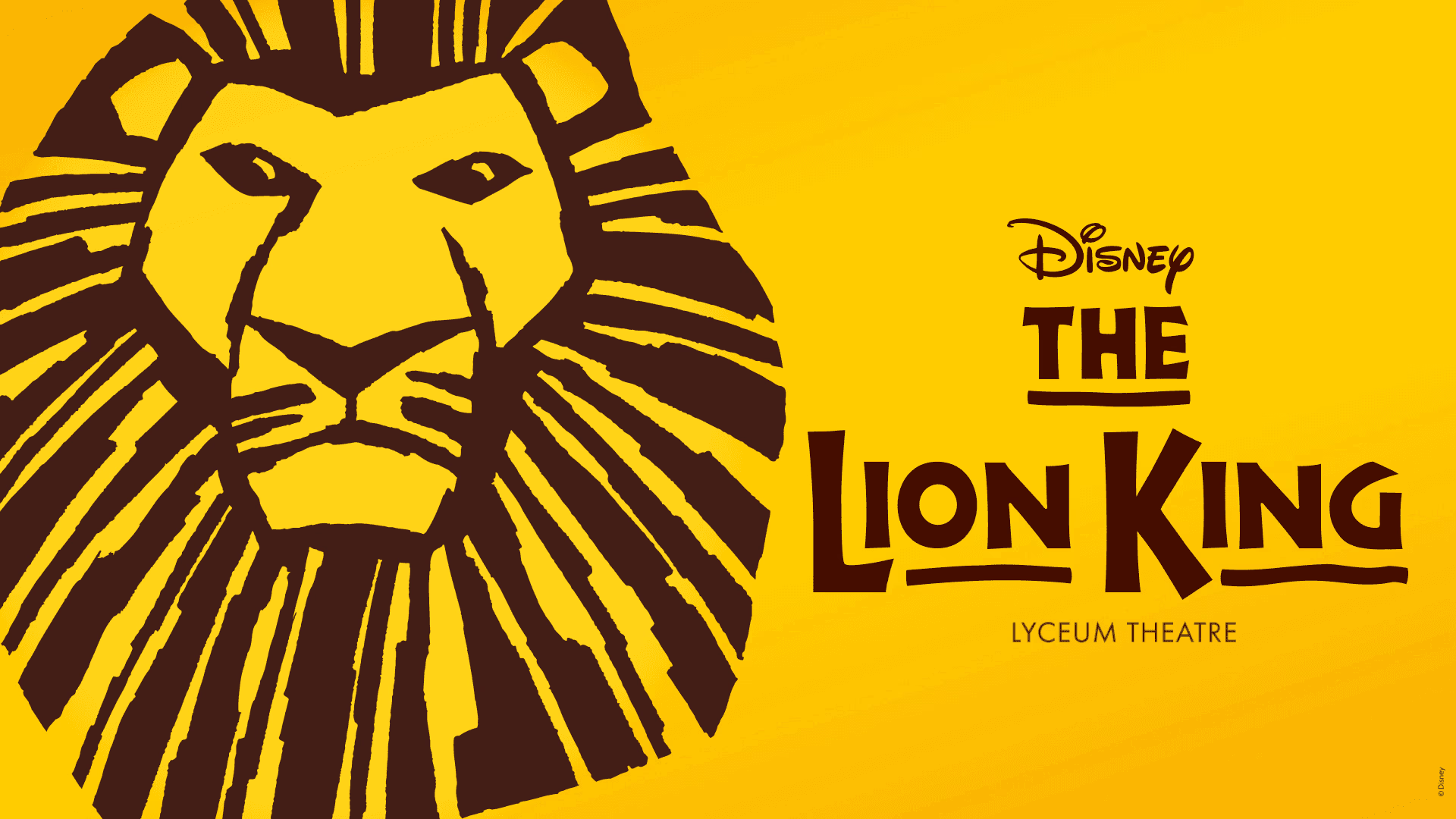
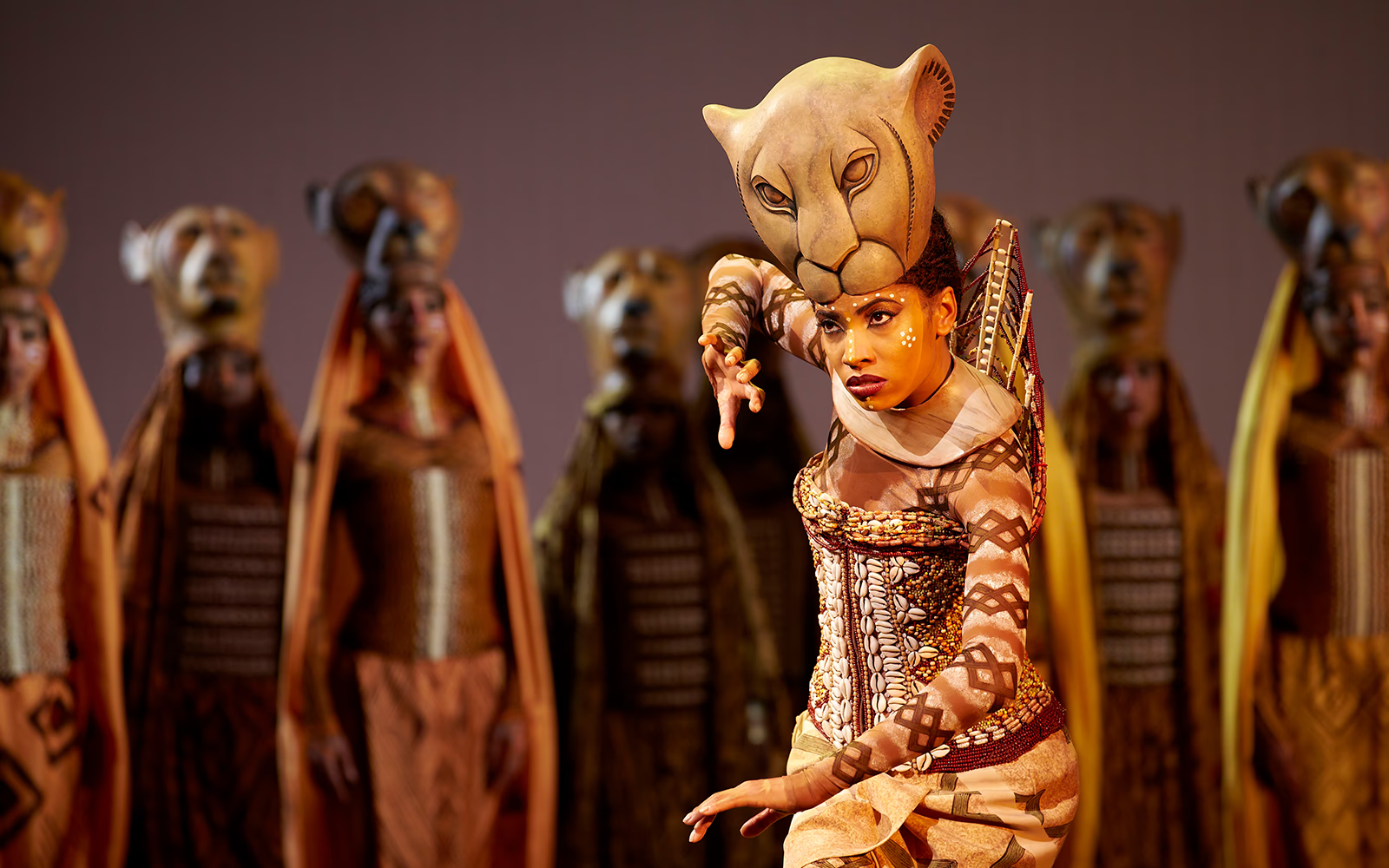
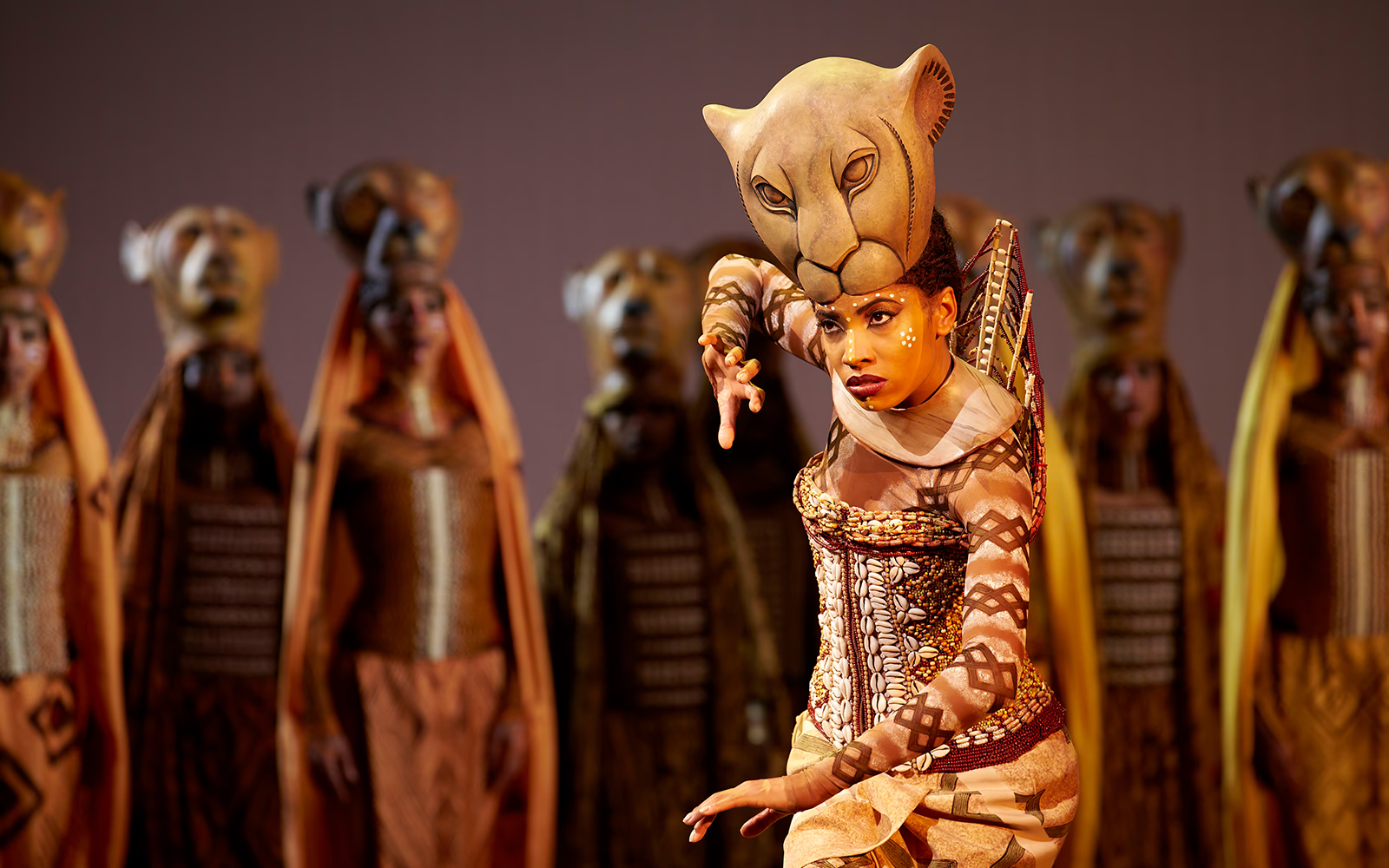
The Lion King at the Lyceum Theatre has been running since 1999 and remains one of the most visually ambitious productions in the West End. The staging by Julie Taymor uses large-scale puppetry, elaborate costume engineering and a physical vocabulary derived from various non-Western theatrical traditions to create the animal world of the savannah on a proscenium stage.
The opening sequence of the show, in which the animal kingdom assembles for the presentation of Simba, uses the full width and depth of the Lyceum's stage and extends into the auditorium, bringing giraffes, elephants and birds into the house itself. The technique used throughout, in which the human performers are visible operating their puppets and costumes rather than concealed within them, creates a theatrical transparency that gives the show a distinctive quality: the audience sees both the illusion and the means by which it is created simultaneously. After twenty-five years in the West End, the staging retains its capacity to astonish.
Wicked at the Apollo Victoria Theatre makes its case through scale and theatricality. The production design creates Oz as a world of green-tinged grandeur, with a set that fills the Apollo Victoria's stage with architectural ambition, a large mechanical dragon that presides over the auditorium, and a central flying sequence in which Elphaba rises above the stage at the end of the first act. The technical demands of the flying sequence have been a production challenge and a theatrical attraction throughout the show's run.
For audiences attending Wicked for the first time, the staging is one of the reasons the show works as well as it does: the physical world of Oz earns the emotional arc of the two leads in a way that a more economical staging would not. The spectacle is not disconnected from the story but is its condition.
The Phantom of the Opera is the production most associated with the large-scale theatrical spectacle of the 1980s West End. The falling chandelier, the candelabra rising from the underground lake, the boat crossing through mist and darkness: these are theatrical moments that have defined expectations of what a West End spectacular can be for decades, and the production's staging remains a benchmark for the category.
The show's design serves its Gothic-romantic subject: the Paris Opera House of the story is rendered as a world of overwhelming scale and hidden depths, and the staging creates a physical analogue for the Phantom's psychology. The design communicates something about the character and the world he inhabits that the music alone would not.
Hamilton at the Victoria Palace Theatre makes a different argument about staging from the productions above. Where Starlight Express and The Lion King commit to maximum physical and scenic ambition, Hamilton uses a deliberately economical staging vocabulary: a wooden revolve, minimal set changes, period-inflected but abstracted costumes. The production design is restricted in scale but precise in effect.
The revolve does work throughout the show that a simpler stage would not allow: it creates the sense of time passing, the relentless forward movement of history that the show is about, through a physical mechanism that never stops. It also allows scenes to overlap and intersect in ways that a static stage cannot accommodate. The staging of Hamilton is an argument that what you withhold can be as powerful as what you provide.
Disney's Hercules at the Theatre Royal Drury Lane brings Greek mythology to the largest stage in the West End. The show makes full use of the Drury Lane's size and technical capacity to create the world of Olympus and the mortal realm with the scale that the story demands. The Muses, who function as a theatrical chorus, drive the show's most energetic sequences with choreography and staging that suit the Motown-influenced gospel style of the Menken and Zippel score.
For audiences attending for the first time, the Theatre Royal Drury Lane itself contributes to the experience: the auditorium's scale and architectural grandeur give the spectacle of the show a context that amplifies its ambition.
The productions above differ significantly in what they mean by spectacular staging. Starlight Express means physical danger and technical achievement. The Lion King means the combination of multiple theatrical traditions into a unified visual language. Wicked means architectural grandeur and mechanical flying. Phantom means darkness and Gothic romanticism made physical. Hamilton means restraint and precision. Disney's Hercules means scale and mythological energy.
What they share is a refusal to treat the physical staging as separate from the theatrical work itself. In each case, the design is an argument rather than decoration, and the argument is part of what the show is trying to say. For audiences interested in what contemporary musical theatre can achieve, these are the productions that best demonstrate the range of its possibilities.
For tickets to all of these productions and the full West End programme, tickadoo covers full seat availability with maps and pricing. tickadoo also offers theatre gift vouchers.
Which West End musical has the most impressive staging? Different productions make different arguments about staging. Starlight Express is among the most physically extraordinary; The Lion King is widely cited for its puppetry and design innovation; Wicked is notable for its scale and flying sequences; Hamilton for its precise economy. The answer depends on what kind of theatrical ambition interests you most.
Are spectacular staging productions suitable for first-time West End visitors? Yes. Productions like The Lion King and Wicked are popular choices for first-time visitors precisely because the staging provides a strong initial experience of what West End theatre can achieve. For children and family audiences, The Lion King is particularly recommended.
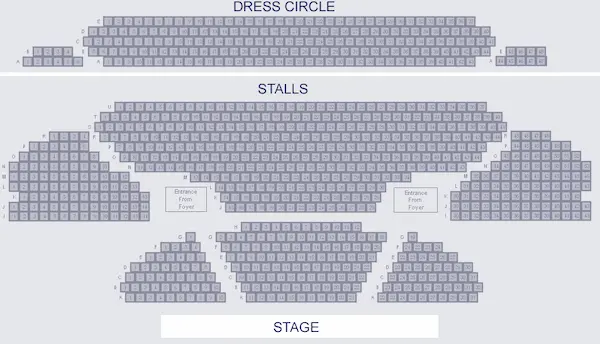
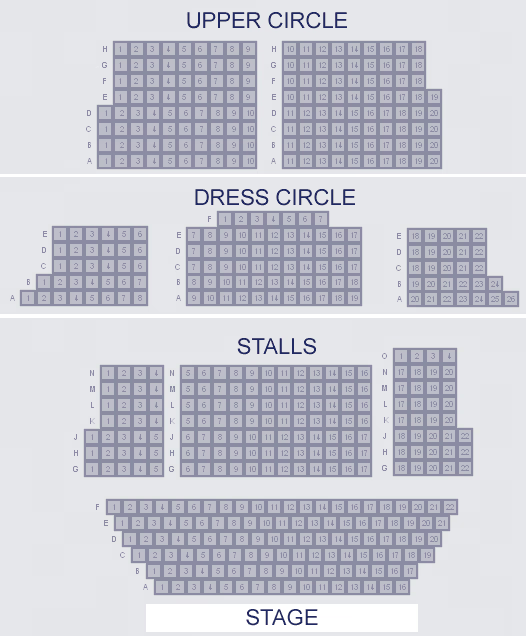
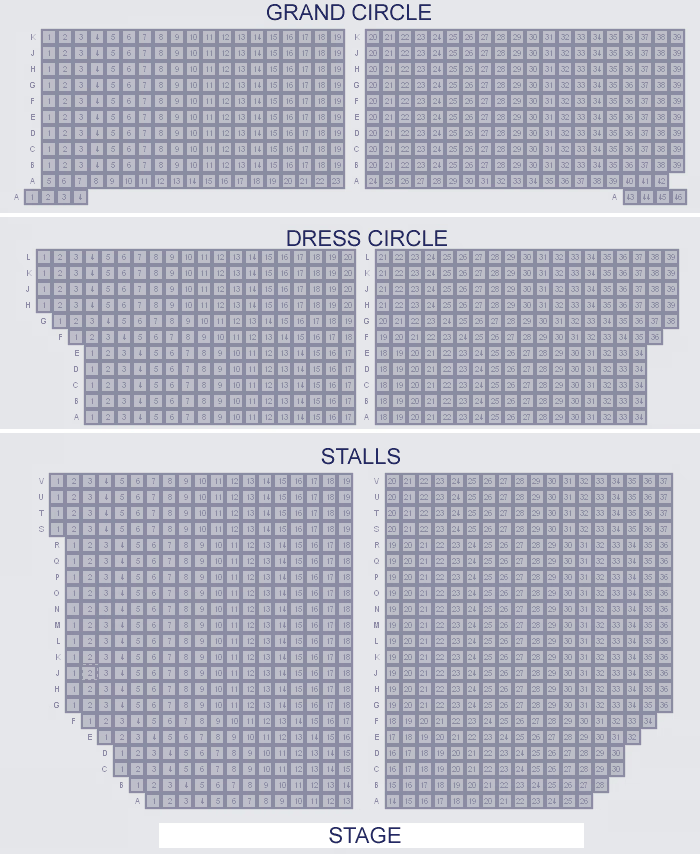
Does the staging of these shows vary between seats? Yes. For productions with significant staging activity in different parts of the theatre, central seats at a mid-level typically give the best overview. For shows like Starlight Express where the action moves around the audience, the spatial relationship between seat and track matters more than in a conventional production. Seat maps on tickadoo help identify the best positions for each venue.
Stay in the spotlight
Get the latest theatre news, reviews and exclusive offers straight to your inbox.