101 Dalmatians the Musical is a stage adaptation of one of the most well-known family stories in British and American popular culture. Drawing on Dodie Smith's original 1956 novel and the Disney film adaptations that followed, the musical brings Cruella de Vil, the Dalmatian puppies and the heroic dogs of London to the stage in a production designed specifically for family audiences. This guide covers what the show is, how it tells its story, what to expect from the production, and the practical information visitors need to plan a trip.
The story of 101 Dalmatians begins with Dodie Smith's novel, written in 1956 and set in London and rural England. The book follows Pongo and Missis, two Dalmatian dogs living in London, whose newborn puppies are stolen by the villainous Cruella de Vil, who wants to use Dalmatian fur for a coat. The dogs of London and England rally through a communication network called the Twilight Barking to locate the missing puppies, and Pongo and Missis make the journey across winter England to rescue them.
The novel was adapted by Disney as an animated film in 1961, one of the most celebrated of the studio's mid-century productions. The film introduced the visual interpretation of Cruella de Vil that has remained the dominant version of the character: dramatically overdressed, obsessively fixated on Dalmatian fur, and performed with theatrical menace. A live-action adaptation followed in 1996, and the character has continued to be revisited in Disney productions since.
The stage musical draws on these various iterations to create a theatrical version suited to live performance. Stage adaptations of the story face the particular challenge of representing Dalmatian puppies convincingly on stage, and the creative solutions that productions use for this are typically among the most visually engaging elements of the show.
101 Dalmatians the Musical is designed as a family production, with the audience composition, running time and tone all calibrated for a mixed-age group. The story follows the familiar plot of the novel and films: Pongo and his human owner Roger in London, the romance that develops between Roger and Anita (who owns Missis), the birth of the Dalmatian puppies, Cruella's theft of the puppies, and the rescue mission across England.
Cruella de Vil is the show's central theatrical pleasure. The role gives a performer the opportunity to play one of popular culture's most flamboyant antagonists: entirely without moral restraint, visually outrageous, motivated by vanity to the exclusion of all else, and played with a theatrical excess that children and adults can appreciate simultaneously. The character's combination of genuine menace and absurdist excess is the quality that has made her endure across many decades and formats, and the stage musical uses that combination as its primary source of energy.
The dogs, and particularly the puppies, present the show's principal creative challenge and opportunity. Theatrical interpretations of the Dalmatian characters use a range of approaches, from performers in costume to puppet designs that create the impression of dogs without asking actors to replicate them literally. The puppet and costume design for family shows of this kind often represents the most distinctive and discussed aspect of the production.
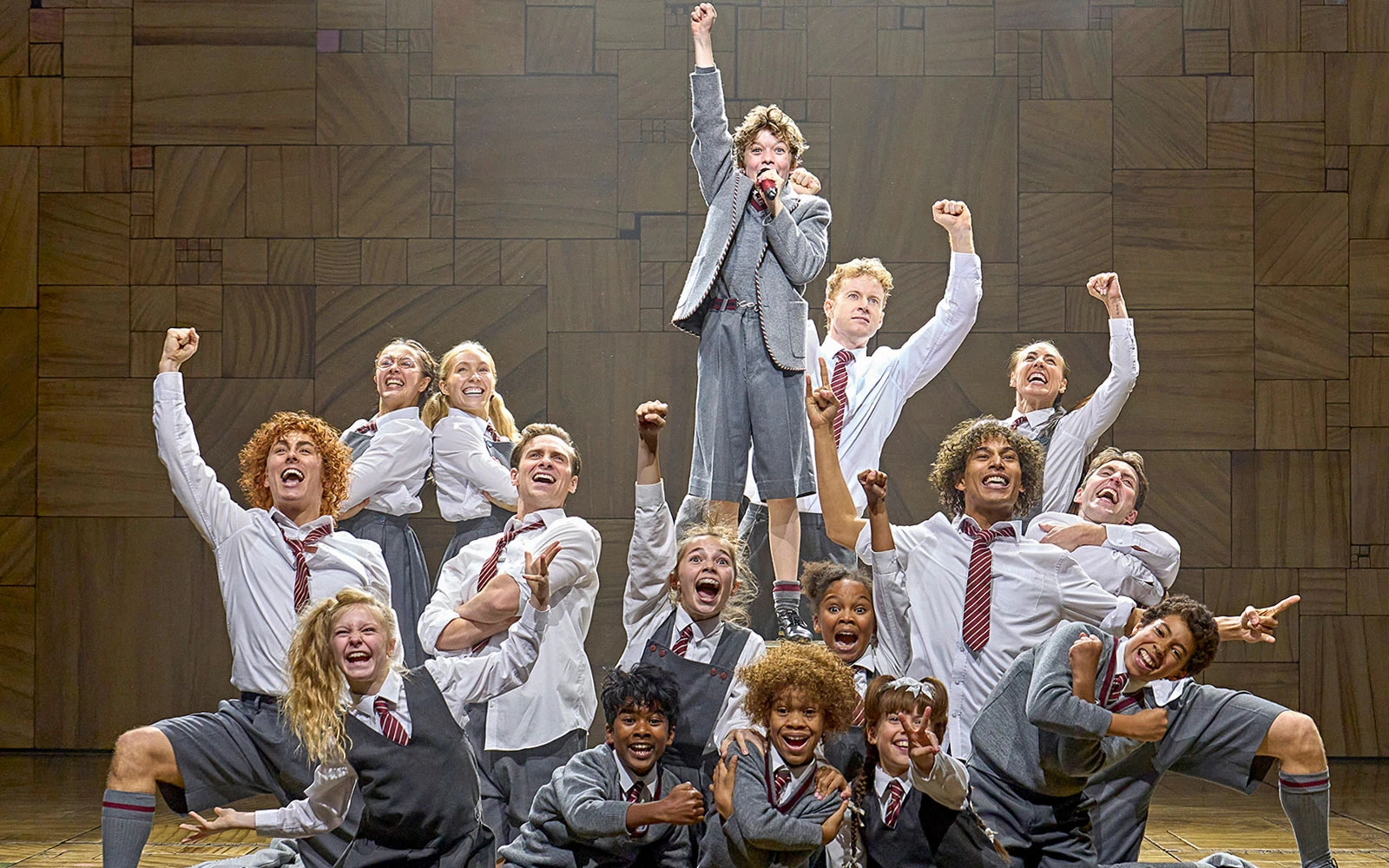
101 Dalmatians the Musical is among the most explicitly child-focused productions in the West End family show category. Where productions like Matilda the Musical are designed to work at different levels for children and adults simultaneously, 101 Dalmatians is primarily oriented toward younger children and family groups. The story is straightforward, the villain is clearly defined and the emotional stakes are simple: rescue the puppies.
For families with younger children who find the running time or emotional complexity of some West End productions demanding, 101 Dalmatians offers a production calibrated to keep a younger audience engaged without relying on the sophistication required for some other family shows. For adults accompanying children rather than being the primary intended audience, the show's pleasures are partly in the pleasure children take in it, and partly in Cruella, who is written and designed to be enjoyed at any age.
The show's running time is likely to include an interval, as is standard for West End productions of any substantial length. Age recommendations for 101 Dalmatians follow standard family show guidance; younger children who can sit through an age-appropriate show are the primary intended audience.
For families visiting the West End for the first time, the practical checklist is much the same for this show as for any other. Booking in advance gives access to the best available seats at the best available prices before they are taken. Arriving early enough to find seats, buy programmes and settle children before the house lights go down reduces the stress of the experience. Taking note of interval length allows time for refreshments and is particularly useful with younger children.
For an overview of London's current family theatre venues and the productions playing at them, BritishTheatre.com covers the full West End programme.
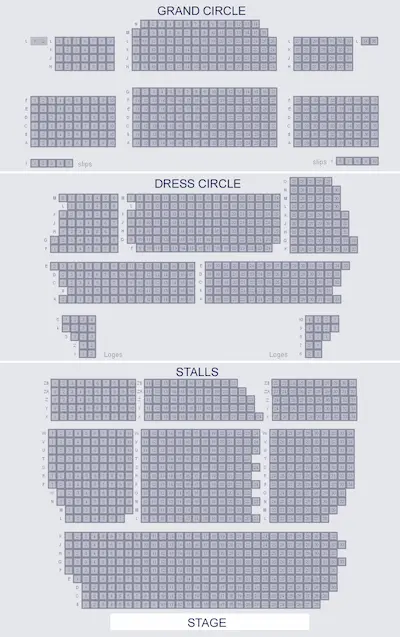
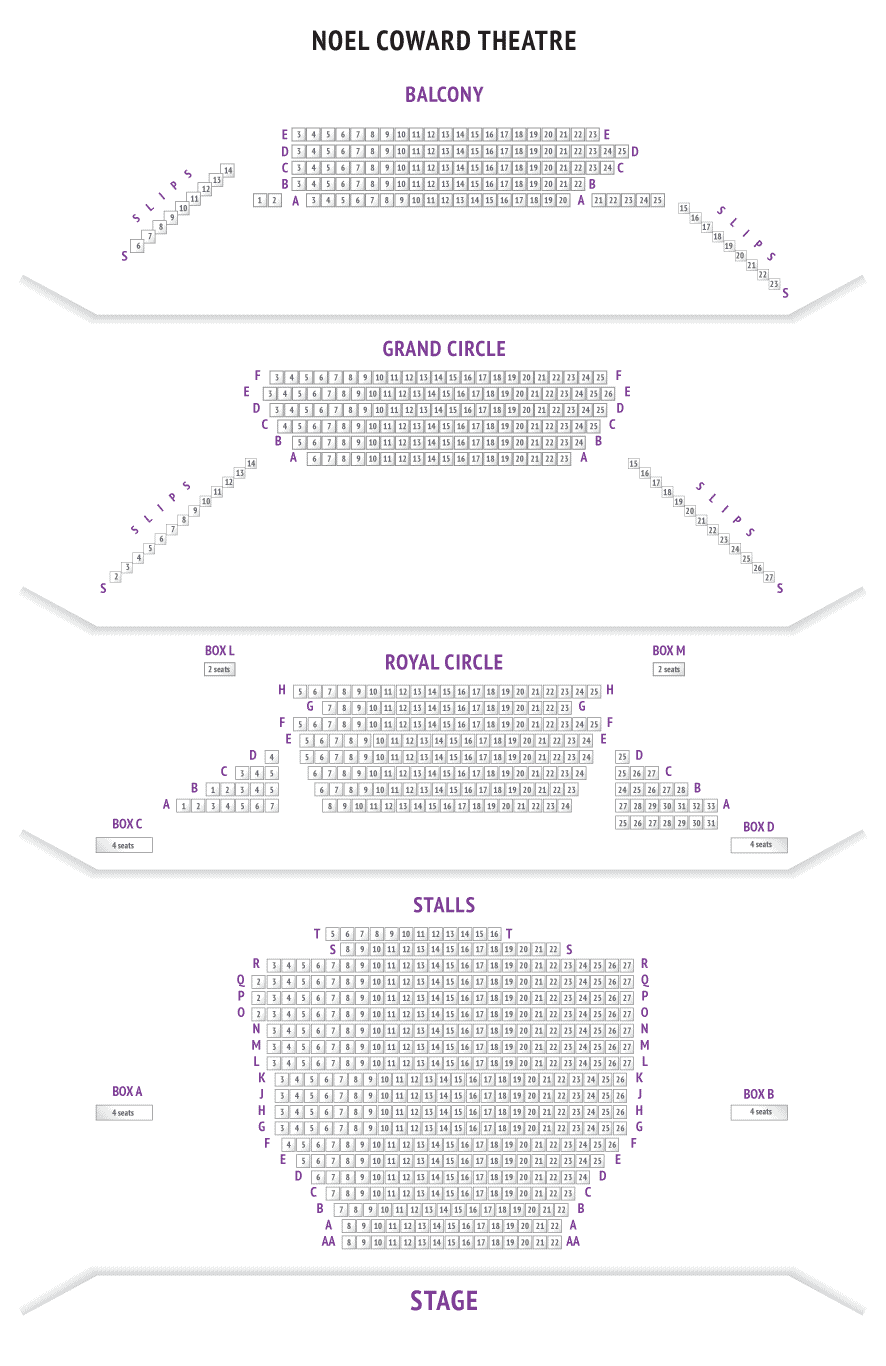
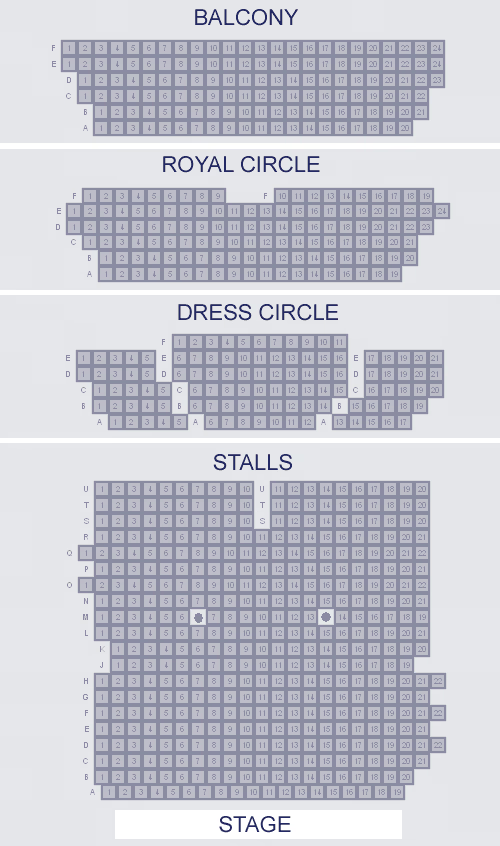
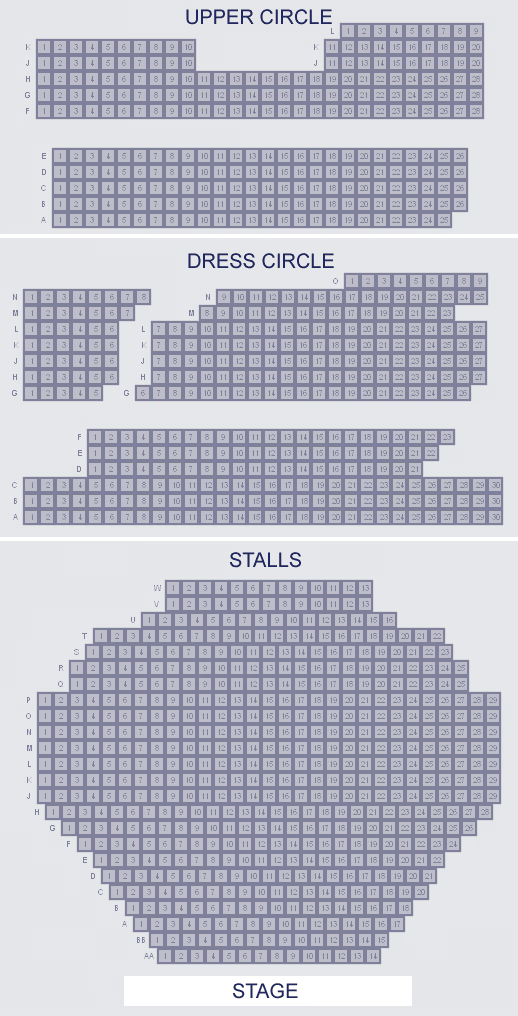
For a production where physical performance and staging detail are part of the experience, particularly when Cruella's costumes and the design treatment of the dogs are significant, the mid-Stalls central block provides the most direct engagement with the production. The proximity to the stage gives the clearest view of the physical performance and the design work.
The Dress Circle or equivalent first balcony provides the elevated perspective that reveals the full staging picture. For productions where ensemble staging and the spatial relationship between different groups of characters form part of the visual language, the elevated view from the circle can reveal things that the ground-level Stalls does not. This is particularly useful on a second visit when the plot is already known.
Upper-level seating at a lower price provides a complete view of the stage and access to the story and music, though at a greater physical distance from the performers. For families where the priority is access to the show rather than ideal proximity, the central upper level is a practical choice.
At all levels, central positions are preferable to side seats that cut off part of the staging, particularly for a production that is likely to use the full width of the stage for ensemble scenes.
For tickets to 101 Dalmatians the Musical, tickadoo covers full seat availability with an interactive seat map and pricing at all levels. Family shows in the West End are in demand, particularly at weekends and during school holidays; advance booking is strongly recommended. For the complete West End programme and all current family productions, BritishTheatre.com covers all venues and shows. tickadoo also offers theatre gift vouchers.
What is 101 Dalmatians the Musical? 101 Dalmatians the Musical is a stage adaptation of Dodie Smith's 1956 novel and its Disney adaptations, following Pongo, Missis and their stolen puppies in a family production designed for mixed-age audiences.
Is 101 Dalmatians suitable for young children? Yes. The show is designed as a family production with younger children as the primary intended audience. The story is clear and direct, the villain is distinctive, and the emotional stakes are straightforward.
How long is 101 Dalmatians the Musical? Running times vary by production. As with most full-length West End family shows, an interval is typically included. Check the specific production details at the time of booking.
What are the best seats for 101 Dalmatians? The mid-Stalls central block provides the most direct view of the staging and physical performance. The front central rows of the Dress Circle or equivalent level offer a clear elevated perspective. At all levels, central seats are preferable to restricted-view side positions.
Where can I book tickets for 101 Dalmatians the Musical? tickadoo covers full availability with seat maps and pricing. Advance booking is recommended, especially for weekend performances and school holiday dates.
Stay in the spotlight
Get the latest theatre news, reviews and exclusive offers straight to your inbox.