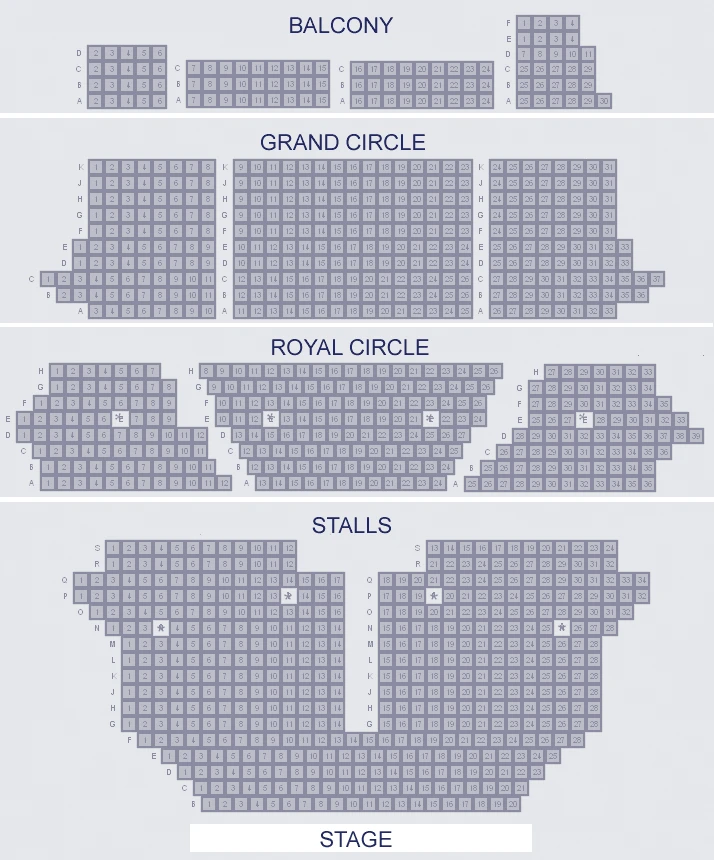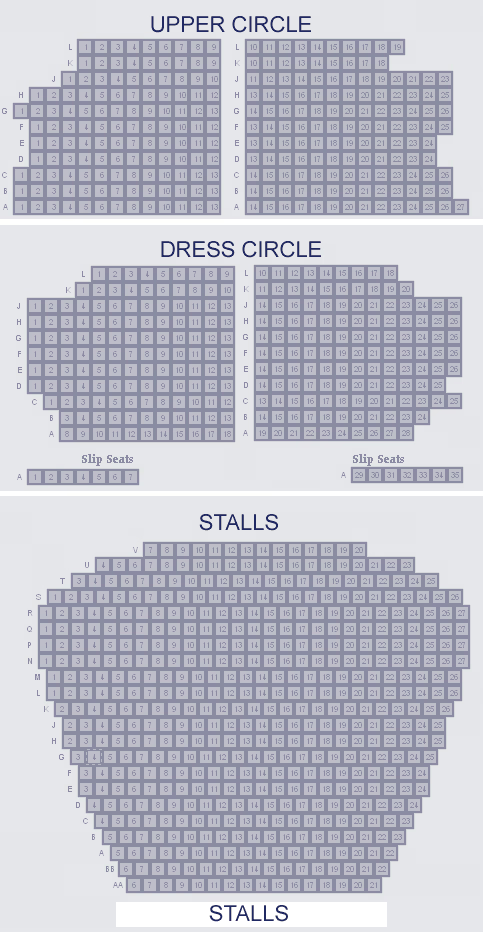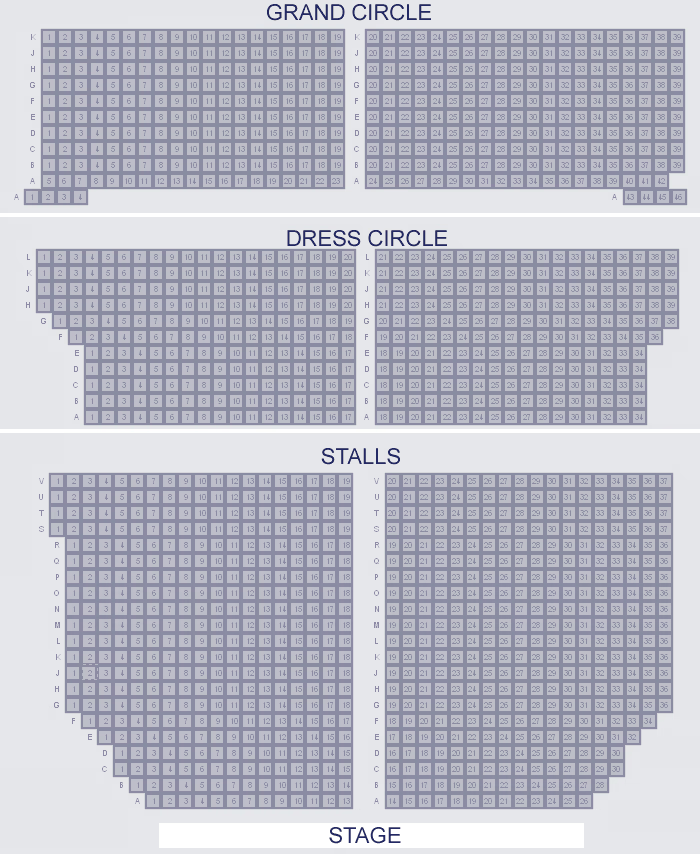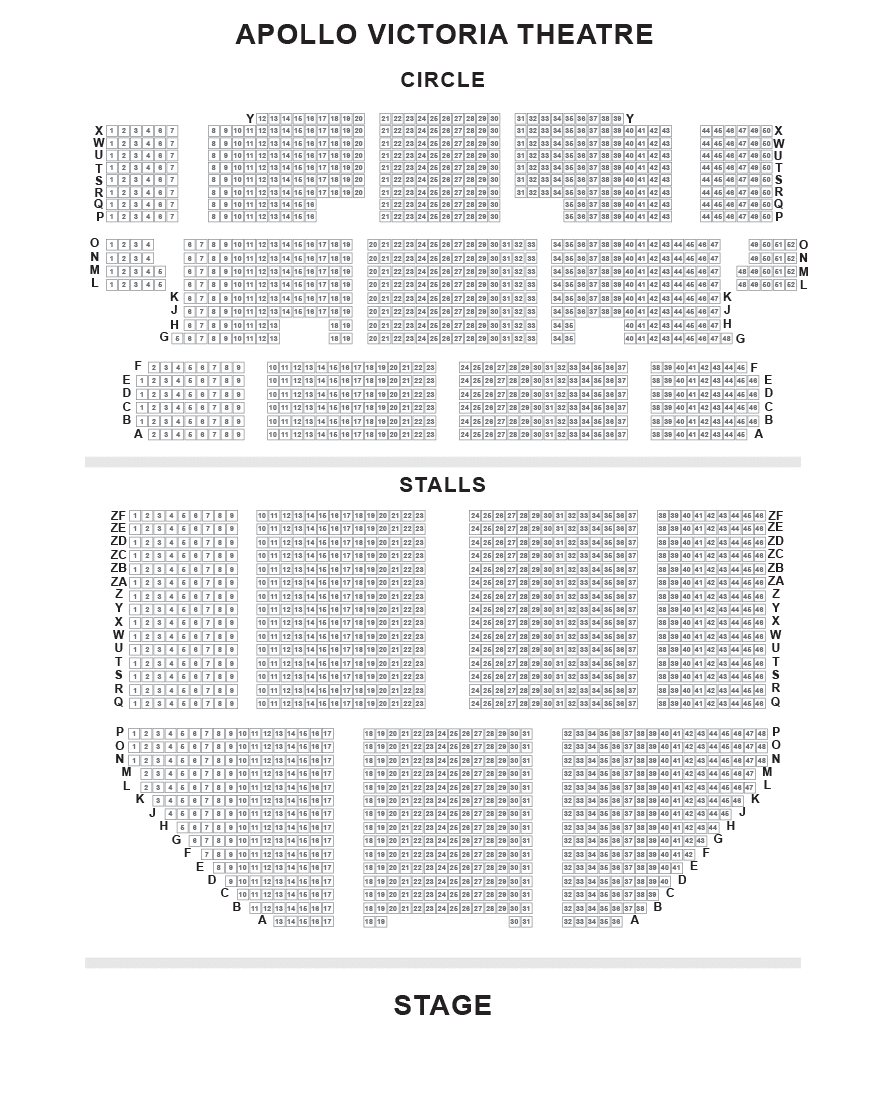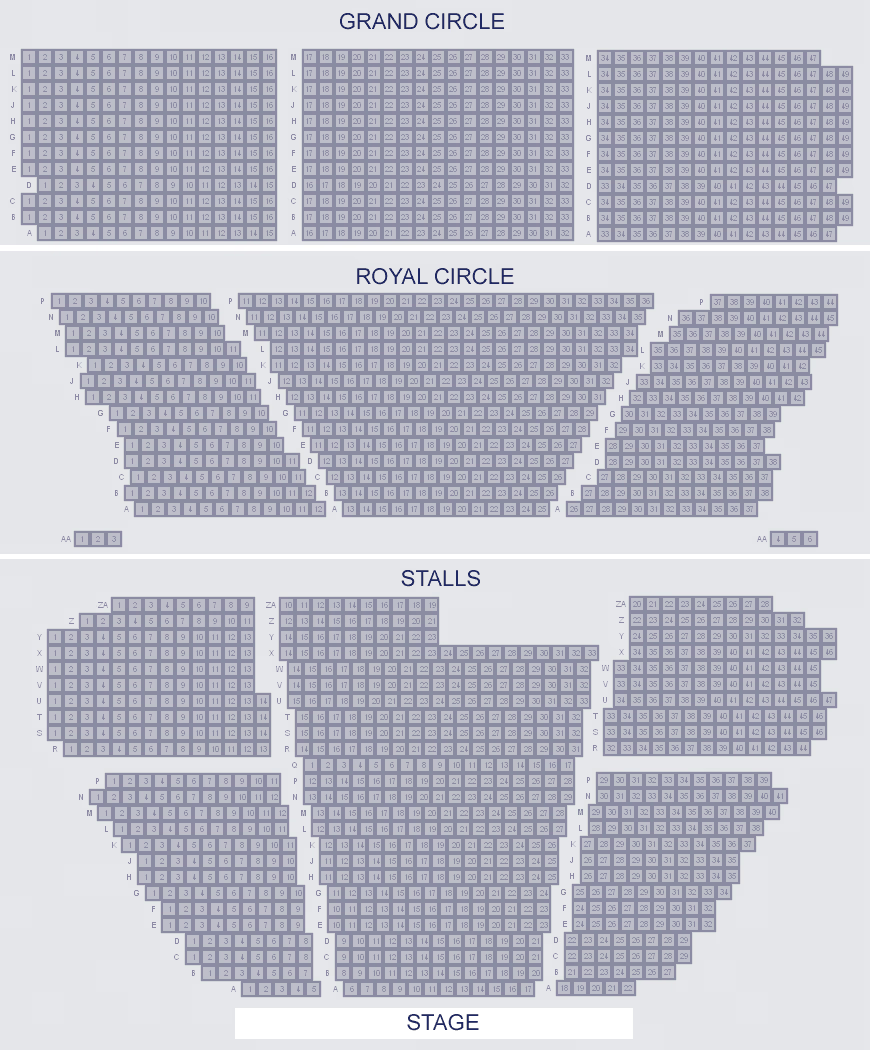
One of the most common questions from people booking West End tickets is whether to choose the Stalls or the Dress Circle. The answer is not the same for every show, every venue or every audience member, but there are clear principles that make the decision much easier once you understand how each level works. This guide covers the differences, the trade-offs and how to match your choice to the specific show you are seeing.
Most West End theatres have between two and four seating levels. The names vary slightly between venues, but the structure follows a common pattern.
Stalls is the ground-level seating, closest to the stage. Rows typically run from A (furthest forward) to the rear of the lower level. The stage is often slightly elevated, which means the very front rows sometimes look upward at the performance.
Dress Circle (sometimes called the Royal Circle) is the first balcony, positioned above and behind the Stalls. It provides an elevated view of the stage.
Grand Circle or Upper Circle is the second balcony, above the Dress Circle. This is usually the most affordable tier.
Gallery exists in some older West End theatres as a fourth level above the Grand Circle. Acoustics here can be excellent, but the views are the most distant.
The Stalls place you at the same level as the stage or very close to it. This creates an immersive quality that is unlike any other level: there is a physical closeness to the performance that can make the experience feel immediate and direct.
The advantages of Stalls seating: Mid-Stalls rows in the centre block give you the closest clear view of the actors' faces, which matters significantly for drama and dialogue-heavy shows. For productions where the emotional weight of a scene depends on a close reading of an actor's expression, central Stalls seats deliver that in a way that no other level fully replicates. The Stalls also tend to work well for productions with minimal scenic staging, where being close to the performance is the point.
The limitations of Stalls seating: The very front rows (typically A to D or E, depending on the venue) involve a steep upward viewing angle in theatres where the stage is raised. This can be physically uncomfortable over the course of a two-to-three-hour show. For productions with large-scale staging, particularly musicals with elaborate choreography and set pieces, sitting very close can mean you see less of the whole picture than from further back or from a higher level.
Side Stalls seats (those far to the left or right of the centre block) can have restricted sightlines in many venues. Always check the seat description carefully when booking positions at the edges of the Stalls.
For Hamilton at the Victoria Palace Theatre, central mid-Stalls seats are among the most sought-after because the pace of the show rewards being close enough to see detail in the performers' delivery.
The Dress Circle sits above the Stalls and offers an elevated perspective on the stage. This higher angle gives you a cleaner view of the full stage picture: you see how the set is arranged, how the choreography uses the full width of the stage, and how performers relate to each other across the space. For shows where what is happening across the whole stage matters as much as what a single actor is doing, the Dress Circle often gives the most satisfying view.
The advantages of Dress Circle seating: The front rows of the central Dress Circle are widely regarded as some of the best seats in many West End theatres. The view encompasses the whole stage at once, and the distance from the performers, while greater than the front Stalls, is close enough to retain a sense of direct engagement with the show. For The Lion King, Wicked, Les Misérables and similar large-scale musicals, the Dress Circle perspective allows the scale of the production to be appreciated fully.
Sound distribution in many West End theatres also favours the Dress Circle level, where the audio reaches the audience at a natural angle from both the stage and the speakers positioned in the auditorium.
The limitations of Dress Circle seating: A small number of seats in the very front rows of the Dress Circle have a safety rail in the direct sightline. For most audience members this is a minor issue, but it is worth checking seat-specific notes when booking. Some Dress Circle side seats also have restricted views or require leaning forward to see certain parts of the stage.
The Grand Circle (or Upper Circle) is the second balcony. It offers the widest panoramic view of the stage of any level, which can be an advantage for shows with elaborate staging where the full picture benefits from distance. Acoustics in the Grand Circle are often very good, because the position is closer to the central speaker arrays in many venues.
The main consideration is distance: Grand Circle seats are further from the action than any other level. For shows that rely heavily on the actors' facial expressions or the intimacy of the performance, this distance can diminish the experience compared to lower levels. For visually spectacular productions where what you are watching is partly about the overall composition of the staging, the Grand Circle delivers excellent value.
For Mamma Mia or similar high-energy productions where the whole auditorium becomes part of the atmosphere, the Grand Circle often produces a particularly enjoyable experience.
Drama, plays and dialogue-heavy shows: Central Stalls or front Dress Circle. Being close enough to read the actors matters.
Large-scale musicals with choreography: Front-centre Dress Circle or mid-Stalls. The Dress Circle gives you the full staging; the Stalls gives you the immediacy.
Shows with spectacular visual staging: Dress Circle or Grand Circle for the widest view of the full picture.
Intimate or studio productions: Stalls almost always, as the scale of these productions is designed for closeness.
Budget-conscious booking: Grand Circle central is typically the best value in the house, offering a clear view of the full stage for less than Stalls or Dress Circle prices. For most musicals, the compromise is less significant than it might appear.
When booking on BritishTheatre.com or through tickadoo, most ticketing interfaces allow you to view an interactive seat map before committing. Use this to check the position of your specific seats within the level, not just the level itself. Two seats in row A of the Dress Circle and two seats in row G of the Dress Circle are significantly different experiences, even though they carry the same tier label.
For popular productions, the best central Stalls and Dress Circle seats go first. Booking early gives you the widest choice of positions. For less popular performance dates (midweek, matinees outside school holidays), good central seats are often available with shorter notice.
Check tickadoo for current availability across West End venues and performance dates.
Are Stalls or Dress Circle seats better? Neither is categorically better. Stalls seats offer closeness and immediacy; Dress Circle seats offer a wider perspective and a clearer view of the full staging. The best choice depends on the specific show and where in each level the seats are positioned. For most first-time visitors, front-centre Dress Circle or mid-Stalls central are the safest all-round choices.
What is the difference between Dress Circle and Royal Circle? Different theatres use different names for the same level. Dress Circle and Royal Circle refer to the first balcony above the Stalls. The name varies between venues but the level is equivalent.
Are front-row Stalls seats good? The very front row of the Stalls can be excellent for some shows and less comfortable for others. In theatres where the stage is elevated, rows A to D or E involve a steep upward viewing angle that can become physically tiring. For shows with a low stage or thrust staging, front Stalls rows can be extraordinary. Check the specific venue and show before choosing front-row seats.
Is Grand Circle worth it? Grand Circle seats offer the widest view of the stage for the most accessible price in most West End theatres. For visually staged shows, they are often better value than their price suggests. The trade-off is distance from the performers, which matters more for some shows than others.
Can I see the whole stage from the Dress Circle? From the central rows of the Dress Circle, yes: the elevated angle gives a clear view across the full width of the stage. Side seats in the Dress Circle can have restricted sightlines to parts of the stage, particularly in older theatres with curved balcony configurations. Always check the seat map before booking.
Stay in the spotlight
Get the latest theatre news, reviews and exclusive offers straight to your inbox.