Julius Caesar Globe Theatre 21 July 2014 3 Stars
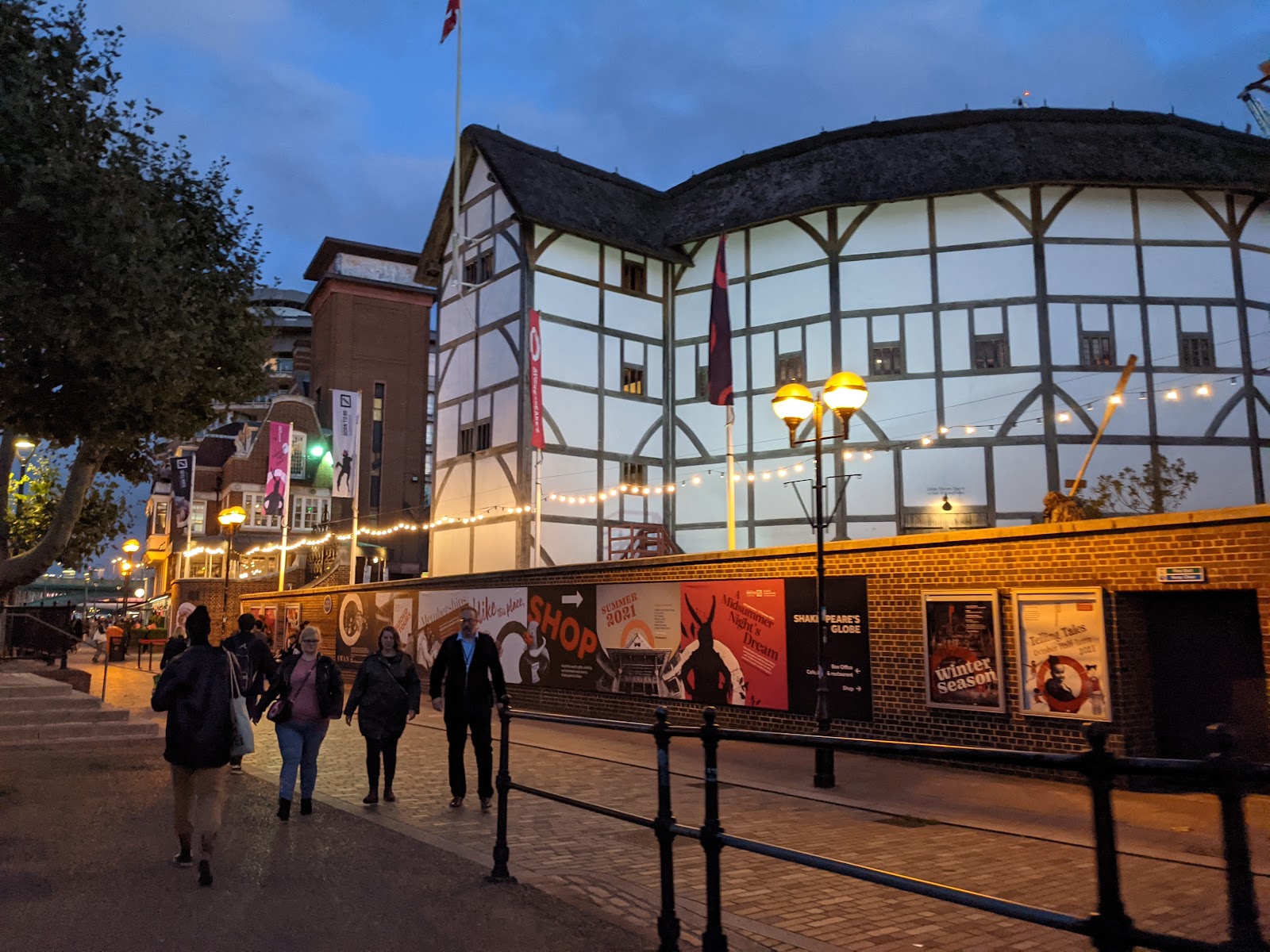
It's interval. Mark Antony has delivered his "Brutus is an honourable man" speech and the crowd listening to him has been whipped up into a frenzy, now desperate for the blood of Brutus, Cassius and their murderous confederates. The audience hoots and hollers and heads out of the Globe for refreshment, chatter and other relief.
As they exit the North Tower, a tall, suited American man and his pearl-necklaced wife are chattering about how much they have enjoyed the performance.
"That Mark Antony is just a shit though, isn't he?" says the man, his accent unfeasibly elongating the word 'shit'.
"Sure," responded the woman, breezily, "but he's so young."
I mention this because Julius Caesar, now playing at the Globe in a new production by Artistic Director Dominic Dromgoole, is a play about political instability, anxiety, revenge and betrayal. And although it would be centuries before the term spin-doctor would be coined, Shakespeare wrote three convincing spin-doctors into his play: Antony, Brutus and Cassius.
And, depending upon your own political persuasion or point of view, as an audience member you can decide for yourself who is the hero, who the villain and who the pawn (or some combination of those). That is one of the glories of the play.
But the American couple's response left me unsure about what they thought of Antony: did they see him as the villain, the person who turned the majority against the good sense of the ruling elite? Or did they see him as Caesar's pawn?
Their conversation continued and it was clear that they were really enjoying the production. So, this was more about how the play and the performances spoke to them and their own life experience.
And it is difficult to think of a clearer ratification of the genius of Shakespeare and his enduring relevance. If the production can play to the views and prejudices and political leanings of disparate but collected people and resonate with all of them differently, something is going right.
Taking a leaf out of the recent production of Titus Andronicus, the groundlings are used as part of the fabric of the production. Before the play commences, the actors weave through the standing audience members and encourage them into war-cries about Caesar. Quickly and cleverly, the audience are on Caesar's side; then the Tribunes start the play, and the discussion with the cobbler raises the key issues: whether Caesar was right to slaughter Pompey and whether Caesar is a great leader or a voracious dictator.
Dromgoole keeps the Groundlings involved throughout the performance, so there is an ever-present sense of involvement, of side-taking, or partisan politics. And for the most part, the mood changes depending on who is speaking.
This is not a production where you sit and watch and the outcome is determined for you; no, it's a production where your mood and the mood of those around you is a palpable part of the experience, and which hones and persuades you to certain points of view.
It's tantamount to interactive theatre - and it pays off handsomely. For the mob mentality helps cover over the cracks, both in the structure and unfolding of the play and the varying quality of performances and the production.
The oddest thing here are Jonathan Fensom's costumes. They are essentially Elizabethan with the odd sash that summons up a sense of the I Claudius notion of Rome. Self-evidently, Elizabethan costumes were not worn in Italy in 44BC, so it is difficult to understand why they are the choice here. And yet, strangely and counter-intuitively, they seem less ridiculous than ordinary togas might have been.
Often the brutal murder of Caesar is difficult to take seriously because of the togas, but here, only Caesar wore a white toga in that scene and there was, as a result, a sense of isolation for him as well as a sense of the hunting pack for the assassins. So, while the costumes are odd, they serve an interesting, unexpected purpose.
Despite being the titular role, Caesar is not the main character of the play, or even one of them, but his presence is critical. Without a Caesar who is both charismatic and flawed, the mechanics of the play simply don't work as they should. George Irving is a lacklustre Caesar, regrettably, one who it would be kind to murder because he just seems beyond power and high office. He brings none of the fire the role requires.
Which means that the other central characters have more of the burden and often seem to talking about some other Caesar. Indeed, Katy Stephens, as Calpurnia, gives Irving such good support that she makes his Caesar better simply by being there with him. His murder is staged well, but Irving hams it up sadly, and the wail he gave when Brutus delivered his blow was simply embarrassing.
But his shortcomings do not prove fatal for the whole.
Tom McKay is an accomplished Brutus and brings great passion and style to what he does. His oration over Caesar's body is excellently done, as are the earlier scenes where he soliloquises about his anxieties and his dealings with his wife, Portia (a lovely turn from Catherine Bailey). His Brutus is complex and fascinating, just as he should be.
Anthony Howell makes a fine fist of Cassius, although he tended to shout for effect rather than deliver the lines for meaning. Christopher Logan creates an idiosyncratic Casca with a curious vocal tone, but clearly conveys the man's duplicity and shallowness.
There is excellent work from Paul Rider as Cicero and Antony's servant, Patrick Driver as Cinna and Flavius, and Joe Jameson as Octavius.
But the beating heart of this production comes in the form of Luke Thompson, whose Mark Antony is original, believable and, happily, eloquent. He looks like a hero, sounds like a hero and speaks like a hero - but there is an underlying question about whether his belief in and love for Caesar is misplaced which adds zest and intrigue to the entire performance.
He is effortless in establishing the athletic prowess of the character (a shirtless gallop around the ground does that) and the lusty, bawdy behaviour of a young entitled Tribune (first rate hangover acting). But when Caesar is slaughtered, he rises majestically into his own - he wipes the floor with Brutus in an engaging and volatile oration (the famous Friends, Romans, Countrymen, lend me your ears speech) and, with the sense of Martin Luther King's "I had a Dream" and JFK's "Ask not what your country can do for you" hovering about his delivery, easily turns the crowd, actors and groundlings, to his cause. The sense of persuasion was palpable, thick and fruity in the air.
Thompson's Antony did not seem at all like a shit to me.
Stephen Collins is a contributor at British Theatre, covering West End productions, London theatre news, casting updates, and UK stage trends.
View profile and all articlesStay in the spotlight
Get the latest theatre news, reviews and exclusive offers straight to your inbox.