The West End is one of the principal reasons that London attracts visitors from across the world, and for international audiences, a theatre visit often forms one of the central experiences of a trip to the city. Whether the purpose of the visit is to see a specific show, to experience the West End as a destination in its own right, or simply to add a theatre evening to a broader itinerary, understanding how the West End works in practice makes the experience significantly more straightforward. This guide covers the essentials for international visitors: how to find and book shows, how to navigate the West End, what to expect from the experience, and practical advice for getting the most from a theatre visit to London.
The West End is London's commercial theatre district, centred on a cluster of theatres on and around Shaftesbury Avenue, the Strand and Covent Garden, within roughly a mile of each other in central London. It is comparable in function to Broadway in New York, but has a distinct character: the venues tend to be somewhat smaller, the programme mixes long-running musicals with plays and shorter runs, and the physical environment of the theatre buildings is largely Victorian and Edwardian, which gives the experience a historical character that newer theatre districts do not have.
The major West End venues are all located within walking distance of each other and within a short distance of the main public transport hubs of central London. The nearest Underground stations for most venues are Leicester Square, Covent Garden, Piccadilly Circus, Tottenham Court Road and Charing Cross, all of which are served by multiple lines and easily accessible from most parts of central London.
For international visitors who have a specific show in mind, the choice is straightforward: check availability and book in advance. For visitors who want to make a theatre visit but are not committed to a specific production, the range of the West End programme provides options across most categories of interest.
Hamilton at the Victoria Palace Theatre is the most in-demand show in the current West End and one that international visitors typically rate highly, particularly those with an American background who know the historical material. Booking well in advance is essential for good seats.
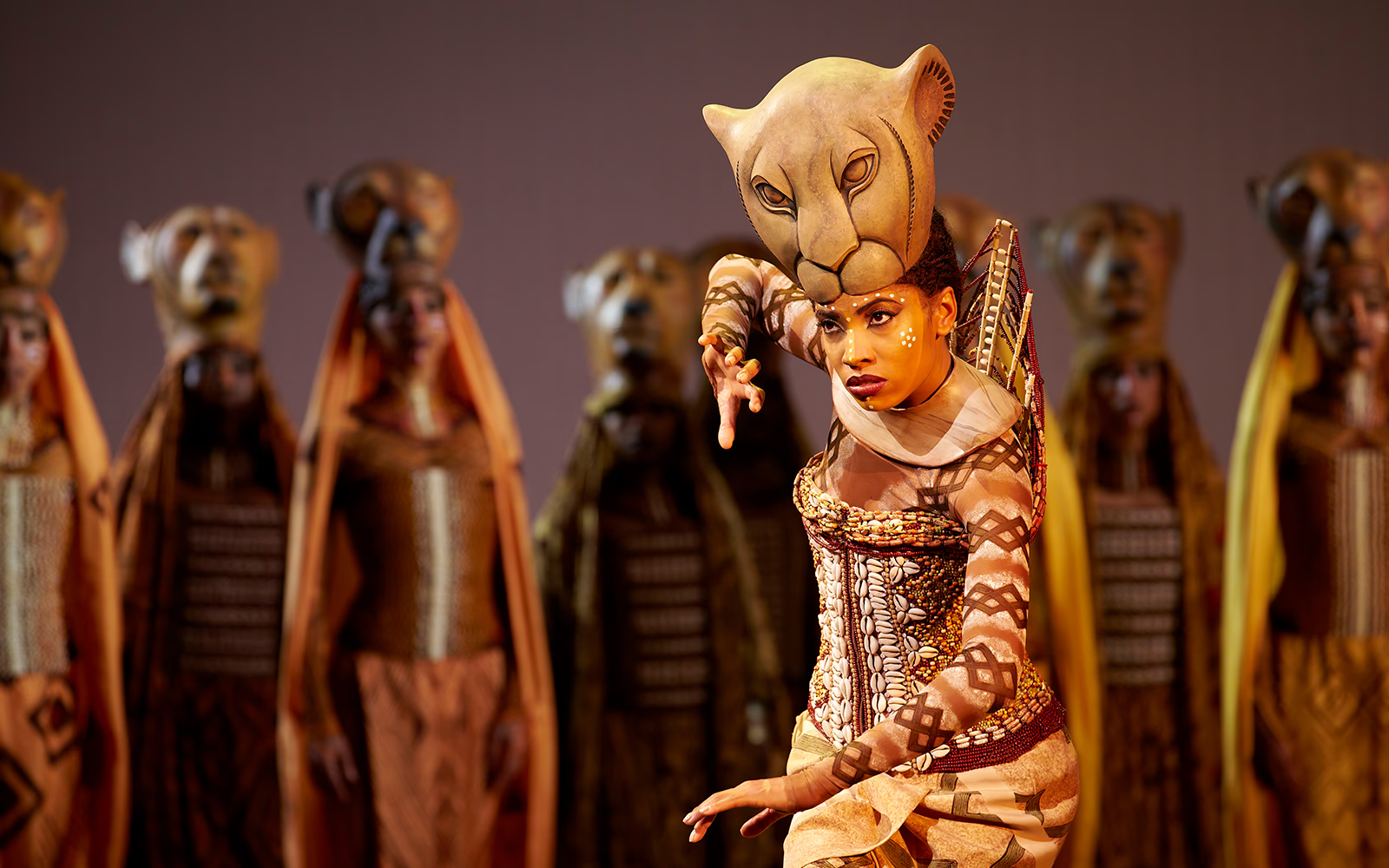
The Lion King at the Lyceum Theatre is the most reliably successful choice for visitors who want a visual and musical spectacle accessible to a wide age range. The production values are exceptional and the show's musical score, its design and its physical staging all translate well to audiences regardless of cultural background.
Wicked at the Apollo Victoria Theatre is another long-running production with a broad international following, particularly accessible to audiences who are familiar with The Wizard of Oz. The show's combination of comedy and emotional drama works for audiences across a range of ages and cultural contexts.
Les Misérables has particular appeal for visitors from Europe and particularly from France, where Victor Hugo's original novel is a cultural touchstone. The show's through-sung format and grand dramatic scale make it accessible to audiences without any prior knowledge of the musical, and its emotional impact does not depend on familiarity with the English-language theatrical tradition.
The most important practical advice for international visitors planning a theatre visit is to book in advance, ideally several weeks or months before the visit. The best central seats at popular productions sell quickly, and waiting until you arrive in London to buy tickets carries a significant risk of finding only restricted-view or very elevated positions available.
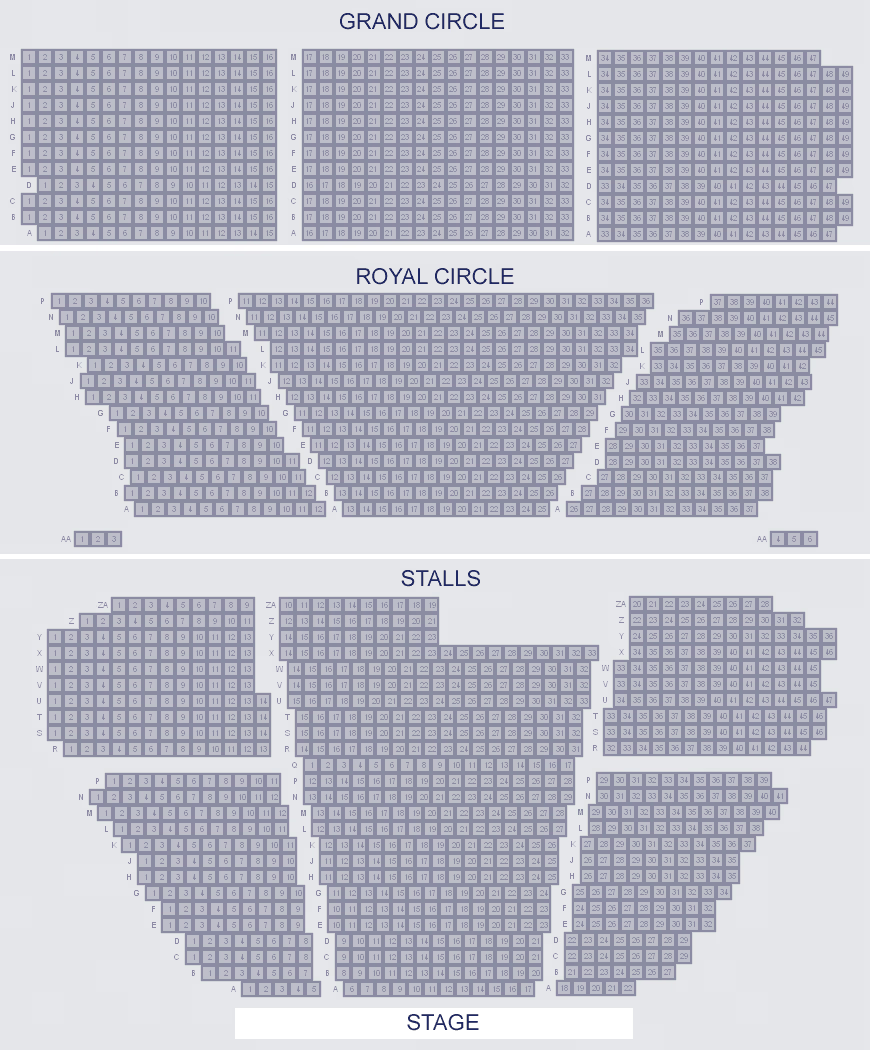
tickadoo provides full seat availability for all major West End shows with interactive seat maps, making it straightforward to choose a specific seat position before booking. For a complete view of the current West End programme across all shows and venues, BritishTheatre.com provides comprehensive listings. Both services can be accessed from outside the UK, and booking from abroad is straightforward for any major West End show.
Avoiding secondary market ticket sellers is strongly recommended. The secondary market for West End tickets includes sellers who charge significant premiums above the face value of tickets, and there is no guarantee that tickets purchased from unofficial sellers are valid. Official ticketing agents like tickadoo sell at face value or modest booking fees and can be relied on for legitimate tickets.
West End theatre etiquette is similar to what international visitors will be familiar with from other formal performance venues. Performances typically start on time, and late arrivals are usually held at the back of the house until an appropriate moment allows them to be seated. Arriving ten to fifteen minutes before the advertised start time is recommended.
Most West End shows run for two to two and a half hours with one interval. The interval, typically fifteen to twenty minutes, is taken seriously by London audiences as an opportunity to have a drink, eat something and discuss the performance so far. The interval bar culture is a distinctive feature of West End theatre-going that international visitors often find engaging.
Photography is not permitted during performances, and phone use during the show is not expected. The convention of silencing phones completely before the performance begins is consistent across all venues.
All West End productions perform in English. For visitors whose first language is not English, the level of linguistic accessibility varies by production: shows with a strong visual and musical component can be followed with reasonable clarity even without catching every word, while productions that depend primarily on spoken text require a strong command of English to appreciate fully.
Large-scale musicals like The Lion King, Wicked and Hamilton are accessible to non-native English speakers with a reasonable command of the language, particularly when the visitor has prior familiarity with the show's story. Spoken plays require a more confident level of English comprehension.
The West End is compact enough to be navigated on foot once you are in the area. From Leicester Square or Covent Garden Underground stations, every major venue is within ten to fifteen minutes on foot. The concentration of theatres in a small area makes it easy to combine a pre-theatre dinner at a nearby restaurant with attending a performance, and the Covent Garden, Soho and Strand areas around the theatre district have restaurants and bars at all price points.
Do I need to book West End tickets in advance as an international visitor? Yes. Advance booking is strongly recommended, particularly for the most popular shows. Waiting until you arrive in London significantly limits your choice of seats and productions. Booking several weeks or months in advance is standard practice.
Which West End shows are best for international visitors? Hamilton, The Lion King, Wicked and Les Misérables are consistently the most visited by international tourists. The combination of visual spectacle, strong music and accessible storytelling makes large-scale musicals the most reliably satisfying choice for visitors without a specific production in mind.
Can I buy West End tickets from outside the UK? Yes. tickadoo and the major venue box offices all allow booking from international locations. Payment by international credit or debit card is standard.
What is the best area to stay if I want to visit the West End? Hotels in central London, particularly in the Covent Garden, Soho and Victoria areas, place visitors within easy walking distance of the main West End venues. Hotels anywhere on the Central or Northern Underground lines are typically within fifteen to twenty minutes of Theatreland by public transport.
Stay in the spotlight
Get the latest theatre news, reviews and exclusive offers straight to your inbox.