Liverpool has a theatre culture that goes well beyond its role as a stopping point on national touring routes. The city has a long tradition of producing original work alongside presenting the large-scale touring productions that make up much of the commercial theatre programme outside London, and its combination of producing houses and large touring venues gives audiences a range of theatrical experiences that reflects the city's character. This guide covers Liverpool's principal theatre venues, what kinds of work each one stages, and how to approach booking for shows in the city.
The Liverpool Empire on Lime Street is the city's principal large-scale touring venue and one of the largest theatres in the United Kingdom outside London, with a capacity of over 2,000 seats. The venue presents the major national touring productions that make up the commercial theatre touring circuit: large-scale West End transfers of musicals and plays that visit the country's main touring houses on extended regional runs.
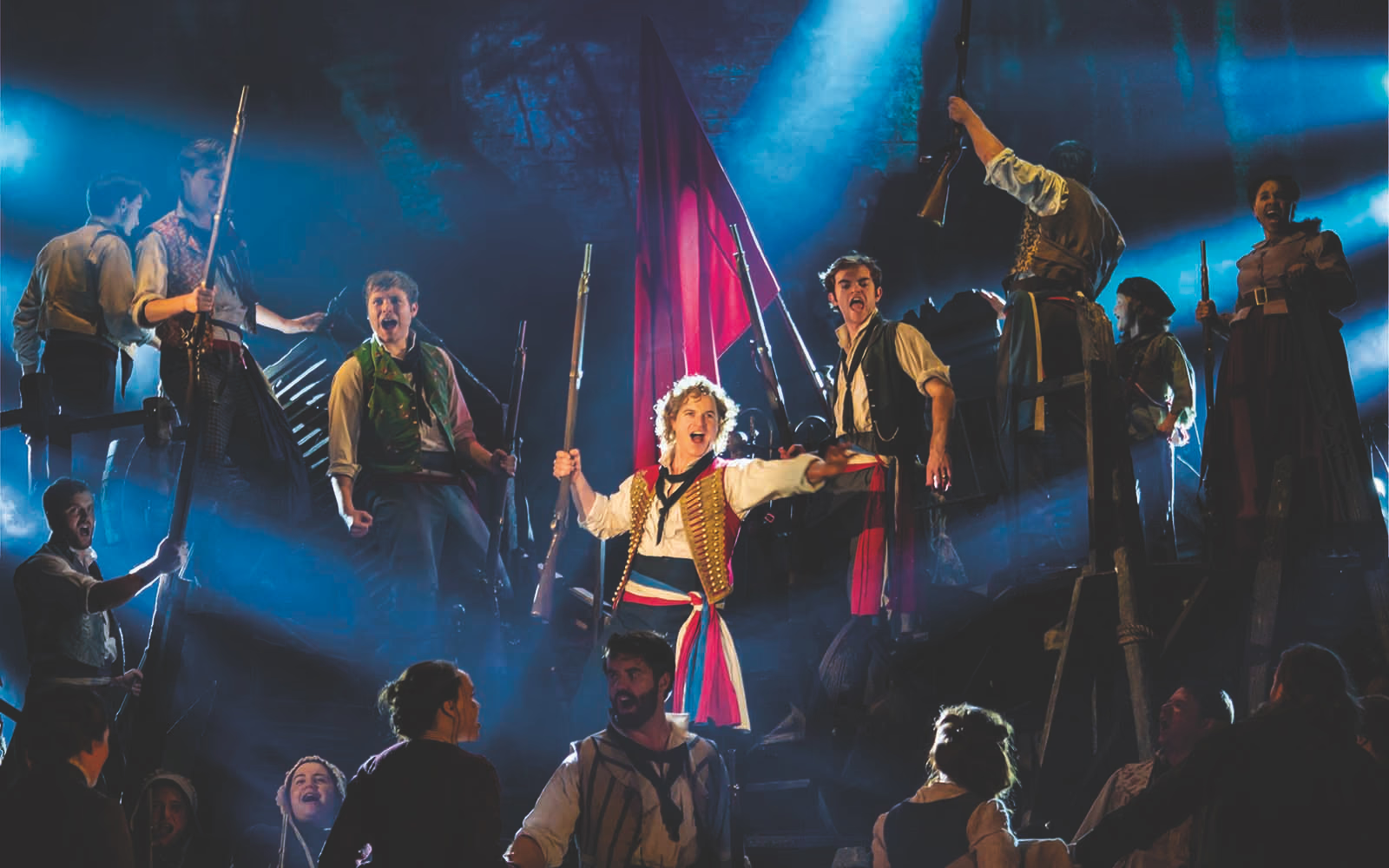
Productions like Les Misérables, Wicked and Hamilton have all visited Liverpool as part of their national tours, and the Empire's scale means it is the appropriate venue for the kind of large-scale musical productions that define the commercial touring circuit. The theatre's two circles and main stalls provide seating across all price points, and for audiences who want to see major touring productions in the north-west of England, the Empire is the primary destination.
The building itself has an Edwardian character and a history stretching back to its opening in 1925. The auditorium has been refurbished while retaining its original architectural character, and the traditional configuration of the house suits large-scale productions that require a proscenium stage with the depth and technical infrastructure to match.
The Everyman Theatre on Hope Street is a very different kind of venue from the Liverpool Empire, and a very different kind of institution. The Everyman is a producing house with a long history of making original work and staging productions that reflect the cultural life of Liverpool specifically, rather than presenting nationally touring productions that are the same in each city they visit.
The theatre is associated with a tradition of community-engaged theatre practice and with productions that draw on the stories and voices of Liverpool audiences. The building itself, which was comprehensively rebuilt and reopened in 2014, is a contemporary structure designed to reflect the theatre's relationship with its community: the facade incorporates a series of photographic portraits of Liverpool residents, underlining the institution's stated relationship with the people of the city.
The Everyman's programme typically includes new plays by British writers, productions that engage with local history or contemporary social themes, and collaborations with local communities and artists. For audiences interested in what British producing theatre looks like outside the London mainstream, the Everyman is one of the most interesting examples in the country.
The Liverpool Playhouse on Williamson Square is the sister venue to the Everyman, operated by the same organisation under the name Liverpool Theatre Trust. The Playhouse is a more traditional theatre building with a larger proscenium stage, giving it the capacity for productions that require a more conventional theatrical configuration than the Everyman's auditorium allows.
The Playhouse programmes a mix of productions, including work that originates at the Everyman and transfers to the Playhouse's larger stage, co-productions with other regional theatres and some touring work. Together, the Everyman and the Playhouse give Liverpool Theatre Trust the flexibility to stage work at different scales and in different configurations within the same city.
The Unity Theatre is a smaller, independent venue that programmes community-focused work, political theatre and productions by emerging companies. It operates with a different model from the larger commercial and subsidised venues, and its programme tends toward the experimental and the locally specific.
For audiences interested in independent and community theatre practice outside the mainstream, the Unity offers a perspective on Liverpool's theatre ecology that the larger venues do not. Productions are typically small in scale but can be ambitious in their engagement with their subject matter and their audience.
The major touring productions of West End musicals reach Liverpool primarily through the Liverpool Empire. The national touring circuit brings productions of The Phantom of the Opera, Matilda the Musical and similar shows to the Empire's stage in the same way they reach other large touring venues around the country. Ticket prices for touring productions are generally somewhat lower than equivalent West End performances, and for audiences in the north-west of England, seeing a major production in Liverpool rather than making a trip to London represents a practical and often economical alternative.
The touring circuit schedule changes throughout the year, and productions do not typically announce Liverpool dates far in advance of the booking opening. For audiences planning ahead, checking the Liverpool Empire's programme as announcements are made is the most reliable way to find out when specific shows are visiting.
The range of work available in Liverpool covers the full spectrum from large commercial touring productions at the Empire to independent new work at the Unity, with the Everyman and Playhouse occupying the space between. For audiences visiting the city, or for Liverpool residents who want to engage with the city's theatre culture more broadly, the combination of venues provides access to work in most of the principal categories of contemporary British theatre.
The city's producing houses, and the Everyman in particular, have a track record of developing work that subsequently reaches national and international audiences, and the quality of the work they programme is not simply local in its ambitions or its relevance.
For touring productions at Liverpool venues and to see the full national touring circuit schedule, BritishTheatre.com lists touring productions across the country. For the complete West End and national theatre venues programme, tickadoo covers all major London productions with seat maps and pricing. tickadoo also offers theatre gift vouchers.
What is the main theatre in Liverpool? The Liverpool Empire on Lime Street is the city's largest venue and the principal home for major touring productions in Liverpool. For producing theatre, the Everyman on Hope Street is the most significant producing house.
Does Liverpool get West End tours? Yes. The Liverpool Empire receives major national touring productions including transfers of West End musicals and plays. Productions like Les Misérables, Hamilton and Wicked have all toured to Liverpool.
What is the Everyman Theatre in Liverpool? The Liverpool Everyman is a producing theatre on Hope Street that makes original work with a strong connection to Liverpool's communities and culture. It operates alongside the Liverpool Playhouse under the Liverpool Theatre Trust and is one of the most highly regarded regional producing theatres in the country.
How do I find out what shows are coming to Liverpool? The Liverpool Empire's own website lists upcoming productions, and BritishTheatre.com provides touring production listings across the national circuit. For productions coming to Liverpool from the West End, checking when national tours are announced typically provides the earliest information about Liverpool dates.
Stay in the spotlight
Get the latest theatre news, reviews and exclusive offers straight to your inbox.