The Gillian Lynne Theatre on Drury Lane is one of the larger West End theatres, with a history that stretches back to its opening in 1973 and a particular place in the story of British musical theatre as the original London home of Cats. The theatre's current name, adopted in 2018, honours Gillian Lynne, the choreographer whose work on Cats and other productions shaped the vocabulary of West End dance. For visitors to London, the theatre sits at the northern edge of Covent Garden within easy reach of the Theatreland district, and its programming has consistently made it one of the key venues on the commercial circuit. This guide covers the theatre's history, the auditorium, seating advice and the practical information needed before arriving.
The building that now bears Gillian Lynne's name opened in October 1973 as the New London Theatre, designed by Paul Tvrtkovic and Sean Kenny to incorporate both a traditional theatrical layout and flexible staging possibilities unusual for a commercial West End venue at the time. The flexible configuration was used for various productions in the theatre's early years, but the most significant period in the building's history began in 1981 when Andrew Lloyd Webber's Cats opened on its stage.
Cats ran at the New London Theatre for twenty-one years, closing in 2002 as the longest-running musical in West End history at the time. The production, directed by Trevor Nunn and choreographed by Gillian Lynne, was staged using the theatre's flexible space in a configuration that placed the audience on three sides of a central playing area, transforming the auditorium into the oversized junkyard world of the show. The run cemented the building's place in the history of British musical theatre and made the New London Theatre internationally recognised as the venue associated with one of the most commercially successful musicals ever produced.
After Cats closed, the theatre continued to present large-scale productions, including a significant run of MJ the Musical, the biographical musical about Michael Jackson. In 2018, during a major refurbishment, the venue was renamed the Gillian Lynne Theatre in recognition of the choreographer's contribution to the theatre that had staged her most celebrated work. Lynne passed away the same year at the age of ninety-two, having choreographed more than eighty productions across her career.
The theatre's current configuration has returned to a more conventional end-on layout, with the full capacity of the house used for large-scale musical productions that suit its size and technical infrastructure.
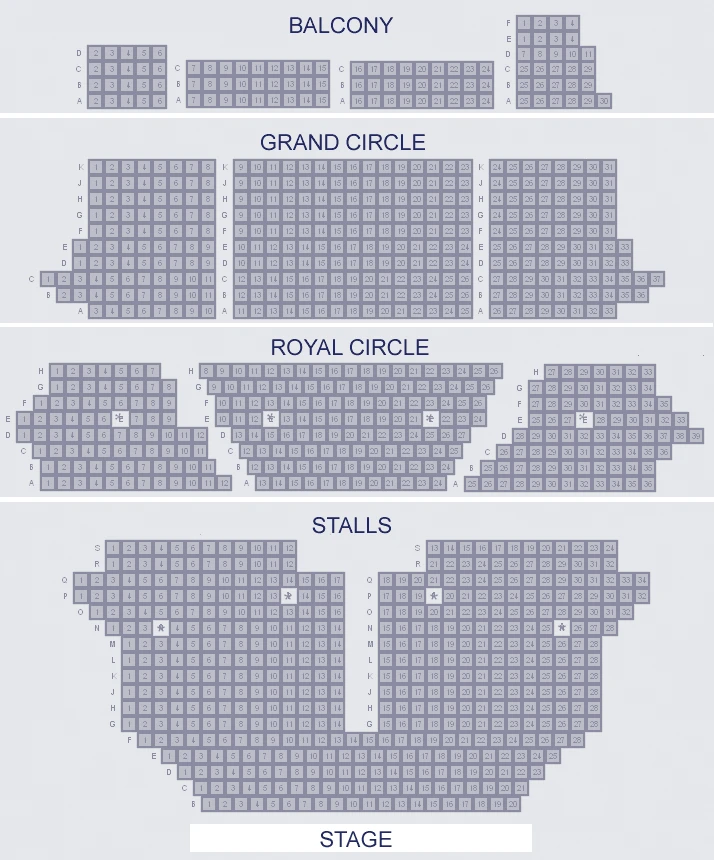
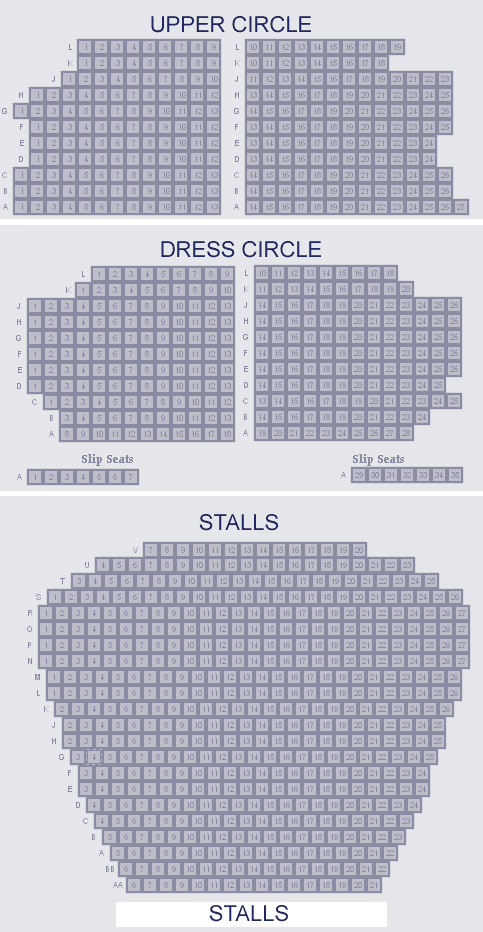
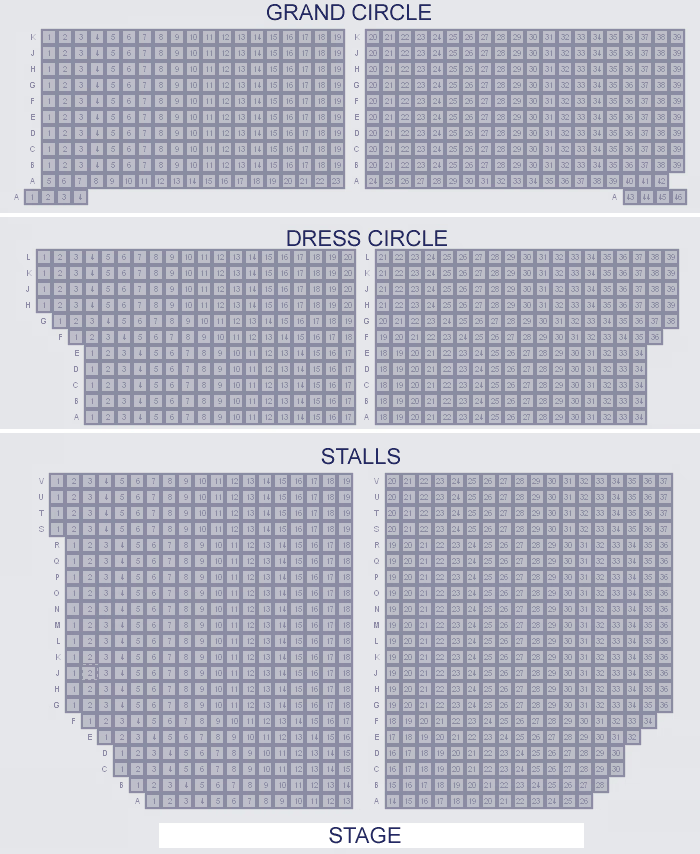
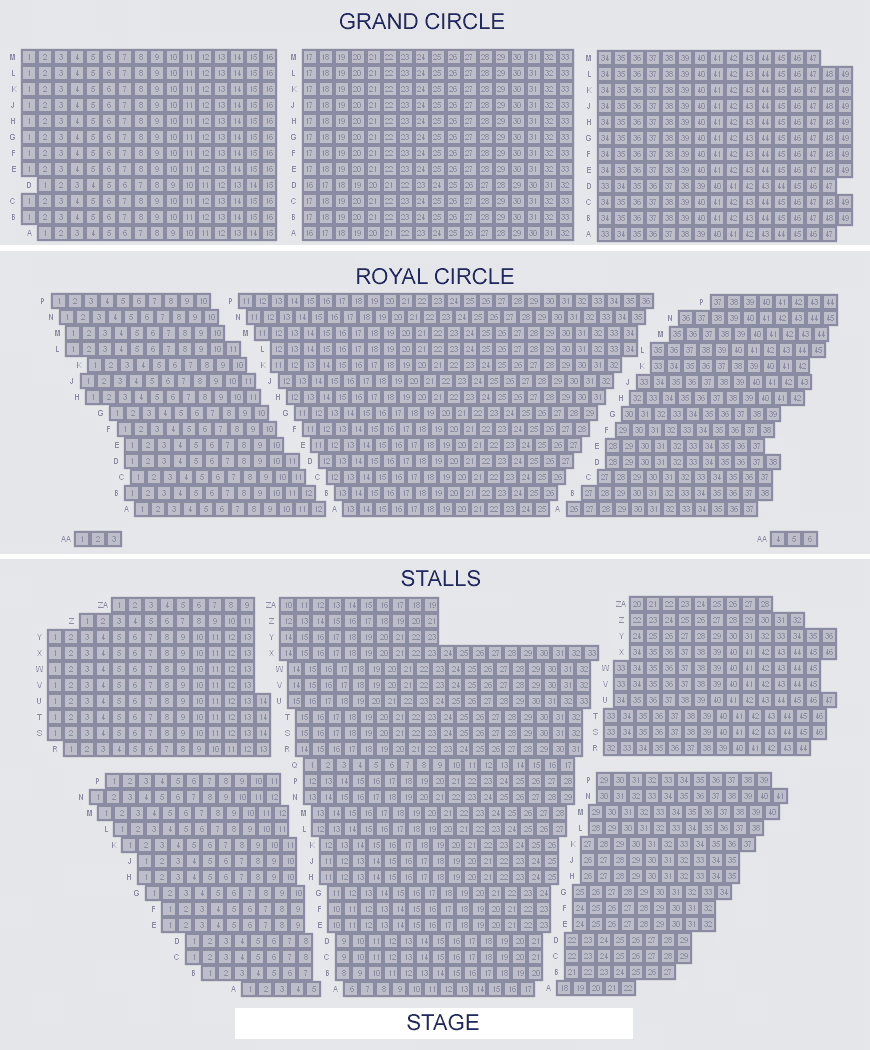
The Gillian Lynne Theatre has a capacity of approximately 1,160 seats across three levels: Stalls, Circle and Upper Circle. The auditorium in its current configuration follows a traditional end-on arrangement with a proscenium stage, though the building's history of flexible staging is reflected in its relatively wide stage opening and the flexible architectural elements that supported the in-the-round Cats configuration.
The stage is large and technically well-equipped, with a substantial fly tower and the infrastructure to support large-scale productions requiring significant scenic complexity. Productions staged here typically take advantage of the stage's depth and height, and the theatre's scale suits the kind of large-format musical that defines the commercial West End circuit.
The width of the auditorium is notable: the stalls spread broadly across the stage rather than running very deep, which means that side seats are in relatively good proximity to the action even when not centrally located. The raked Stalls floor provides reasonable sightlines throughout the level, and the Circle above is at a moderate elevation relative to the stage.
Stalls: The central blocks of the Stalls from approximately rows D to L provide the strongest combination of proximity and perspective in the house. The front Stalls rows offer significant proximity to the stage but may require looking upward for set elements and lighting effects at height. In productions with significant staging across the full stage width, the central mid-Stalls position gives the best overview of the full picture. Side Stalls positions at the extreme edges of the house can involve angle, particularly for action staged on the far side of the stage.
Circle: The Circle at the Gillian Lynne Theatre is elevated to a moderate degree and provides a clear overview of the stage that many audiences find preferable to the closer but more acute angle of the front Stalls. The central Circle blocks offer a wide and unimpeded view of the full stage, and the acoustic conditions at this level are generally favourable. Central Circle seats in the front few rows are among the most valued in the house.
Upper Circle: The Upper Circle is at a more significant height from the stage than the levels below and involves a steeper angle of view. Seats are correspondingly lower in price and suitable for audiences where cost is the priority. Central positions in the Upper Circle have the best conditions within this level; extreme side positions can involve restricted sightlines.
For Starlight Express, the central Stalls and central Circle positions are the most recommended, as the production's staging makes use of the full stage width and the overhead and side elements that benefit from a mid-distance view rather than the extreme proximity of the very front rows.
The Gillian Lynne Theatre building is located on the corner of Drury Lane and Parker Street, and the exterior reflects its 1970s construction in a commercial architectural style that differs from the Edwardian and Victorian theatres that make up much of the Theatreland stock. The interior has been refurbished on multiple occasions, with the 2018 renovation updating the facilities and the decor while retaining the theatrical character of the main auditorium.
The foyer and bar areas at the Gillian Lynne Theatre operate across multiple levels, with facilities at Stalls, Circle and Upper Circle levels. Pre-performance drinks can be ordered in advance through the venue's own service at some productions to reduce queuing at the interval. The theatre's facilities are standard for a large West End venue of its capacity.
The Gillian Lynne Theatre is on Drury Lane in the Covent Garden area of central London. The nearest Underground stations are Covent Garden (Piccadilly line), approximately five minutes on foot, and Holborn (Central and Piccadilly lines), approximately eight minutes on foot. The theatre is also within walking distance of Charing Cross and Waterloo mainline stations for audiences arriving by national rail.
The Drury Lane location places the Gillian Lynne Theatre within the main Theatreland area, close to other significant West End venues including the Theatre Royal Drury Lane and the numerous houses around Shaftesbury Avenue and the Strand. The Covent Garden area provides a wide range of pre-theatre dining options within a short walk of the building.
There is no dedicated parking at the theatre. For audiences arriving by car, the nearest public car parks are in the Covent Garden area, but public transport is strongly recommended for the location. Drury Lane is a busy central London street, and the theatre sits on a route with good bus connections from across the city.
The Gillian Lynne Theatre has hosted a series of major long-running productions since Cats ended its run in 2002. The theatre's scale and technical infrastructure suit large-scale musicals, and the productions that have occupied it reflect the commercial expectations of a venue this size.
MJ the Musical, which transferred to the Gillian Lynne Theatre following its Broadway run, brought a significant production to the venue and demonstrated the theatre's capacity to host high-profile incoming transfers from the commercial American circuit. The production ran at the venue as part of the show's international roll-out.
Starlight Express, the Andrew Lloyd Webber musical with a new production, has brought another chapter to the theatre's history, returning one of the most technically ambitious shows in the musical theatre catalogue to the venue's stage. The connection between the Gillian Lynne Theatre and Lloyd Webber's work, which began with Cats, continues through this new production.
For tickets to productions at the Gillian Lynne Theatre and across the West End, tickadoo provides seat maps, pricing and availability for all major London venues. For the complete current West End programme across all London theatre venues, BritishTheatre.com lists all productions with full booking details. tickadoo also offers theatre gift vouchers.
What is the Gillian Lynne Theatre? The Gillian Lynne Theatre on Drury Lane is a large West End theatre with a capacity of approximately 1,160 seats. Originally opened in 1973 as the New London Theatre, it was renamed in 2018 to honour choreographer Gillian Lynne. It is best known as the original London home of Cats, which ran there for twenty-one years.
What was the Gillian Lynne Theatre called before? The theatre opened in 1973 as the New London Theatre and was renamed the Gillian Lynne Theatre in 2018, following a major refurbishment and as a tribute to the choreographer who worked on Cats and other productions.
What show ran longest at the Gillian Lynne Theatre? Cats ran at the venue from 1981 to 2002, a period of twenty-one years that made it the longest-running musical in West End history at the time of its closure. The show was directed by Trevor Nunn and choreographed by Gillian Lynne, after whom the theatre is now named.
Where is the Gillian Lynne Theatre? The Gillian Lynne Theatre is on Drury Lane in the Covent Garden area of central London. The nearest Underground stations are Covent Garden (Piccadilly line) and Holborn (Central and Piccadilly lines), both within approximately five to eight minutes on foot.
What are the best seats at the Gillian Lynne Theatre? The central Stalls from approximately rows D to L and the central front rows of the Circle provide the strongest sightlines and acoustic conditions in the house. The central Circle offers a good overview of the full stage width that some audiences prefer to the proximity of the Stalls.
Stay in the spotlight
Get the latest theatre news, reviews and exclusive offers straight to your inbox.