Live orchestral music is one of the qualities that distinguishes theatre from every other form of entertainment, and it is one that the best West End productions take full advantage of. The experience of hearing a full orchestra play beneath or alongside a performance is qualitatively different from recorded accompaniment: the sound has a physical presence, a warmth and an unpredictability that no recorded track can replicate. This guide identifies the West End shows where the live orchestra is a significant part of what makes the production worth seeing, from large pit orchestras playing grand symphonic scores to smaller onstage bands that place the musicians at the centre of the dramatic world.
The relationship between live orchestral performance and theatrical experience is fundamental to what musical theatre is. When a large orchestra launches into an overture in a darkened theatre, the event begins before the curtain rises: the music announces the emotional territory of the evening and creates a physical sensation that no recording can produce at theatre volume in a live space.
For audiences who are deciding between productions, or who are attending a show for the first time, the presence of a live orchestra is a factor worth weighing. The budget and ambition required to maintain a full live pit orchestra is significant, and productions that do so typically do so because the music is central to the show's identity. Where that is the case, the result is an audio experience that forms a genuine part of why the evening is worth attending.
Hadestown at the Lyric Theatre is distinguished among current West End productions by the fact that its band is visible on stage throughout the performance. The musicians are not hidden in a pit beneath the audience but are placed within the dramatic world of the show, positioned on the set and visible to the audience as part of the theatrical picture.
This staging choice is not merely aesthetic but reflects the nature of the material. Anaïs Mitchell's folk and blues-influenced score for Hadestown is performed by a small ensemble whose sound defines the show's atmosphere: dusty, intimate, melancholy and alive. Hearing this music performed live and seeing the performers play it as part of the dramatic world of the production gives the experience a quality that is quite distinct from any conventional pit orchestra arrangement. For audiences interested in how theatre can use music in structurally inventive ways, Hadestown is the most distinctive example in the current West End programme.
Hamilton at the Victoria Palace Theatre is driven by a score that is extraordinary in its musical range: hip-hop, R&B, jazz, show tunes and ballads are all woven into a unified dramatic arc, and the live pit orchestra that performs it is one of the production's defining assets.
The score's complexity is one of the most demanding in contemporary musical theatre, and hearing it performed live rather than pre-recorded makes a significant difference to the theatrical experience. The Victoria Palace Theatre provides excellent acoustics, and the orchestra's presence in the pit gives the production a physicality and energy that is fundamental to its impact. For audiences who are attending Hamilton for the first time, the quality of the live musical performance is as important to understanding why the show works as the performances on stage.
Les Misérables has one of the grandest orchestral scores in the musical theatre canon, and the West End production maintains the full musical forces that the show requires to deliver its emotional impact. Claude-Michel Schönberg's score is symphonic in its ambition, using orchestral texture and dynamics to carry the emotional weight of a narrative that spans decades and involves dozens of characters.
The famous melodic themes of the show are shaped by the full orchestral sound: the brass, strings and woodwind writing is central to how the music lands at the moments the show depends on. In a large house with a full orchestra, the effect of the major musical climaxes is visceral in a way that smaller productions or reduced arrangements cannot achieve. Les Misérables is one of the productions where attending a full-scale West End version rather than a touring production with reduced forces makes the most significant difference to the experience.
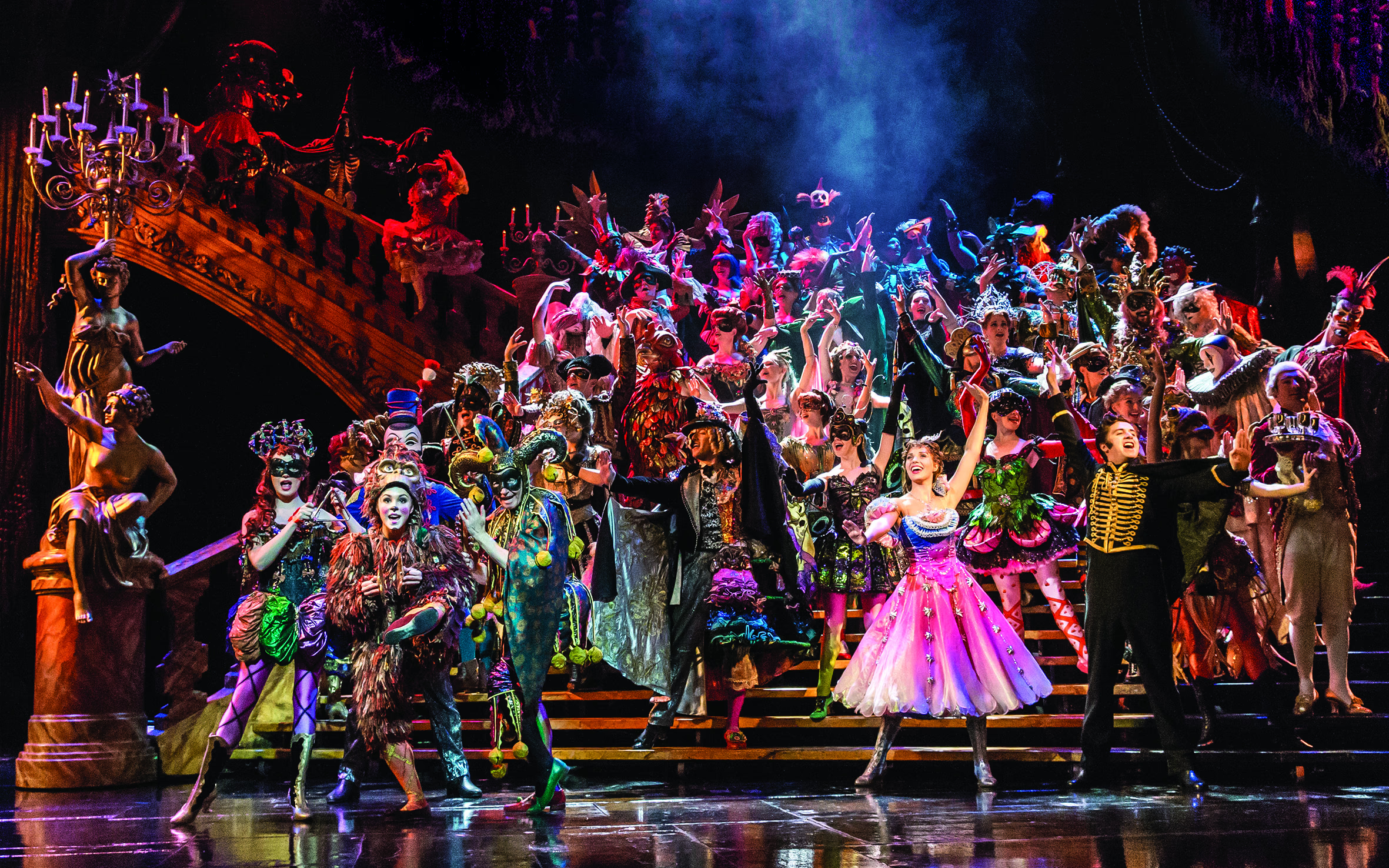
The Phantom of the Opera has one of the largest pit orchestras in West End musical theatre, and the Andrew Lloyd Webber score requires the full forces to achieve its characteristic combination of operatic grandeur and popular melody. The famous overture, with its organ and full orchestral response, is one of the defining musical moments of West End theatre, and it depends entirely on the scale and quality of live performance to land with the impact it has.
The sonic landscape of the show is large-scale in a way that reflects its dramatic ambitions: the underground world of the Phantom is rendered in music that fills the theatre and creates an environment of heightened emotional intensity. For audiences who want to experience a musical on a grand orchestral scale, The Phantom of the Opera remains one of the most compelling options in the West End.
Wicked at the Apollo Victoria Theatre fields a large live orchestra for Stephen Schwartz's lush, harmonically rich score. The show's musical identity depends on the quality of its orchestral playing: the voice parts in Wicked are demanding, and the orchestral writing that supports and counterpoints those parts is an integral component of why the score works.
The Apollo Victoria Theatre has a large stage and auditorium that suits the scale of the production, and the acoustics support the orchestral sound clearly across all parts of the house. The major musical numbers in Wicked are among the best-known in contemporary musical theatre, and in a live performance with full orchestral forces they carry a different weight from any recording. For audiences who know the show primarily through recordings or film, the experience of hearing it performed live with a full pit orchestra is a significant step up.
The productions listed here represent different relationships between live music and theatrical experience. Hadestown is the choice for audiences interested in an onstage band that is part of the dramatic world; Hamilton and Wicked are the strongest options for audiences interested in contemporary scores of exceptional compositional quality; Les Misérables and The Phantom of the Opera are the productions where large-scale orchestral forces are most central to the emotional impact.
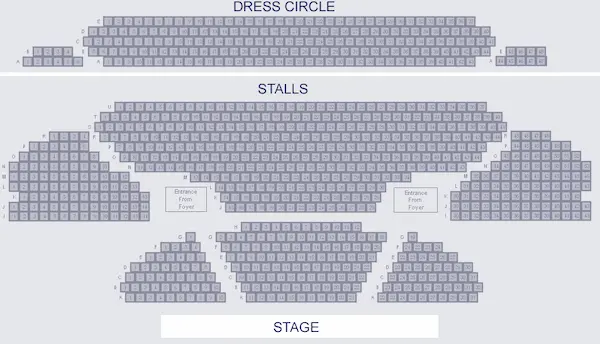
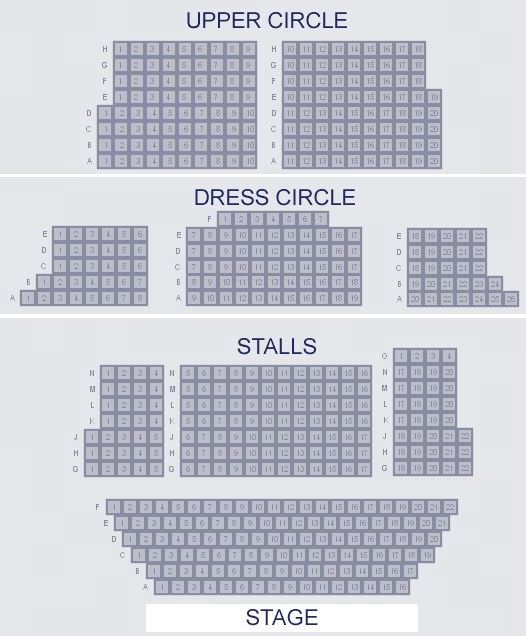
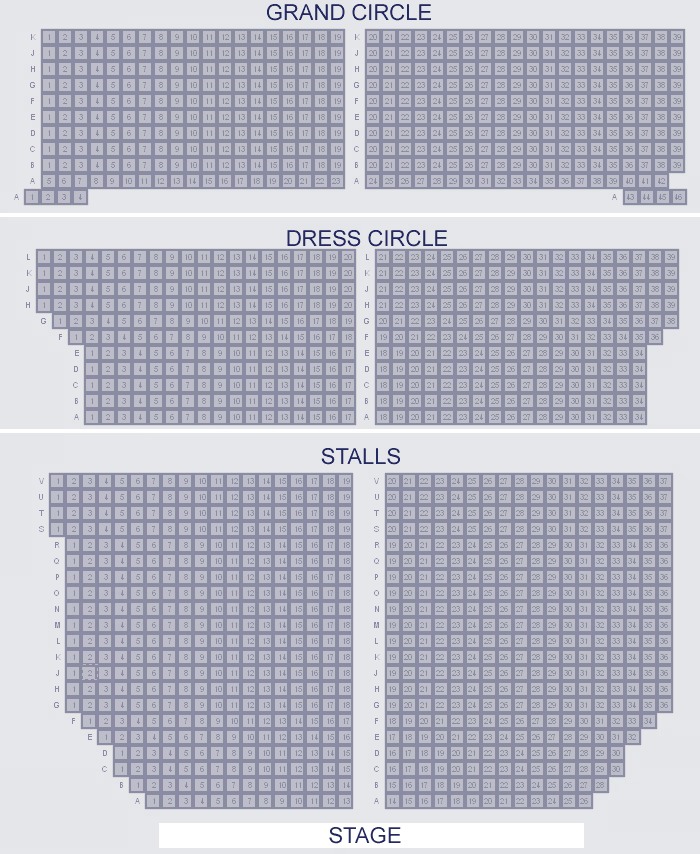
All of these shows benefit significantly from being seen and heard in good acoustic conditions, and central seats at Stalls or Dress Circle level tend to offer the most even orchestral sound in most West End houses.
For tickets to all the productions featured in this guide, tickadoo covers the full West End programme with seat maps and pricing at every level. For the complete listing of what is currently running across the West End, BritishTheatre.com provides full production details. tickadoo also offers theatre gift vouchers for occasions where flexibility of choice is more useful than a pre-booked ticket.
Which West End shows have live orchestras? All of the major musicals in the West End use live orchestras, though the size of the ensemble varies. Productions like Les Misérables, The Phantom of the Opera and Wicked field particularly large orchestral forces. Hadestown is distinctive for placing its band visibly on stage.
Is the orchestra visible in West End productions? In most West End productions, the orchestra is in a pit beneath the stage and not visible to the audience. Hadestown is an exception: its band is positioned on stage within the dramatic world of the show and visible throughout the performance.
Do all West End musicals use live musicians? Major West End productions use live musicians, though the size of the ensemble varies by production and venue. Long-running shows and large-scale productions maintain full pit orchestras; some smaller productions use smaller ensembles. The prestige West End productions featured in this guide all use live orchestral forces.
What is the best West End show for orchestral music? The answer depends on what kind of score you prefer. For grand symphonic scale, Les Misérables and The Phantom of the Opera are the strongest options. For a distinctive onstage band experience, Hadestown is unique. For contemporary score quality, Hamilton is exceptional.
Stay in the spotlight
Get the latest theatre news, reviews and exclusive offers straight to your inbox.