A significant number of the most enduring West End shows have their origins in published literary works. Novels, novellas, biographies and short fiction have all served as source material for musicals and plays that subsequently found long lives on the West End stage, and the relationship between the page and the stage has produced some of the most celebrated productions in the history of British musical theatre. This guide looks at the West End shows with the most significant literary sources and what the adaptations do with their material.
Les Misérables is based on Victor Hugo's 1862 novel of the same name, one of the most substantial works of nineteenth-century French literature. Hugo's novel traces the story of Jean Valjean, a man released from years of unjust imprisonment who attempts to rebuild his life while pursued by the obsessive inspector Javert. Around this central narrative, the novel builds an extensive portrait of Paris across several decades, weaving in the lives of the Thénardier family, the young revolutionary Marius and the orphaned Cosette.
The musical, with music by Claude-Michel Schönberg and lyrics by Alain Boublil, premiered in Paris in 1980 and in London in 1985 at the Barbican before transferring to the West End. The adaptation necessarily condenses a novel of nearly 1,500 pages into a theatrical form, and the choices made in what to include and what to omit define the musical's particular emphases. The political dimension of the original, including the June Rebellion of 1832, remains present; the picaresque breadth of Hugo's panoramic vision is achieved through the through-composed musical structure.
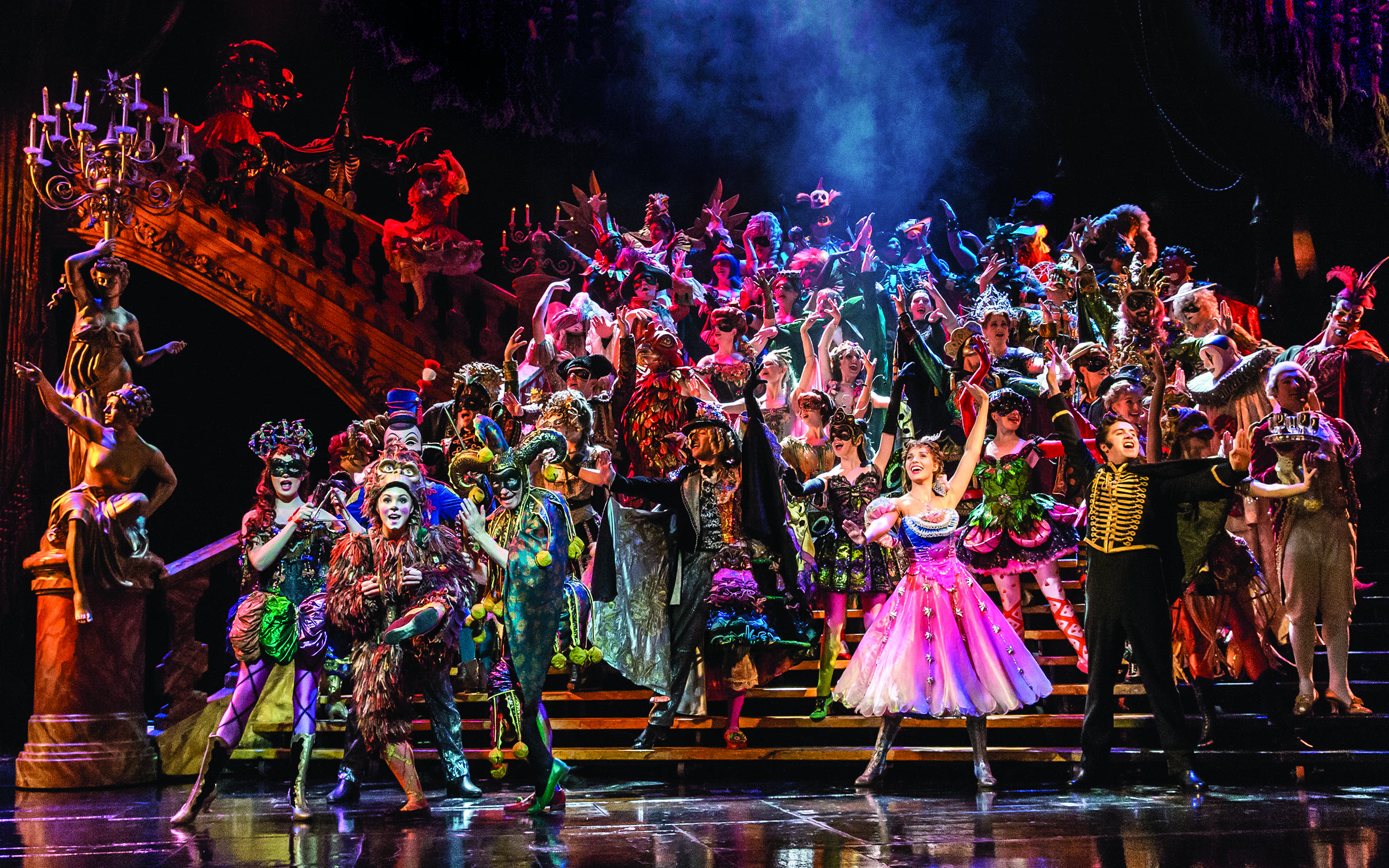
The Phantom of the Opera is based on Gaston Leroux's 1910 French novel, a Gothic mystery set in and beneath the Paris Opera House. The novel's disfigured composer who haunts the opera house and becomes obsessed with a young soprano provided the basic dramatic premise for Andrew Lloyd Webber's musical, which opened in the West End in 1986.
The musical takes the romantic and melodramatic elements of the novel as its primary material, amplifying the relationship between the Phantom, Christine and Raoul and building these into a three-cornered emotional structure. The operatic setting allows the show to use the conventions of grand opera as both subject matter and stylistic reference, giving the score a range and scale appropriate to its theatrical context.
Matilda the Musical is based on Roald Dahl's 1988 novel Matilda, one of the most popular works of British children's literature. Dahl's story of an extraordinarily gifted child whose intelligence and moral clarity stand in comic contrast to the venality and stupidity of the adults around her provided the Royal Shakespeare Company and composer Tim Minchin with rich material for theatrical adaptation.
The show preserves the darkly comic tone of Dahl's original, including the genuine menace of Miss Trunchbull and the pathos of Miss Honey's situation, while adding layers of theatrical invention not present in the book. The musical won multiple Olivier Awards following its West End opening in 2011 and became one of the most critically successful adaptations of a children's book in theatrical history.
Hamilton is based primarily on Ron Chernow's 2004 biography Alexander Hamilton, a substantial scholarly work that prompted Lin-Manuel Miranda to develop one of the most discussed musicals of recent decades. Chernow's biography covers Hamilton's life from his Caribbean origins through his role as a Founding Father of the United States, his work in establishing the country's financial system and his death in a duel with Aaron Burr.
Miranda's show uses hip-hop and contemporary popular musical forms to tell a story set in the eighteenth century, creating a deliberate and productive tension between historical subject matter and contemporary musical language. The adaptation's core dramatic choices, including the foregrounding of Hamilton's immigrant origins and the casting of actors of colour in the Founding Father roles, emerge directly from the source material's emphasis on overlooked aspects of the historical narrative.
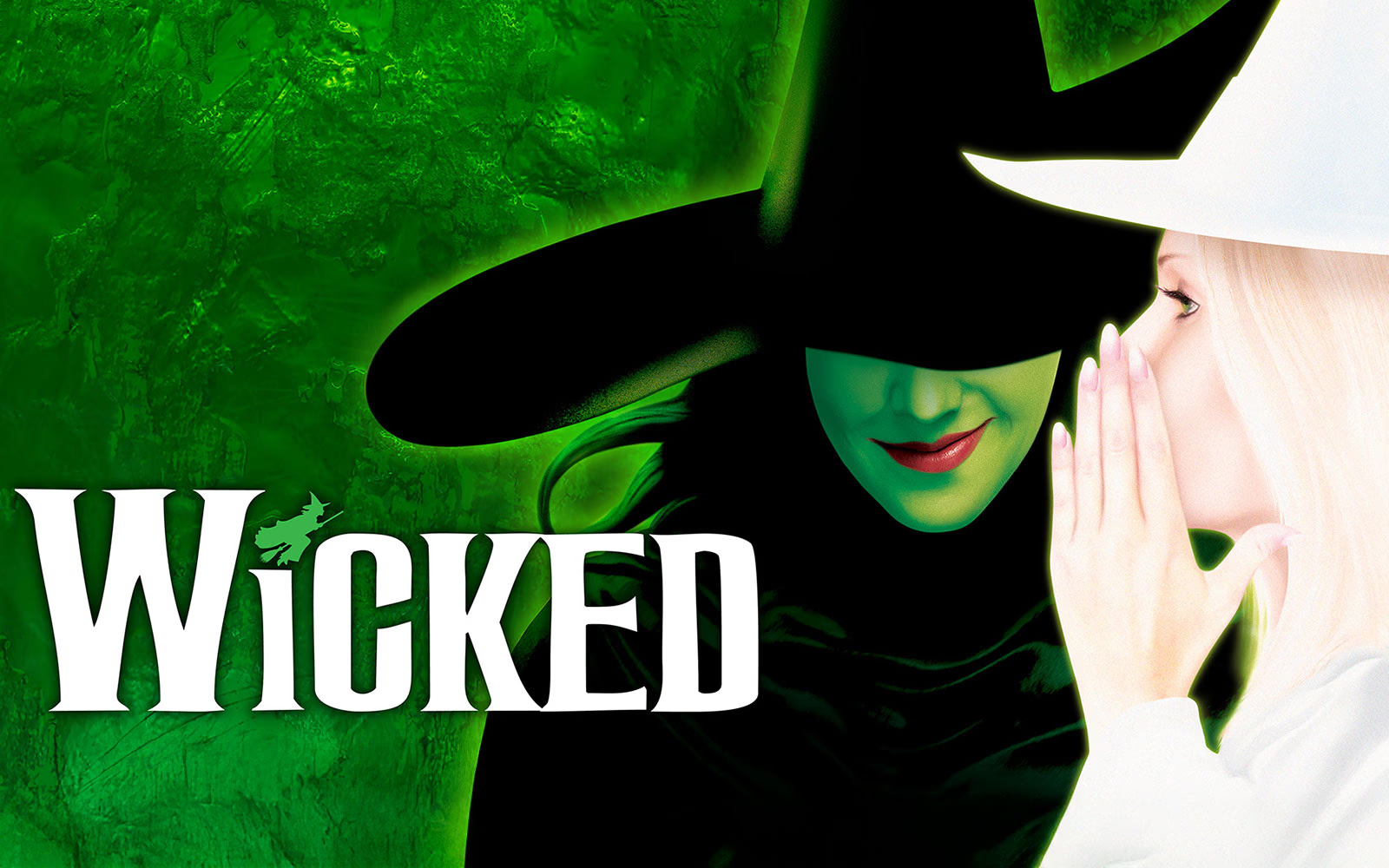
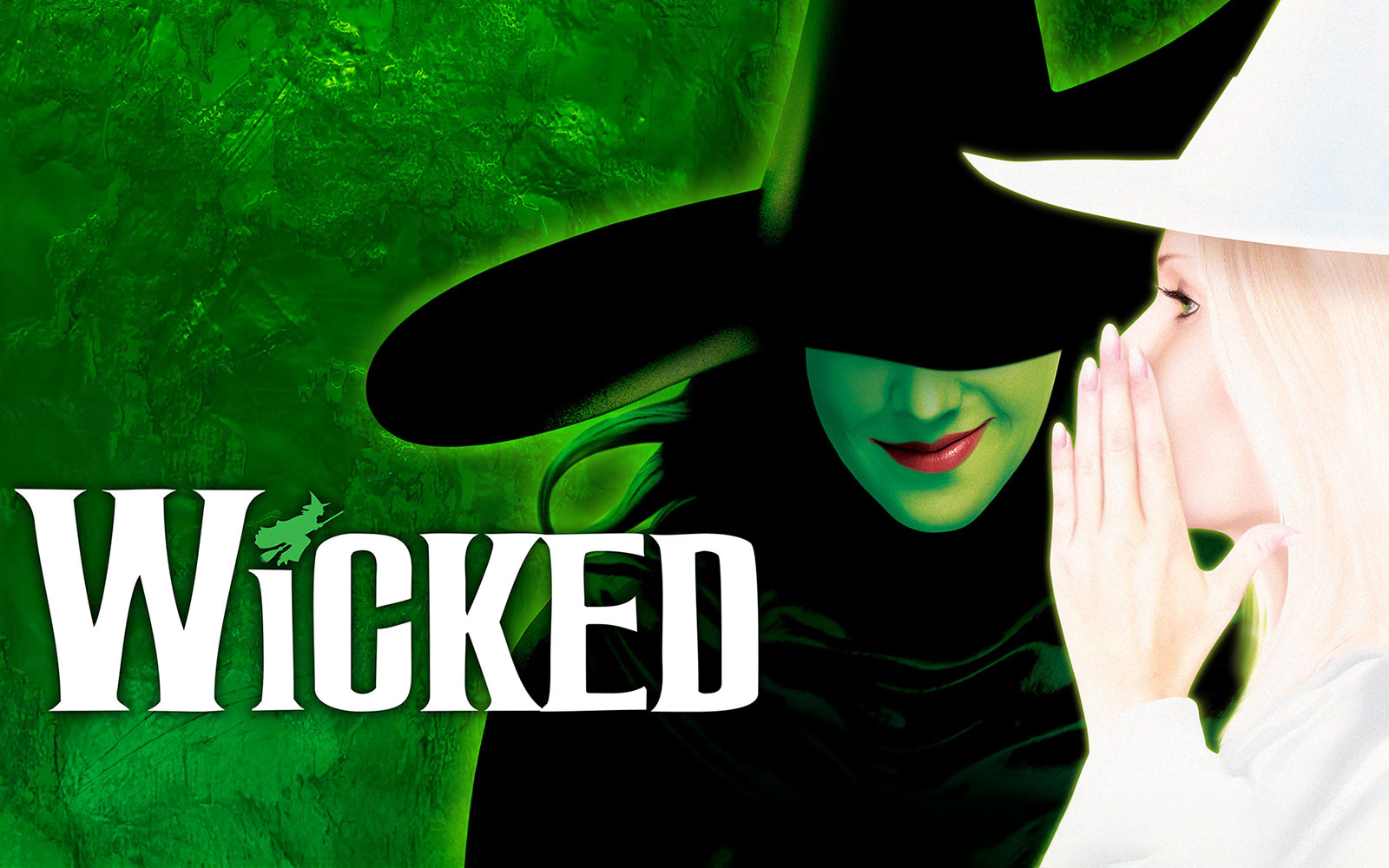
Wicked takes its source material from Gregory Maguire's 1995 novel Wicked: The Life and Times of the Wicked Witch of the West, a revisionist retelling of L. Frank Baum's Oz world from the perspective of Elphaba, the witch who became the villain of the original story. Maguire's novel is a complex work addressing questions of political oppression, identity and the construction of evil; the musical adaptation simplifies this into a more accessible narrative focused on the friendship and rivalry between Elphaba and Glinda.
The show uses the transformation of its source material as a model for its own thematic content: just as the original novel asks audiences to reconsider received judgements about villainy, the musical asks audiences to reconsider the simplified narratives they have absorbed about ambition, difference and the cost of conformity.
The best book-to-stage adaptations tend to find what is essentially theatrical in their source material rather than trying to transfer everything the original contains. Novels operate on time and inner life in ways that the stage handles differently, and the best adaptations make creative decisions about which elements of a book to foreground, which to condense and which to transform into theatrical equivalents that cannot exist on the page.
The shows above have in common that their sources provided compelling characters, strong emotional arcs and subject matter that rewards theatrical treatment. In each case the adaptation is a creative response to the source rather than a straightforward transfer, and the differences between book and show often illuminate something significant about both.
For tickets to the literary adaptations and the full current West End programme, tickadoo provides seat maps, pricing and availability across all London theatre venues. The complete current listing with full production details is available at BritishTheatre.com. tickadoo also offers theatre gift vouchers.
Which West End shows are based on novels? Several of the most enduring West End productions are based on novels: Les Misérables (Victor Hugo), The Phantom of the Opera (Gaston Leroux), Matilda the Musical (Roald Dahl) and Wicked (Gregory Maguire) are among the most notable examples. Hamilton is based primarily on a biography rather than a novel.
How faithfully do West End shows follow their source books? Adaptations vary considerably in their fidelity to source material. Some shows closely follow their source's plot and tone; others make significant changes to emphasis, characters or narrative structure. The best adaptations use the theatrical form to find something that the book could not express, rather than attempting a direct transfer of literary content to the stage.
Are book adaptations better or worse than original musicals? The question of whether an adaptation or an original work is preferable is not determined by the source but by the quality of the creative response. Some of the strongest works in the musical theatre canon are adaptations; so are some of the weakest. The source material provides a starting point, but what the creative team does with it determines the result.
Stay in the spotlight
Get the latest theatre news, reviews and exclusive offers straight to your inbox.