The music in a musical is not merely decoration: it is the form through which characters articulate what cannot be said in spoken dialogue, and the quality of the score is the most reliable indicator of whether a musical will last. For audiences who attend the West End primarily as music lovers rather than as general theatre-goers, some shows reward the experience in musical terms far more than others. This guide covers the productions that are most worth seeing specifically for the quality, distinctiveness and ambition of their scores.
Hamilton at the Victoria Palace Theatre has one of the most musically ambitious scores in contemporary musical theatre. Lin-Manuel Miranda's composition draws on hip-hop, R&B, pop and Broadway traditions simultaneously, and the density of the writing means that repeated listenings reveal material that is not immediately apparent on first exposure. The show runs for approximately two and a half hours without a single spoken scene: everything is sung, rapped or set to music, and the musical language shifts between styles to reflect character, situation and thematic weight.
For music lovers, Hamilton is interesting because it treats hip-hop as a compositional system rather than a stylistic overlay. The show's use of counterpoint, in which characters sing different melodies simultaneously that combine into a unified musical texture, places it in a tradition of musical theatre writing with genuine compositional ambition. Songs including "Non-Stop," "The Room Where It Happens" and "Satisfied" reward close listening in ways that go beyond the theatrical context.
Les Misérables offers a different kind of musical ambition from Hamilton: a sweeping through-composed score in which almost the entire three-hour running time is set to music. Claude-Michel Schönberg's score, with English lyrics by Herbert Kretzmer, covers a range from intimate character songs to large-scale ensemble sequences, and the demands it places on its cast are among the most extensive in the West End repertoire.
The score of Les Misérables has an architectural quality: it builds across the full evening, with themes returning in transformed contexts as the characters' situations develop. For audiences who appreciate the structural dimension of musical composition, this is one of the shows most worth attending for purely musical reasons. The emotional weight of songs including "I Dreamed a Dream," "Bring Him Home" and "One Day More" derives in part from having heard the themes in earlier, differently contextualised forms.
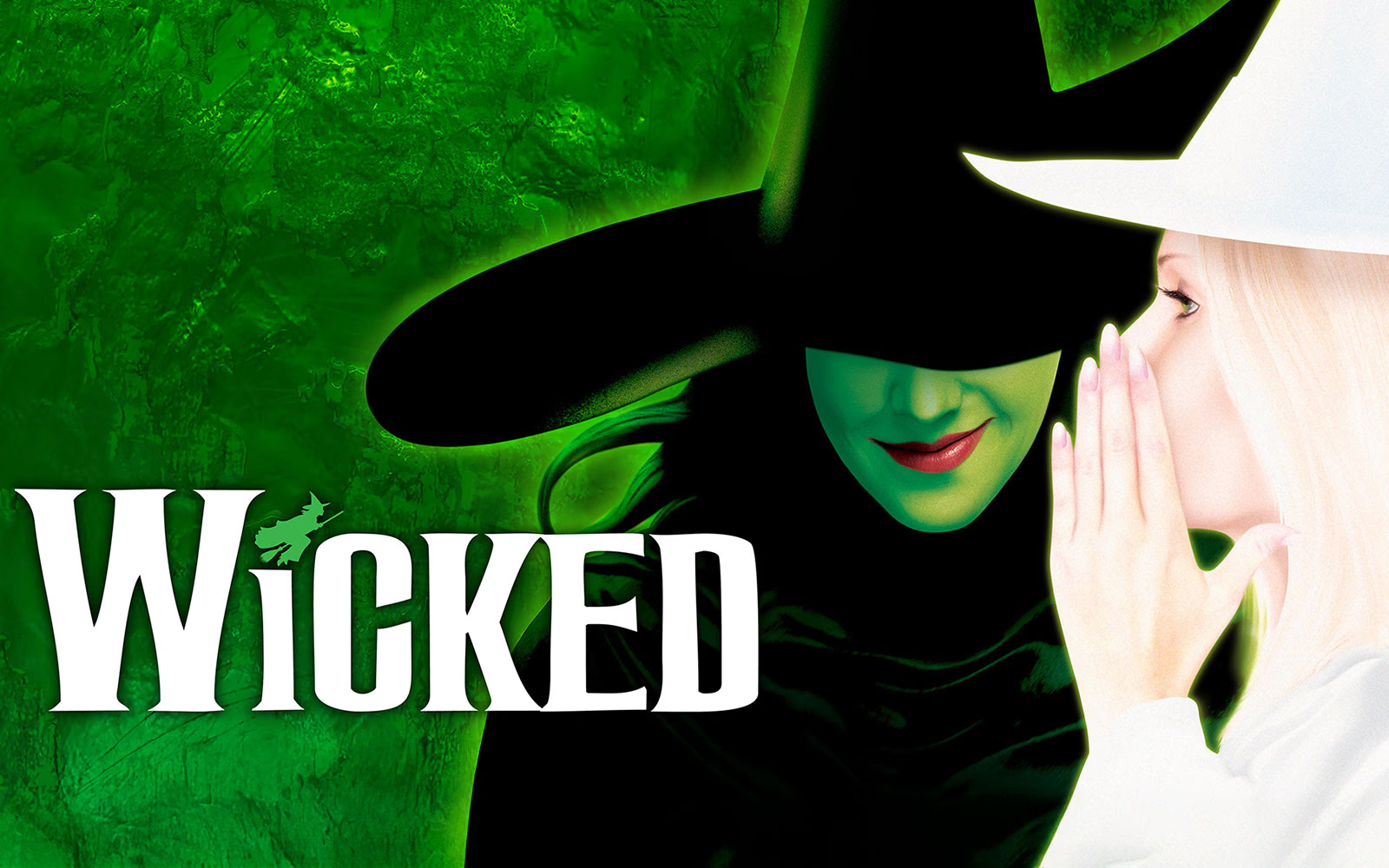
Wicked at the Apollo Victoria Theatre features one of the most enduringly popular scores in the West End repertoire. Stephen Schwartz's compositions draw on pop, rock and Broadway idioms in a way that makes them accessible to audiences who do not usually follow musical theatre, and the show's best songs function as self-contained pieces that have had a life well beyond the production itself.
"Defying Gravity," the first act finale, is among the most technically demanding and theatrically effective sequences in current West End programming. "Popular" and "What Is This Feeling?" demonstrate Schwartz's skill with comic character writing. "For Good" carries the emotional resolution of the show's central relationship. The score as a whole is consistent in quality, and for audiences who want a musical with an immediately pleasurable and carefully constructed set of songs, Wicked delivers reliably.
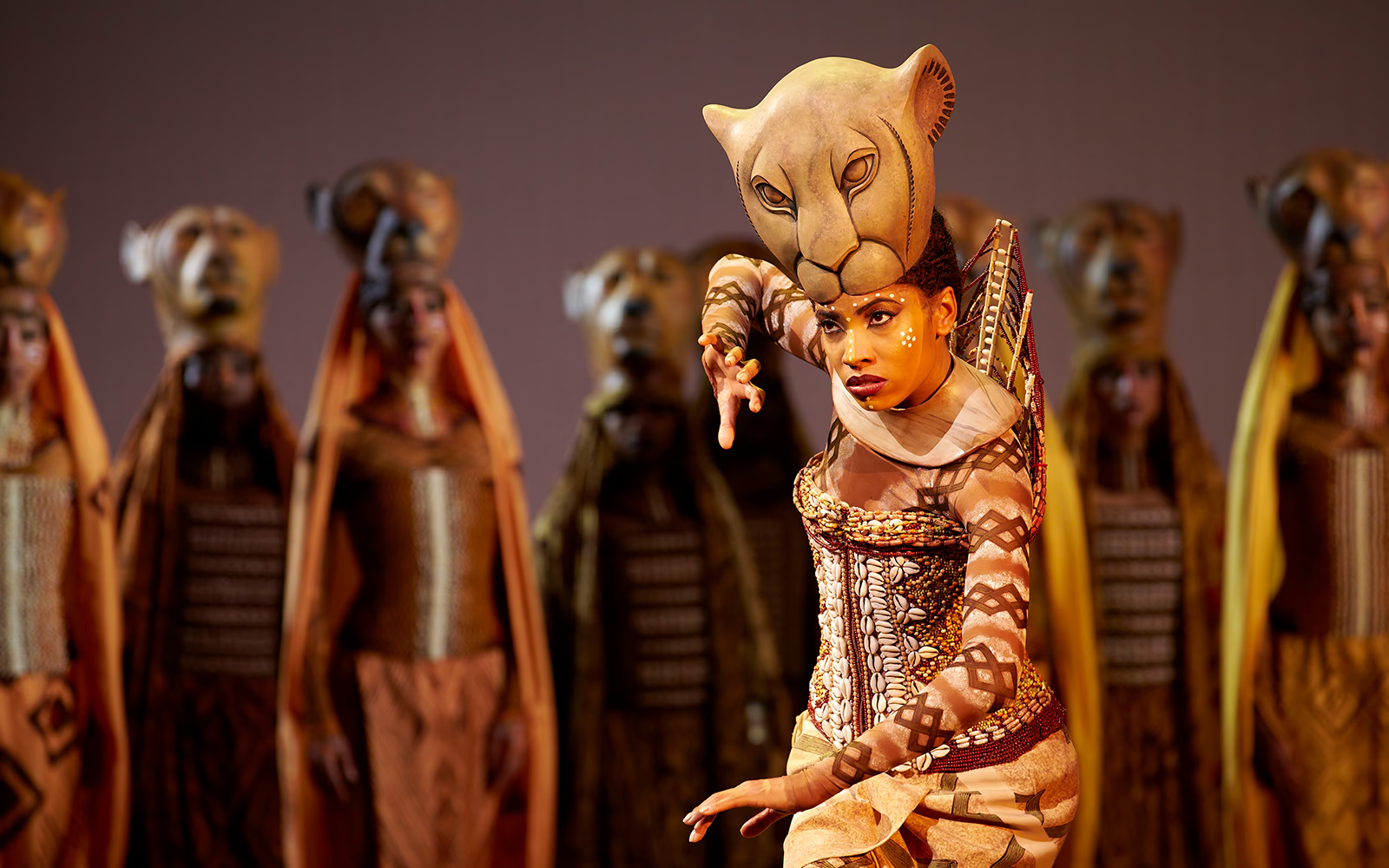
Disney's Hercules has arguably the most distinctive musical identity of any current West End production. Alan Menken and David Zippel's score draws on Motown, soul and gospel rather than the pop-ballad tradition that most Disney stage musicals inhabit, and this gives the show's musical sequences an energy and communal warmth that is genuinely different from the rest of the West End programme.
The Muses, who function as a gospel chorus and narrators throughout the show, carry the score's most adventurous sequences. Their performances of songs including "The Gospel Truth" and "Zero to Hero" create a theatrical experience that owes as much to a live gospel performance as to a conventional West End musical, and for music lovers interested in range and originality of source material, this is the score in the current programme that is most unlike anything else.
The Phantom of the Opera is the Andrew Lloyd Webber score that most explicitly engages with operatic tradition. The show's musical world draws on nineteenth-century romantic opera, and the Phantom himself is a character whose vocal demands place him in a tradition that predates musical theatre. The famous title song, "The Music of the Night," "All I Ask of You" and the closing sequences of both acts demonstrate Lloyd Webber's ability to write melody of genuine power and theatrical effect.
For music lovers who come to the West End from a background in classical music or opera, The Phantom of the Opera provides the most legible connection between musical theatre and the concert hall. The score does not simply evoke operatic style; it engages with it seriously.
Matilda the Musical at the Cambridge Theatre has a score by Tim Minchin that is consistently inventive in its use of rhythm, rhyme and unexpected musical turns. The composer's background in stand-up comedy and musical comedy gives the songs a wit that is relatively rare in mainstream musical theatre, and the arrangements match the intelligence of the writing.
Songs including "Revolting Children," "My Favourite Books" and "Naughty" are built on precise comic rhythms that reward close attention to the lyrics and their relationship to the musical settings. For music lovers who appreciate the intersection of language and melody, Matilda provides the most linguistically intelligent score currently in the West End.
The productions above differ substantially in what kind of musical experience they offer. Hamilton rewards analytical listening and has the complexity of a composition that reveals itself over time. Les Misérables offers scale and emotional sweep. Wicked provides accessible but carefully constructed pop songwriting. Disney's Hercules offers stylistic distinctiveness and gospel energy. The Phantom of the Opera provides the clearest link between musical theatre and operatic tradition. Matilda rewards attention to text and its relationship to music.
For tickets to all of these productions, tickadoo covers the full West End programme with seat maps and pricing. tickadoo also offers theatre gift vouchers, and BritishTheatre.com covers all current productions.
Which West End musical has the best score? Different scores suit different tastes. For compositional complexity, Hamilton is the strongest current option. For melodic reach and scale, Les Misérables is the clearest choice. For accessible but well-crafted pop songwriting, Wicked is reliable.
Are cast recordings available for these shows? Yes. All of the shows listed have original cast recordings available through major music streaming platforms and for purchase. Listening to the cast recording before or after attending a production is a way to deepen engagement with the score.
Which West End show is best for classical music fans? The Phantom of the Opera provides the most explicit engagement with operatic tradition. Hamilton rewards structural listening in a different register. Both are worth attending for musically literate audiences.
Stay in the spotlight
Get the latest theatre news, reviews and exclusive offers straight to your inbox.