Features
This Week in the West End: What to See, 15 to 21 June 2026
What is on in the West End from 15 to 21 June 2026: two National Theatre shows in preview, Catherine Tate's final weeks, live prices.
E
Editorial Staff
News & Reviews
Venue
National Theatre has a British Theatre archive footprint. British Theatre currently has 63 related archive articles connected to this venue.
Photos via Google. Attributions: Anthony Payne, Vladan Atanasijevic, Ajith Unni, Adam Mistry
Google rating
4.7 ★ (9.7k)
National Theatre has a British Theatre archive footprint. British Theatre currently has 63 related archive articles connected to this venue.
Box office open · closes 11pm
These are the box office (ticket desk) hours supplied by Google. The theatre itself opens around 45 minutes before curtain-up — always check your ticket for the performance start time. You can book online any time through British Theatre.
Available at this venue:
Accessibility information supplied by Google Maps. Please contact the venue directly to confirm details for your visit.
A wonderful experience at the Olivier Theatre, National Theatre. I really enjoyed the theatre building itself. Despite its brutalist architecture, the interior feels warm, welcoming and surprisingly cosy. I was particularly struck by the concrete walls, whose subtle wood-grain textures give the space a unique and characterful atmosphere. The theatre is modern, comfortable and very well designed, with excellent views of the stage from any seat. I was sitting almost at the very top, in the Circle, and could still see everything perfectly, with nothing obstructing the view. Ballet Shoes was a pleasure to watch. I enjoyed the production, the set design and the story itself. Before the performance, the cast led a playful warm-up with the audience, which was unexpected, engaging and great fun. During the interval I stepped out onto the balcony and enjoyed the views over the Thames and the surrounding buildings. The location is another big plus. Coming from Brighton, I walked from London Blackfriars station and had a lovely, quick and scenic walk along the river. A small detail: the ice cream was 50p more expensive than in other theatres (£4.50 instead of £4), but it certainly didn’t affect the overall experience. I would happily return.
It’s a place you truly want to spend time in. Great atmosphere, friendly and helpful staff, and good food options. Not to mention the plays and wonderful acting! A place you’ll definitely want to come back to.
Love this theatre. And the book shop is to die for. Where else can you go and buy pretty much any play ever written. Lovely souvenirs at a very reasonable price. They always have tickets at discounted prices for concessions making theatre here so much more for everyone than the West End. Oh, and Ballet Shoes was so good we are going back this week! 🩰
Really helpful and friendly staff. Bit of a maze if you don't come in the front door, especially as there are three theatres in the one building. I saw Ballet Shoes, an amazing show - staging, choreography, music, pre-show interactions. Great view from every seat. I was almost right at the back and it was fantastic.
Reviews sourced from Google Maps.
There is no production currently on sale at National Theatre. Check back soon, or browse our full list of West End shows.
You can call National Theatre on 020 3989 5455. For tickets and bookings, please use British Theatre to secure the best seats.
The National Theatre box office (ticket desk) operates: Monday: 10:00 AM – 11:00 PM; Tuesday: 10:00 AM – 11:00 PM; Wednesday: 10:00 AM – 11:00 PM; Thursday: 10:00 AM – 11:00 PM; Friday: 10:00 AM – 11:00 PM; Saturday: 10:00 AM – 11:00 PM; Sunday: Closed. Right now the box office is open · closes 11pm. The theatre itself opens around 45 minutes before curtain-up — and you can book online any time through British Theatre.
National Theatre offers wheelchair-accessible entrance, wheelchair-accessible seating, wheelchair-accessible toilets, wheelchair-accessible parking. Please contact the venue directly if you have specific access requirements.
Features
What is on in the West End from 15 to 21 June 2026: two National Theatre shows in preview, Catherine Tate's final weeks, live prices.
Editorial Staff
News & Reviews
Features
UK theatre for 15 to 21 June 2026: two National Theatre previews, Chichester's Gabriel Byrne, and the Karate Kid musical in Liverpool.
Editorial Staff
News & Reviews

News
Caryl Churchill's groundbreaking satire Cloud 9 returns to the National Theatre from November 2026, directed by Dominic Cooke with a stellar seven-strong cast.
Susan Novak
News & Reviews

News
BAFTA winner Anne-Marie Duff will lead Helen Edmundson's first new play in over a decade, directed by Blanche McIntyre at the Dorfman Theatre from October 2026.
Susan Novak
News & Reviews
News
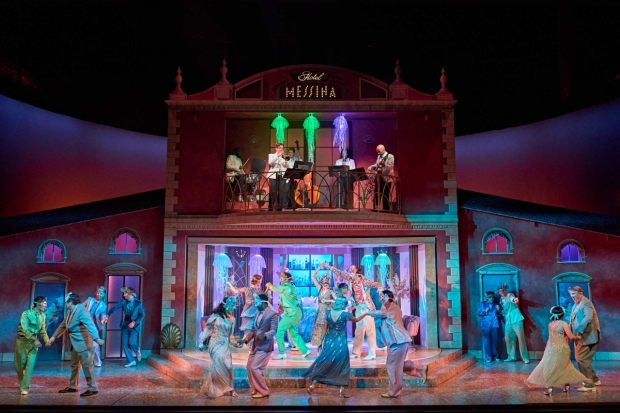
Two acclaimed National Theatre revivals are heading to free-to-air TV on Sky Arts this week, alongside The Phantom of the Opera at the Royal Albert Hall.
Susan Novak
News & Reviews
News
Michael Sheen and Callum Scott Howells will lead the first major West End revival of Amadeus in over a decade, opening at the Noël Coward Theatre in April 2027.
Susan Novak
News & Reviews