Les MisérablesWest EndShow GuidesSondheim TheatreMusicals
Show overview
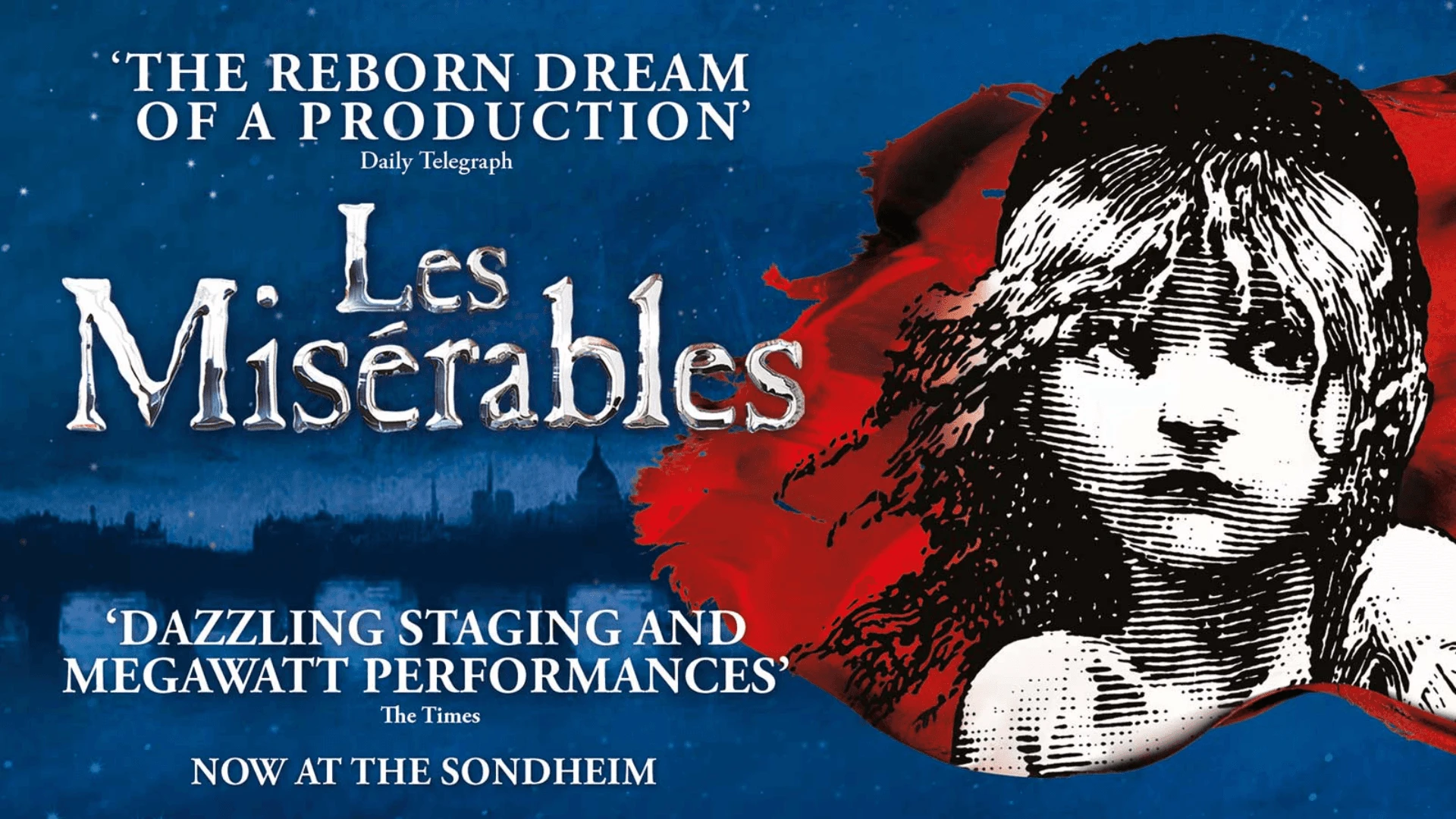
Les Misérables is one of the few musicals where the word epic is not an exaggeration. Based on Victor Hugo's novel, it follows Jean Valjean from prison and parole into a life shaped by mercy, guilt, paternal love and relentless pursuit by Javert. Around that central story, the musical expands into a much broader portrait of nineteenth-century France, taking in poverty, student idealism, corruption, comic survival and the terrible beauty of people choosing principle even when principle will destroy them. In London, the show sits at the Sondheim Theatre, a venue strongly associated with Les Mis for decades. That matters because this is not a musical that can live on songs alone. It needs a house that can carry the full wall of sound, the long arc of the sung-through score and the scale of the barricade staging. When people talk about Les Mis as a West End institution, they are often talking about the relationship between this musical and this room as much as about the title on its own. The official Sondheim Theatre page lists a running time of about 2 hours and 50 minutes including an interval, with an age recommendation of seven and above. That is slightly younger than many people expect, but the guidance makes sense if read carefully. Children under three are not admitted, and the show includes gunfire, smoke and flashing light effects. The material itself is emotionally serious rather than frightening for its own sake. Older children who can handle sadness and concentration often respond strongly to it. Younger children may find it long and emotionally heavy. If you have never seen Les Mis before, one useful expectation to set is that this is a sung-through show. There is virtually no spoken dialogue. That does not make it hard to follow, but it does change the experience. The score does the storytelling continuously, which means the emotional build is cumulative. By the time the major act-ending and act-closing numbers arrive, the audience is not simply applauding a famous song. It is releasing pressure that has been steadily building for an hour or more.What to expect on the night
The official page gives you the key practical facts in one place: Monday to Saturday at 7.30pm, Thursday and Saturday matinees at 2.30pm, tickets from £25, and effects including gunfire, smoke and flashing lights. Those details are worth taking literally. Les Mis is a serious sit-down evening rather than a casual theatre pop-in. You can absolutely attend as a visitor looking for one major show, but it helps to treat the booking with a little ceremony: plan dinner sensibly, arrive in time, and let the scale of the evening do its work. What strikes first-time visitors most is usually not the size of the set but the weight of the score in the room. I Dreamed a Dream, One Day More, Bring Him Home and On My Own are all famous enough to arrive with baggage, yet the production often resets them. Heard in context, they land less as concert favourites and more as moments of narrative release. That is why the show still converts people who think they already know it. Emotionally, Les Mis is direct. It does not hide its sympathies or its appetite for grand feeling, and that is part of the experience rather than a flaw. If you prefer irony, Hamilton is sharper. If you want gothic intimacy, Phantom is more concentrated. Les Mis aims at open-throated feeling and moral scale. When it works, it feels less like a clever evening and more like a tidal one. The other thing to expect is a room that takes the material seriously. Long-running shows can sometimes drift into tourist noise, but Les Mis usually draws an audience ready to meet it halfway. That helps. It is one of those productions where silence between songs can feel almost as important as applause after them.Best seats: stalls vs circle
Les Mis is a classic case of choosing between immersion and architecture. The stalls place you inside the emotional charge of the show. The circle lets you read the structure of the stage picture and the movement around the barricade more clearly. Neither is wrong. The better question is what you most want from a first visit. If you want the human detail of performances, central mid-stalls remains the safest answer. In a sung-through show, seeing faces clearly matters because so much character work is carried in stillness and direct address. You are not waiting for a spoken scene to explain what a person is feeling. You are reading it through song and presence. A good stalls seat makes that easy. If you want to appreciate the staging as staging, the Royal Circle is exceptional value. The earlier Les Mis visitor guides are right to praise that level. From there, you can watch the full geometry of crowd scenes, the rise of the barricade and the arrangement of bodies across the width of the stage. Because Les Mis alternates between intimate confession and mass movement, an elevated view often gives the fullest sense of how the piece is made. The Grand Circle is the practical budget option, and it works better than some people assume. This is not a visual-effects show where every important beat happens in tiny detail at the forestage. Much of Les Mis is designed to read big. If you are watching the budget carefully, a central Grand Circle seat is still a respectable choice for a first trip, especially if the alternative is a more expensive but badly angled side view. As always, central beats side-on. Les Mis uses the full stage picture often enough that restricted-view bargains are less attractive here than they may be in a smaller, more static play.How to get cheap tickets
The Sondheim Theatre listing is refreshingly clear that standard tickets begin at £25, and that remains the foundation of any cheap-ticket strategy. Unlike Hamilton, Les Mis does not foreground a standing public lottery on its official page. Unlike Wicked or Phantom, it does not lead with a branded daily day-seat scheme. So the cheapest realistic route is usually standard rather than promotional: book the cheaper levels, favour quieter performances, and watch for official seasonal offers rather than waiting for a lottery that may never appear. The official page also shows group and education savings, which can matter more than people think. Groups of ten or more get discounted stalls and dress circle prices on selected performances, and school groups can secure reduced Grand Circle seats plus teacher places. Those routes obviously do not help every casual theatregoer, but if you are travelling as a larger party they are worth knowing. For ordinary individual bookings, the practical rule is to stay flexible. Thursday matinees and midweek evenings are often easier than peak weekend dates. The tickadoo seat map helps because it lets you compare whether a cheaper Grand Circle seat is actually a better choice than a more expensive but awkwardly placed lower-level seat. That is the sort of trade-off that matters more than chasing a mythical miracle bargain. The official site occasionally runs clearly advertised price-led campaigns, and when those appear they are worth taking at face value because the seats come through the proper box-office channel. My general advice with Les Mis is not to overcomplicate it. Official regular pricing, central upper levels, and calm midweek dates usually beat the stress of hunting for a non-existent day-seat secret.Nearby restaurants
The Sondheim Theatre sits in one of the easiest dining catchments in the West End. If you want old-school theatre atmosphere, Brasserie Zédel is a strong fit. It has the scale, speed and bustle that suit a major musical evening, and it is close enough to feel like part of the same Theatreland orbit rather than a separate destination. If you want something classically West End, The Ivy West Street remains an obvious choice. It is in the heart of Theatreland and works well if you want a proper pre-show dinner with a bit of occasion around it. If you prefer something less formal but reliably popular, Dishoom Carnaby is close enough to make sense and gives you a very different sort of energy. For Les Mis specifically, I would book rather than wing it. The show pulls a destination audience, and the surrounding streets do the same. The upside is choice. The downside is that the good choices are rarely empty exactly when you need them.Getting there
The Sondheim Theatre is on Shaftesbury Avenue, right in the middle of Theatreland. Local venue guidance and the surrounding transport layout make Leicester Square and Piccadilly Circus the simplest Underground targets, with Charing Cross also workable if you are coming by rail. The crucial point is less which station is technically closest and more that the theatre is easy to reach from several major ones. That flexibility helps because the area around Shaftesbury Avenue can be busy before performances. If one route is crowded, another is usually still workable. If you are arriving by National Rail into Charing Cross, the walk is straightforward. If you are staying elsewhere in the West End, the theatre is often easiest to reach on foot. Because the neighbourhood is dense with restaurants, bars and other theatres, I would still aim to arrive thirty minutes early rather than cutting it fine. Les Mis is not a show you want to enter mid-flow if you can avoid it, and late seating is never the ideal start to a long sung-through piece.FAQ
Is Les Misérables suitable for children?
For older children, yes. The official age recommendation is seven and above, but the emotional seriousness and running time mean most families find it lands best from around eight or nine upward.What are the best seats for Les Misérables?
Choose central mid-stalls if you want emotional closeness. Choose the Royal Circle if you want the best overall perspective on the barricade and stage picture. Choose the central Grand Circle for value.Does Les Misérables have day seats or a lottery?
Its official theatre page does not foreground a permanent public lottery or day-seat scheme. The main official savings are standard lower-tier tickets, group discounts, education rates and occasional seasonal offers.How long is the show?
The official running time is approximately 2 hours and 50 minutes including an interval.Where should I book?
Use the official box office or the tickadoo booking link so you can compare sections and prices without resale uncertainty.Stay in the spotlight
Get the latest theatre news, reviews and exclusive offers straight to your inbox.