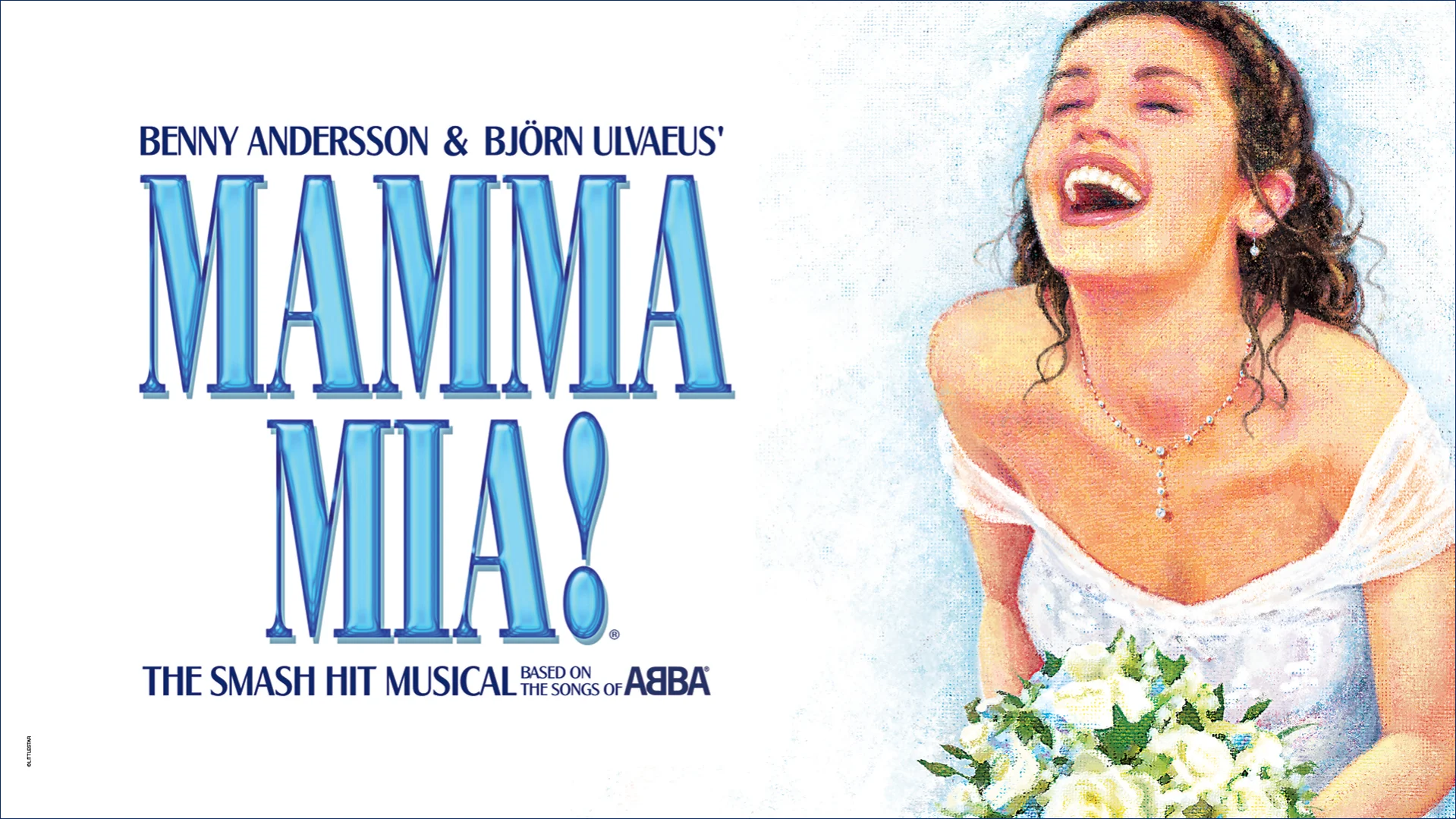
Mamma Mia! is one of the most successful musical theatre productions in history and one of the most enduringly popular shows in the West End. Built around the songs of ABBA, with a book by Catherine Johnson, Mamma Mia! has been playing in London since 1999 and continues to sell to audiences from around the world. The show is at the Novello Theatre on the Aldwych, one of the most elegantly proportioned of all the West End theatre buildings. This guide covers everything you need to know for a visit: the story, the songs, age guidance, the theatre itself, seating and practical information.
Mamma Mia! opened on the West End in April 1999 at the Prince Edward Theatre, following a tryout in Gothenburg and Edinburgh, and transferred to the Novello Theatre (then known as the Aldwych Theatre) where it has made its home. The show has become one of the most successful British theatrical exports ever produced, running simultaneously in multiple productions around the world and spawning two major film adaptations.
The show's success rests on two things: the quality of the ABBA songbook, which provides a sequence of hits with genuine emotional and dramatic range, and the warmth of Catherine Johnson's book, which never pretends to be something more sophisticated than it is. Mamma Mia! knows exactly what kind of show it is, and delivers it with considerable skill.
Sophie Sheridan is about to get married on a small Greek island where she has grown up with her mother Donna, who runs a taverna. From her mother's diary, Sophie has discovered that one of three men could be her father, and she has invited all three without telling Donna: Sam Carmichael, Harry Bright and Bill Anderson, who each had a relationship with Donna around the time of Sophie's conception.
The show follows the chaos of the pre-wedding weekend as Donna, her old friends Rosie and Tanya, and the three potential fathers all descend on the island simultaneously. Sophie's hope of discovering which man is her father, and having that man walk her down the aisle, runs up against the complexity of her mother's past, the feelings that resurface when old loves meet again, and her own growing uncertainty about whether marriage at twenty-one is what she actually wants.
The story is light in weight and warm in spirit. The show does not pretend otherwise. The emotional moments are genuine, the comedy is effective, and the integration of the ABBA songs into the narrative is handled with more skill than the concept might suggest. By the time "Dancing Queen" arrives as a full-company number and the finale deploys the full catalogue, most audiences are on their feet.
The ABBA songbook gives Mamma Mia! material of genuine quality to work with. The songs span the full range of ABBA's output, from the euphoric to the melancholic, and the show deploys them across all three registers.
"Super Trouper," "Dancing Queen," "Voulez-Vous" and "Waterloo" are the show's high-energy crowd-pleasing moments. These are the numbers that the audience has typically been waiting for, and the production delivers them without embarrassment.
"The Winner Takes It All" is the show's emotional centrepiece, given to Donna in a confrontation scene with Sam. It is the number that most clearly demonstrates the quality of the ABBA songbook: a song about the end of love that carries genuine feeling, deployed at a moment when the show has built enough context for it to land. It is the moment where audiences who came primarily for the pop songs encounter something more serious.
"Slipping Through My Fingers" and "The Name of the Game" are the show's quieter, more intimate moments: a mother watching her daughter's childhood ending, and an emerging connection between Sophie and her potential father. These songs provide the emotional range that stops the show from being pure entertainment and gives it a little more weight.
The finale sequence deploys several of the most celebrated ABBA songs in a context that is openly, cheerfully theatrical. By this point the story has been resolved and the show is giving the audience what they came for, with energy and conviction.
Mamma Mia! runs for approximately two hours thirty minutes, including one interval. This is a comfortable running time for most audiences, and the energy of the show makes the time feel shorter than it is.
The recommended age guidance is seven years and above. The show deals with themes of love outside marriage, conception, and adult relationships, though all of these are handled in a light and age-appropriate way. There is nothing in the production that could reasonably be described as unsuitable for children of seven and above; the main question is whether a child of that age will engage with a story built around adult relationships and the music of a 1970s and 1980s pop group. For children aged ten and above who enjoy music and upbeat shows, it is typically a very enjoyable evening. The show has a large adult following and is perfectly at home as a night out without children.
The Novello Theatre is at Aldwych, London WC2B 4LD, in the Aldwych area at the eastern edge of Theatreland, close to the Strand and within easy walking distance of Covent Garden. The building was designed by W.G.R. Sprague and opened in 1905 as part of a matching pair with the Waldorf (now Novello) and the Aldwych Theatre next door. The exterior and interior design are characteristic of the Edwardian theatrical tradition: an ornate facade, a warm intimately proportioned auditorium and a strong sense of occasion appropriate to the scale of productions it has hosted.
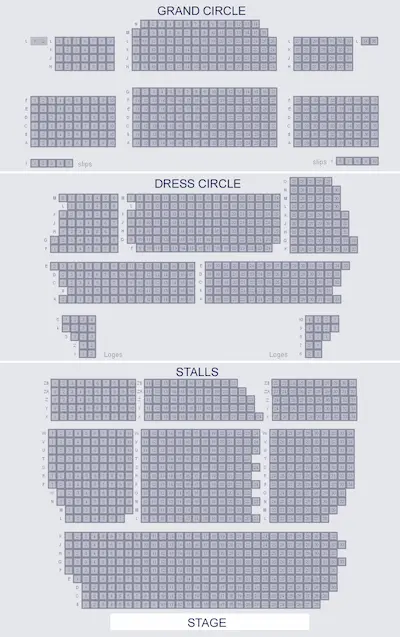
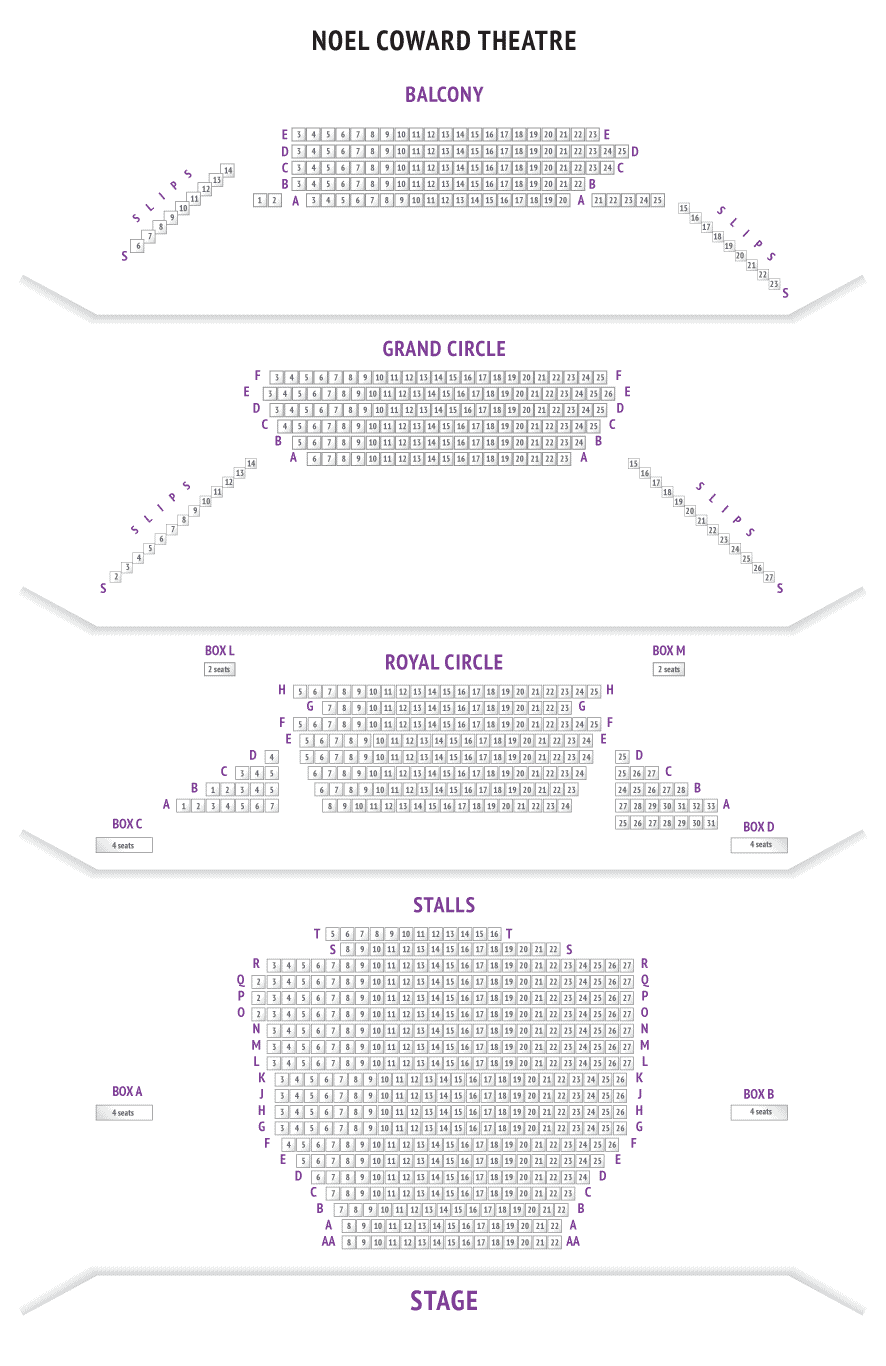
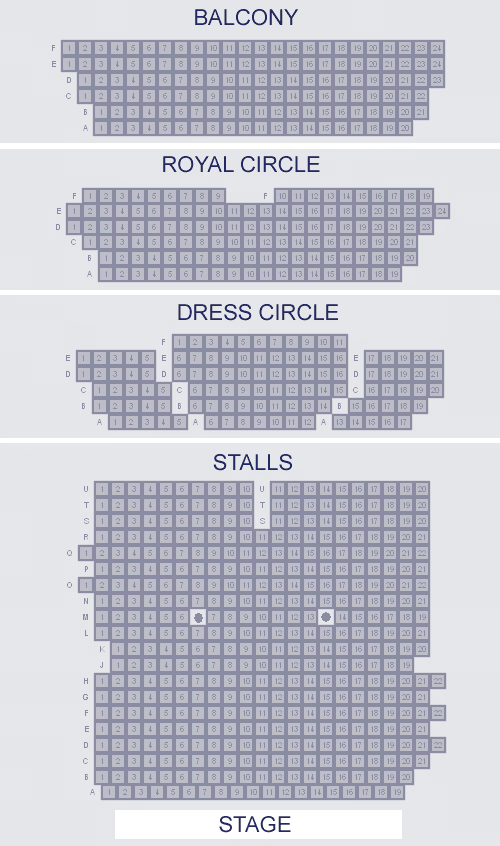
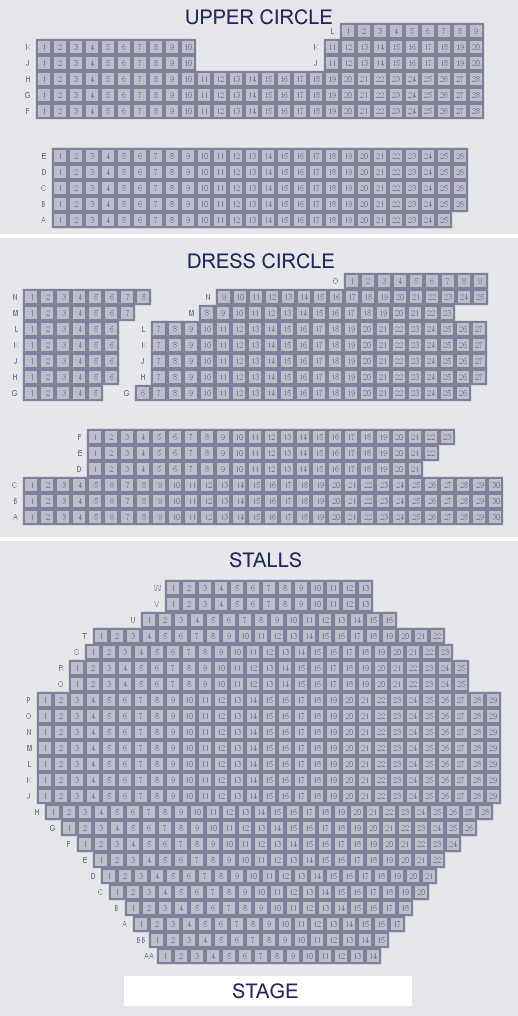
The Novello Theatre seats approximately 1,080 people across three levels: Stalls, Royal Circle and Grand Circle.
Stalls is the ground level and provides the most immersive experience. For Mamma Mia!, where the energy of the production depends significantly on the interaction between the cast and the audience, the Stalls is particularly strong. The mid-Stalls central section gives the best combination of proximity to the performers and a clear view of the full stage. The front rows are very close to the stage and excellent for audience members who want to be inside the performance; the rear Stalls provides a good overview without the physical intimacy of the front rows.
Royal Circle is the first balcony and provides an elevated central view of the staging. For a show like Mamma Mia! where the choreography and the staging of big ensemble numbers make up a significant part of the visual experience, the Royal Circle perspective gives the fullest view of the overall picture. The front central rows of the Royal Circle are among the most sought-after positions at the Novello.
Grand Circle is the second balcony and the most affordable level. The central section provides a clear panoramic view of the full staging at a lower price point. The sound carries well to this level, which is particularly relevant for a show where the musical experience is central.
Restricted-view seats are present at the sides of the Stalls and Circle levels. For a first visit, central positions in any level are strongly preferable.
By Underground: Temple station (District and Circle lines) is approximately eight minutes on foot. Covent Garden station (Piccadilly line) and Holborn station (Central and Piccadilly lines) are both within walking distance, roughly ten to twelve minutes.
By bus: The Strand is one of London's most heavily served bus corridors, with stops very close to the Aldwych. Multiple routes serve the area from north, south, east and west.
By National Rail: Charing Cross station is approximately ten minutes on foot along the Strand. Waterloo is accessible by Underground via the Jubilee or Northern lines to Holborn.
By car: The area is within the London Congestion Charge zone and parking is very limited. Public transport is strongly recommended.
Mamma Mia! occupies a distinct position in the West End as the show most clearly built around an existing musical catalogue. The experience of seeing it is partly about the songs and partly about the theatrical delivery of those songs in a live environment. Audiences who enjoy the film adaptations will find that the stage version has a different energy: the interaction between cast and audience, the physical staging of the ensemble numbers, and the live musical performance change the experience considerably.
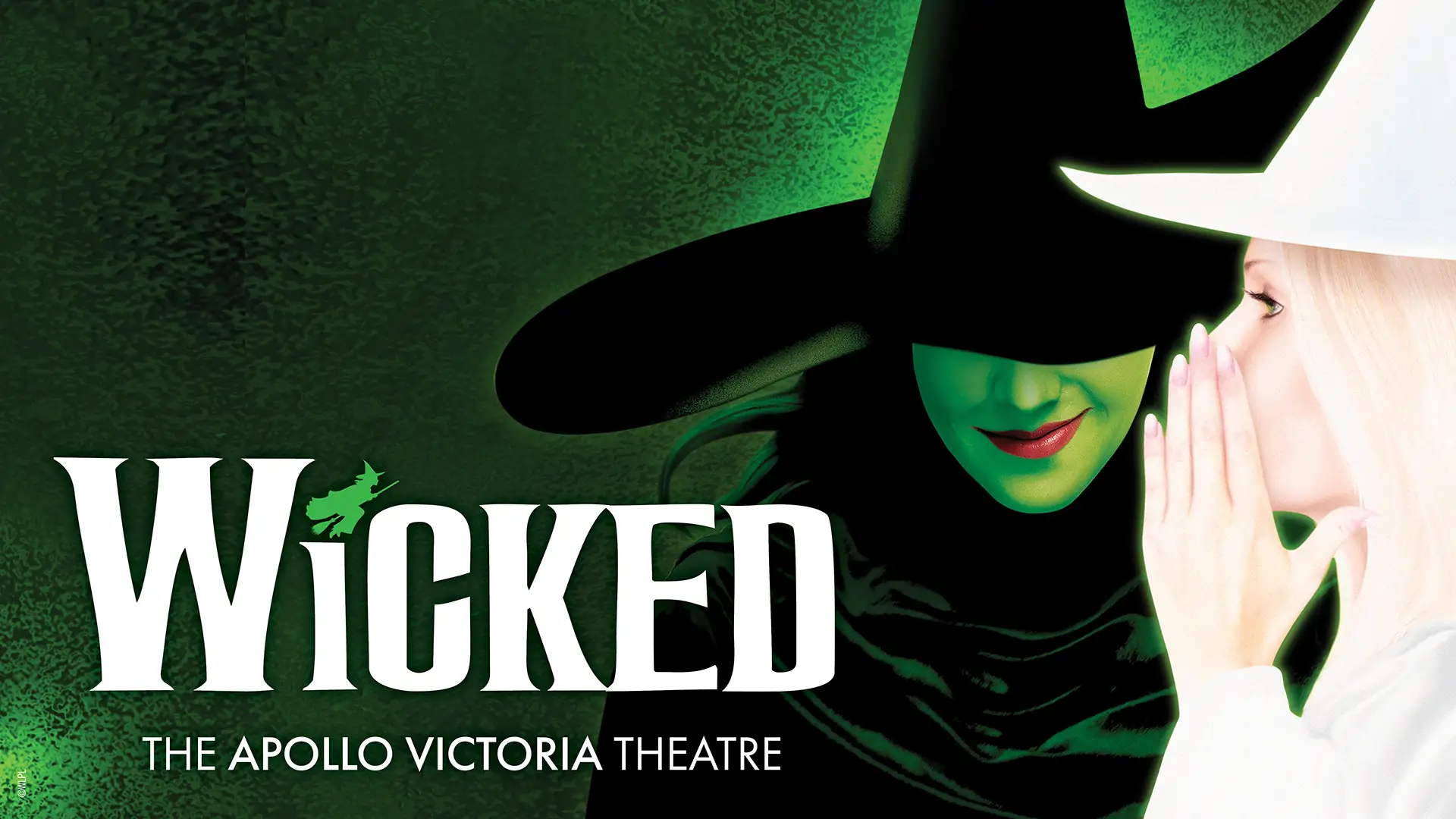
For audiences looking for shows with a similar feel-good energy, Wicked at the Apollo Victoria Theatre is the closest comparison in terms of crowd-pleasing musical ambition. For shows with a more story-led approach, Hamilton at the Victoria Palace Theatre offers something at the other end of the spectrum.
For tickets to Mamma Mia! and all West End productions, tickadoo covers full availability with seat maps and pricing. tickadoo also covers gift vouchers for theatre occasions.
How long is Mamma Mia!? The running time is approximately two hours thirty minutes, including one interval.
What age is Mamma Mia! suitable for? The recommended age guidance is seven years and above. The show deals with adult relationships in a light way that is appropriate for most children aged seven and above. For the most engaged experience, children of ten and above who enjoy upbeat musicals are likely to respond most strongly.
Where is Mamma Mia! playing in London? Mamma Mia! plays at the Novello Theatre, Aldwych, London WC2B 4LD.
What are the best seats for Mamma Mia! at the Novello Theatre? The front rows of the Royal Circle central section and the mid-Stalls central block offer the strongest sightlines and engagement with the performances. The Grand Circle central section is the best-value option with a clear view of the full staging.
Do I need to know ABBA's music to enjoy Mamma Mia!? No, but familiarity with the songs enhances the experience. The show works as a piece of storytelling on its own terms, and the songs are presented in a way that makes their emotional content clear even to audience members who do not know them.
How long has Mamma Mia! been running in the West End? Mamma Mia! opened in London in 1999 and has been a continuous part of the West End programme since then.
Stay in the spotlight
Get the latest theatre news, reviews and exclusive offers straight to your inbox.