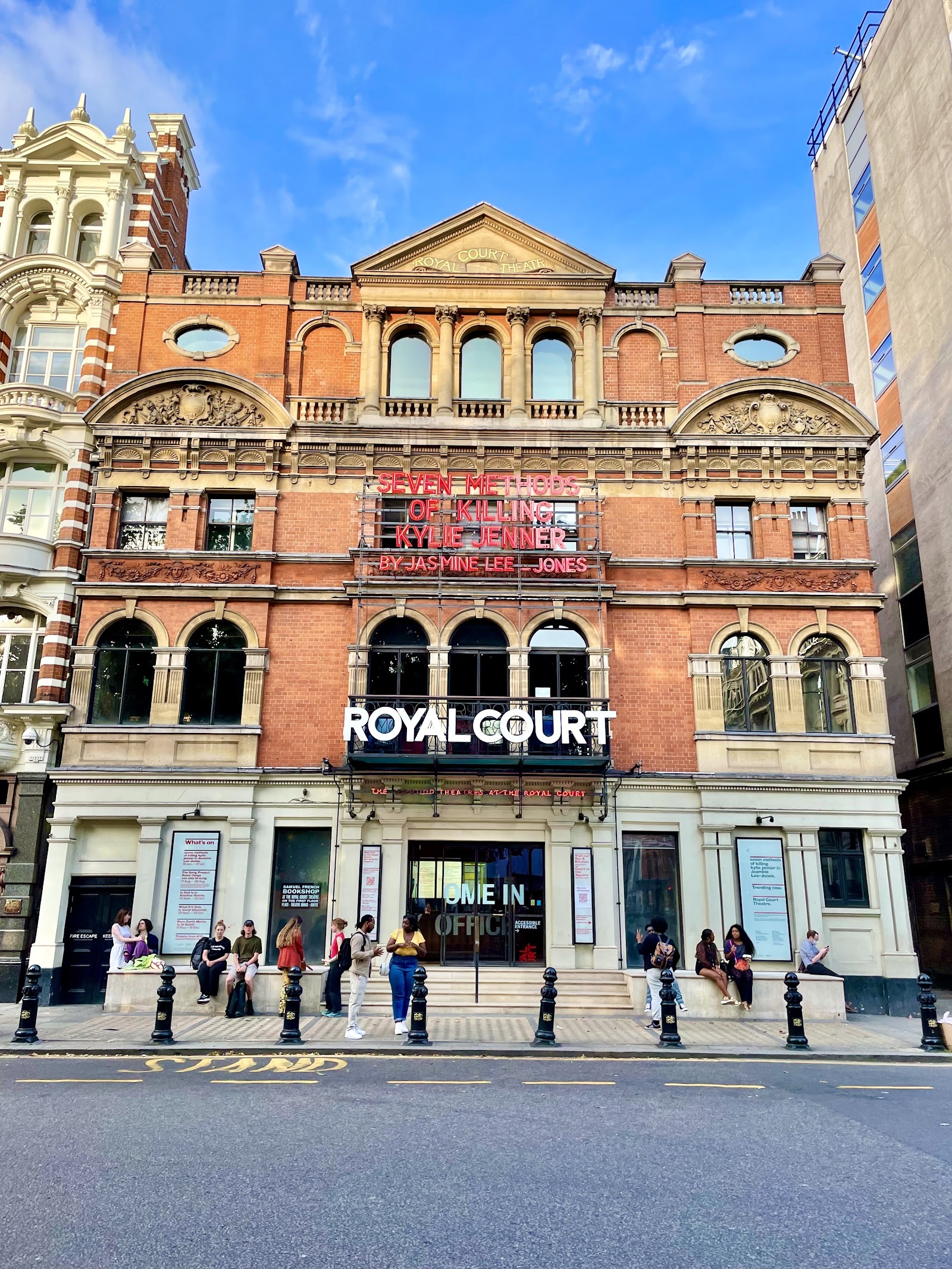
The Wolf From The Door Royal Court - Jerwood Theatre Upstairs September 18 2014 4 Stars Has the Royal Court ever staged a play so "Eye of the Storm" as this one?
The memory of the London Riots is still fresh and the underlying causes even more strident and intense. At the Almeida, Little Revolution reminds us of that time, those feelings, and, starkly, shows how lessons have not been learnt. Last week, a woman was beheaded in a London suburb. Scotland votes today for Independence; would a "Yes" vote bring civil unrest there? The disparity between rich and poor grows ever wider, deeper, more determined as government and banking gouge the poor. Religion fades, lost in a shimmering haze of endless scandal. The other religion of our time, Celebrity, suffers a similar fate. Terrorists and murderers destroy lives, cities, countries and the very notion of peace. In all of this, how is it possible to keep the wolves from the door?
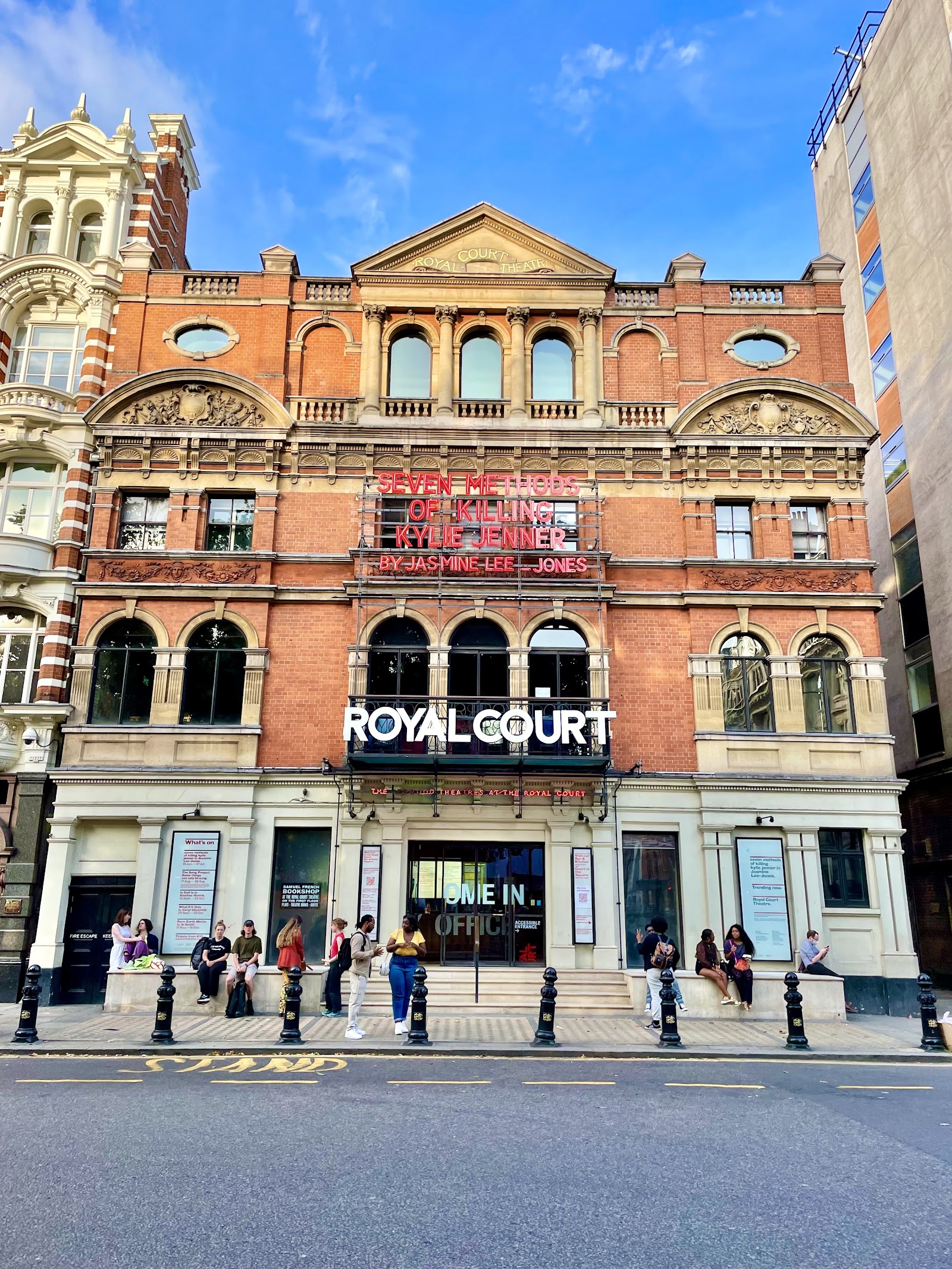
Rory Mullarkey's prize-winning play, The Wolf From The Door, now playing its premiere season at the Royal Court (in the wonderfully claustrophobic space of the Jerwood Upstairs Theatre) addresses these issues in a remarkable piece of theatre, part satire, part fable, part allegory, part horror story, part observational drama, part love story, part comedy - but wholly original, uncomfortable and, sometimes, infuriating.
This is a Marmite play: one imagines it will either be loved or hated; indifference or a casual response seems unfeasible.
Partly, that is because Mullarkey's writing does many things, and the key to comprehension here is to embrace the conceit. Condemning it for "being silly" is to entirely miss the author's intent.
History is littered with tales of the oppressed rising up against the entitled, with tales of fanatics who will stop at nothing to see their vision for the future come to reality, with tales of empires collapsing, of new religions being formed. Mullarkey's genius notion is to weave a tapestry which has threads from all of those tales, but with a wild fabric added for electric and instant response.
Lady Catherine. An aristocrat, complete with endless funds, fabulous estates, obedient servants and a cold, dead spirit worn down by modern society, its values and norms:
I feel utterly powerless, and I feel like your supermarket is one of the key causes of this feeling. A human being should not be made to feel powerless, Derek, but every time I stroll down your well-stocked aisles this is exactly how I feel, I feel powerless and I feel alone, and I feel like the organisation you work for not only helps to engender that feeling in myself and in others but that it positively thrives off that feeling. So I am here seeking compensation…I don’t want any vouchers, Derek. I want your life.
And then Derek is beheaded.
A random murder for an ideological principle. It is chilling and strangely comical at once. But this macabre and frightening moment pulses with raw power and makes clear the underlying thematic point: what if the entitled, the rich, the elite, the pillars of society rose up to destroy the institutions that nurture, encourage and breed them? What if they willingly sacrificed themselves and their fortunes and lifestyles for the chance for the world to have a new start, the possibility of a different culture, a radically different society based on equal wealth for all?
Key to their plan is a young, very beautiful (everyone keeps telling him how beautiful he is) non-Caucasian man – an uneducated but smart lad, at total ease with himself, endlessly charming, indifferent to clothes, food, gadgets and the usual accoutrements of modern youth. He becomes their Messiah, their Jesus figure, their new hope. Their executioner and inspiration. Their silly child-like policy maker. Amoral and seductive. A Top-of-the-Pops Movie Star Monarch who decrees “Mermaid Wednesdays”.
Mullarkey taps into the mindless adoring frenzy which grips the world when phenomena like Justin Bieber, One Direction and Lindsay Lohan stagger into adulation and, with scalpel-like acuity, demonstrates how that familiar sense of frenzy might be utilised; that terrorists come in all shapes, sizes and forms, from all sorts of backgrounds. His central point is timely: modern society will not survive endless complacency and the continual isolation and deprivation of some while the entitled flourish.
The piece plays out over 16 scenes and 85 minutes. It is immaculately directed by James Macdonald, precise, bleak and absorbing. Very cleverly, the essence of English life is interwoven throughout the production: scenes of the many different types of commute embarked upon daily; snatches of classical music which evoke the essence of British pride; and a set, very cleverly designed by Tom Pye which represents constantly two things: England and religion through the notion of a classic Church fete (green lawns, sturdy chairs, benches and pavilions).
The central performances are faultless.
No one channels a sense of the absurdity of entitlement, the pinched perniciousness of polite society, the sensuality of power and ideals like Anna Chancellor. Here she is superb as a kind of anti-Marie Antoinette: giving the cake to the people, encouraging the beheadings and ensuring the demise of her fellow aristocracy. She is especially marvellous in her scene with the hapless Derek in Tesco, her encounter with the “Roundheads” (A quaint couple who like to dress up in Civil War attire but who are shying away from the impending revolution)and the delicious Last Supper with the Bishop of Bath and Wells.
Like all great actresses, Chancellor can express much through silence and pause, and here she uses her honed skills in that department to remarkable effect. Her face during the long drive in the mini-cab to Bath was a portrait of despair, frenzy and stoic determination. She is quite brilliant.
She also ensures that Calvin Demba’s Leo has rock solid support. Demba is a revelation as the Adonis plucked from track-suit obscurity because of his beauty and innocence and trained by Chancellor’s Lady to become a killing machine and a symbol of rage, rebellion and, finally, God on Earth. Everything Demba does is pitched perfectly; his detached nudity, his mis-reading of Lady Catherine’s interest in him; his seduction into her point of view; his acceptance of his role as new-Jesus; his anger, insight and simplicity.
There is nothing not to like about Demba’s turn here – especially as, viewed coldly, he is playing an amoral psychopath who becomes Dictator of England. A man-boy who, finally wrapped in power, yearns for someone to love him, to tell him not to cry (as Lady Catherine repeatedly does) and to cup his perfect butt-cheek in a moment of blissful, silent acceptance and communion.
The final image of Demba’s Joe, enthroned, black kilt, black tracksuit top and papal/regal ermine perched ludicrously on his young shoulders, is as absurd as it is frightening.
But that is the beauty and the power of Mullarkey’s writing and MacDonald’s wonderful production: it shines a light in the dark places that exist everywhere around us in modern Britain and questions the status quo and those that benefit and thrive from it. It’s an evocative, alarming and thought-provoking piece of political theatre.
Wild, bizarre, absurd and delightful - well worth seeing.
4 stars
On Thu, Sep 18, 2014 at 12:55 PM, Stephen Collins <collinss9c@gmail.com> wrote:
Another one:
The Wolf From The Door
Royal Court - Jerwood Theatre Upstairs
September 18 2014
Has the Royal Court ever staged a play so "Eye of the Storm" as this one?
The memory of the London Riots is still fresh and the underlying causes even more strident and intense. At the Almeida, Little Revolution reminds us of that time, those feelings, and, starkly, shows how lessons have not been learnt. Last week, a woman was beheaded in a London suburb. Scotland votes today for Independence; would a "Yes" vote bring civil unrest there? The disparity between rich and poor grows ever wider, deeper, more determined as government and banking gouge the poor. Religion fades, lost in a shimmering haze of endless scandal. The other religion of our time, Celebrity, suffers a similar fate. Terrorists and murderers destroy lives, cities, countries and the very notion of peace. In all of this, how us it possible to keep the wolves from the door?
Rory Mullarkey's prize-winning play, The Wolf From The Door, now playing its premiere season at the Royal Court (in the wonderfully claustrophobic space of the Jerwood Upstairs Theatre) addresses these issues in a remarkable piece of theatre, part satire, part fable, part allegory, part horror story, part observational drama, part love story, part comedy - but wholly original, uncomfortable and, sometimes, infuriating.
This is a Marmite play: one imagines it will either be loved or hated; indifference or a casual response seems unfeasibly.
Partly, that is because Mullarkey's writing does many things, and the key to comprehension here is to embrace the conceit. Condemning it for "being silly" is to entirely miss the author's intent.
History is littered with tales of the oppressed rising up against the entitled, with tales of fanatics who will stop at nothing to see their vision for the future come to reality, with tales of empires collapsing, of new religions being formed. Mullarkey's genius notion is to weave a tapestry which has threads from all of those tales, but with a wild fabric added for electric and instant response.
Lady Catherine. An aristocrat, complete with endless funds, fabulous estates, obedient servants and a cold, dead spirit worn down by modern society, its values and norms:
I feel utterly powerless, and I feel like your supermarket is one of the key causes of this feeling. A human being should not be made to feel powerless, Derek, but every time I stroll down your well-stocked aisles this is exactly how I feel, I feel powerless and I feel alone, and I feel like the organisation you work for not only helps to engender that feeling in myself and in others but that it positively thrives off that feeling. So I am here seeking compensation…I don’t want any vouchers, Derek. I want your life.
And then Derek is beheaded. A random murder for an ideological principle.
It is chilling and strangely comical at once. But this macabre and frightening moment pulses with raw power and makes clear the underlying thematic point: what if the entitled, the rich, the elite, the pillars of society rose up to destroy the institutions that nurture, encourage and breed them? What if they willingly sacrificed themselves and their fortunes and lifestyles for the chance for the world to have a new start, the possibility of a different culture, a radically different society based on equal wealth for all?
Key to their plan is a young, very beautiful (everyone keeps telling him how beautiful he is) non-Caucasian man – an uneducated but smart lad, at total ease with himself, endlessly charming, indifferent to clothes, food, gadgets and the usual accoutrements of modern youth. He becomes their Messiah, their Jesus figure, their new hope. Their executioner and inspiration. Their silly child-like policy maker. Amoral and seductive. A Top-of-the-Pops Movie Star Monarch who decrees “Mermaid Wednesdays”.
Mullarkey taps into the mindless adoring frenzy which grips the world when phenomena like Justin Bieber, One Direction and Lindsay Lohan stagger into adulation and, with scalpel-like acuity, demonstrates how that familiar sense of frenzy might be utilised; that terrorists come in all shapes, sizes and forms, from all sorts of backgrounds. His central point is timely: modern society will not survive endless complacency and the continual isolation and deprivation of some while the entitled flourish.
The piece plays out over 16 scenes and 85 minutes. It is immaculately directed by James Macdonald, precise, bleak and absorbing. Very cleverly, the essence of English life is interwoven throughout the production: scenes of the many different types of commute embarked upon daily; snatches of classical music which evoke the essence of British pride; and a set, very cleverly designed by Tom Pye which represents constantly two things: England and religion through the notion of a classic Church fete (green lawns, sturdy chairs, benches and pavilions).
The central performances are faultless.
No one channels a sense of the absurdity of entitlement, the pinched perniciousness of polite society, the sensuality of power and ideals like Anna Chancellor. Here she is superb as a kind of anti-Marie Antoinette: giving the cake to the people, encouraging the beheadings and ensuring the demise of her fellow aristocracy. She is especially marvellous in her scene with the hapless Derek in Tesco, her encounter with the “Roundheads” (A quaint couple who like to dress up in Civil War attire but who are shying away from the impending revolution)and the delicious Last Supper with the Bishop of Bath and Wells.
Like all great actresses, Chancellor can express much through silence and pause, and here she uses her honed skills in that department to remarkable effect. Her face during the long drive in the mini-cab to Bath was a portrait of despair, frenzy and stoic determination. She is quite brilliant.
She also ensures that Calvin Demba’s Leo has rock solid support. Demba is a revelation as the Adonis plucked from track-suit obscurity because of his beauty and innocence and trained by Chancellor’s Lady to become a killing machine and a symbol of rage, rebellion and, finally, God on Earth. Everything Demba does is pitched perfectly; his detached nudity, his mis-reading of Lady Catherine’s interest in him; his seduction into her point of view; his acceptance of his role as new-Jesus; his anger, insight and simplicity.
There is nothing not to like about Demba’s turn here – especially as, viewed coldly, he is playing an amoral psychopath who becomes Dictator of England. A man-boy who, finally wrapped in power, yearns for someone to love him, to tell him not to cry (as Lady Catherine repeatedly does) and to cup his perfect butt-cheek in a moment of blissful, silent acceptance and communion.
The final image of Demba’s Joe, enthroned, black kilt, black tracksuit top and papal/regal ermine perched ludicrously on his young shoulders, is as absurd as it is frightening.
But that is the beauty and the power of Mullarkey’s writing and MacDonald’s wonderful production: it shines a light in the dark places that exist everywhere around us in modern Britain and questions the status quo and those that benefit and thrive from it. It’s an evocative, alarming and thought-provoking piece of political theatre.
Wild, bizarre, absurd and delightful - well worth seeing.
Stephen Collins is a contributor at British Theatre, covering West End productions, London theatre news, casting updates, and UK stage trends.
View profile and all articlesStay in the spotlight
Get the latest theatre news, reviews and exclusive offers straight to your inbox.