The Heresy of Love
5 August 2015
3 Stars
Nuns make good theatrical fodder. Whether it be The Sound of Music, Doubt, Measure for Measure, or Sister Act, and any number of other shows in between, plays or musicals where Nuns appear as central characters have a habit of being intriguing, engaging and warm. Helen Edmundson's 2012 play, The Heresy of Love, is no exception to that, but it has an edge that is relatively rare and fundamentally worthwhile: it looks at religion closely, through a female perspective, and allows female voices to debate religious beliefs.
In this, Edmundson seeks to imitate and reflect the life of the historical figure around whom her play is fashioned: Sor Juana Inés de la Cruz, a 17th century South American nun who the programme tells us was "a great writer, a beauty, a champion of indigenous people". It is a mystery why Juana is not better known in this century given her apparent abilities. Certainly, Edmundson's play makes one long to see a performance of one of Juana's plays to permit evaluation of her contribution to world drama.
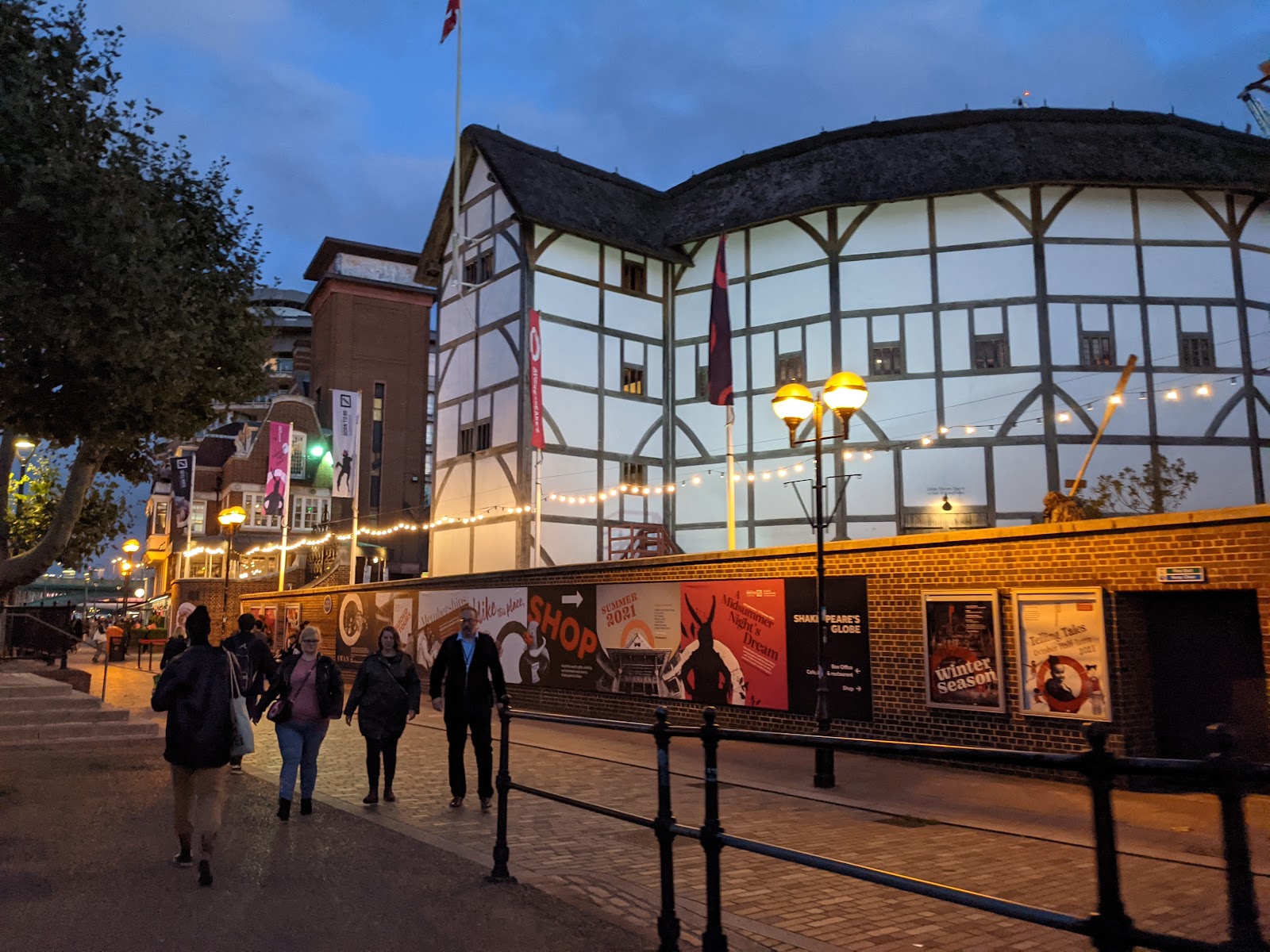
The play was commissioned by the RSC and debuted in the intimate Swan theatre in 2012. It is rare, but very welcome, for a new work to receive a major revival so soon after its premiere, but John Dove's revival, now playing at Shakespeare's Globe is such a rarity. And, like all rarities, it produces surprising results.
There is a new Archbishop in Mexico. He is a hardline Conservative and probably a misogynist. He has no time for integrating the doctrine of the church with the vagaries of local life. He makes an enemy of local bishop, Santa Cruz, who wants to wrestle power from him.
One of the focal points of the new Archbishop's anger is a Nun, a Nun the Archbishop clearly thinks is doing wrong by her faith and her God. She writes plays and poems and is well regarded around the world, but the Archbishop wants her to resume her place - silent and in prayer, devoted to God not literature or learning or women's rights.
The Nun is beautiful and adored by those who know her. The viceroy and his wife are close friends and admirers; Santa Cruz himself has carnal desires for her. Other Nuns might harbour resentment or fear about her activities. The Nun wants to keep writing, keep reading, keep learning and sharing, and this puts her on a deadly collision course with the Archbishop who demands that she cease doing anything other than her obligations as a bride of Christ. The Spanish Inquisition is hovering close by.
There is a subplot involving the Nun's niece and her search for her proper vocation - Nun or wife. The niece is aided in her quest by one of the servants at the convent, the voluble Juanita. When the niece is observed, disguised as the Nun, kissing a man she loves, the darkness starts to engulf the Nun. Subterfuge and treachery come into clear focus.
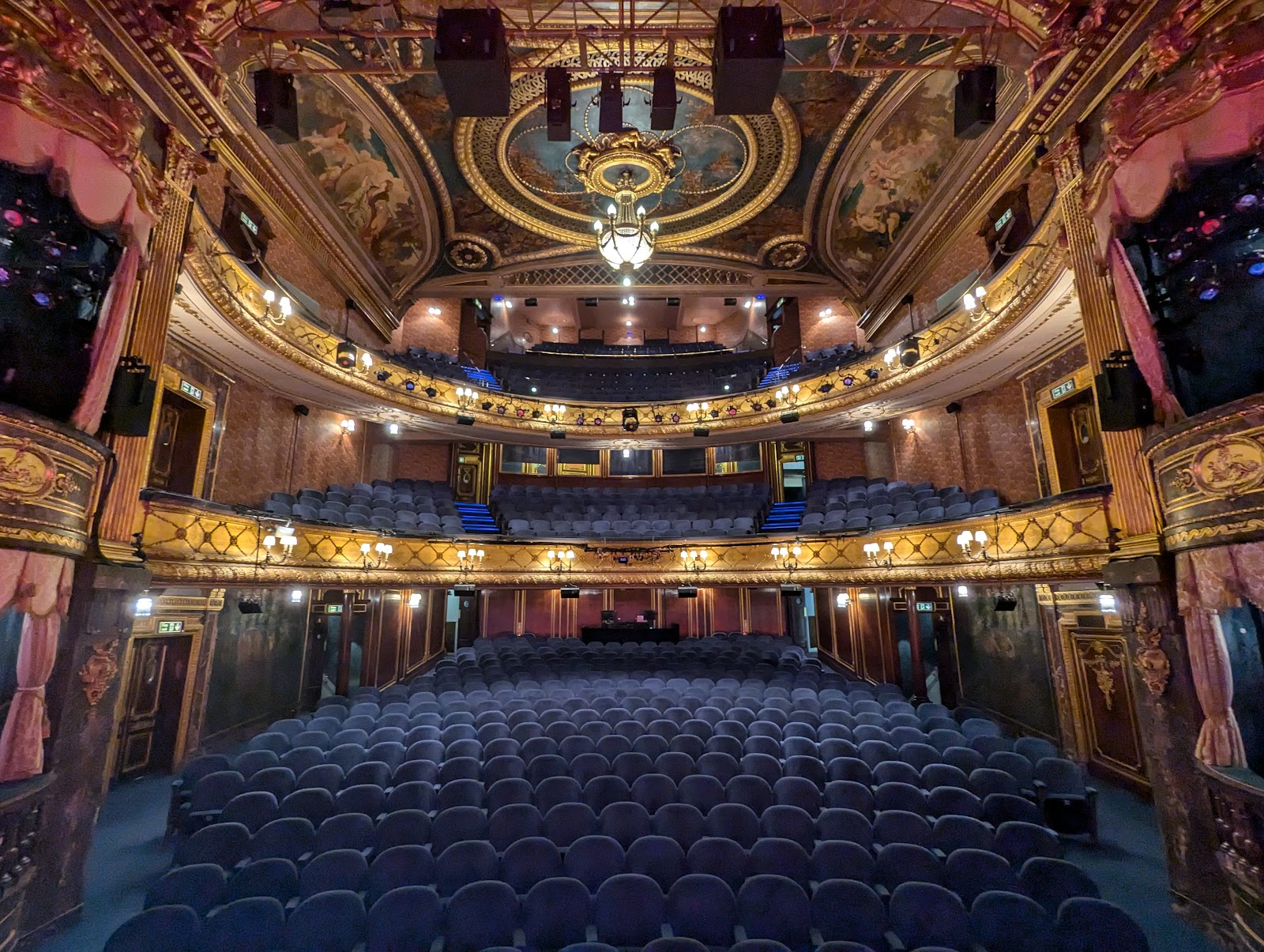
The Globe is not really a space for claustrophobic intense drama and this production really brings that home. Dove's production would look and feel very different in the Sam Wanamaker Theatre and probably should have been programmed there. The openness of the space works against the mounting tension in Edmundson's writing, and Dove's direction does not utilise the wide spaces in a way which enhances or accentuates the dark, brooding, and Machiavellian aspects of the religious politics and the dogma dissection.
Rather, the openness of the space lends itself more naturally to the comedy sub-plot with the niece, and it is here that the play really scores its best points. Sophia Nomvete makes a great deal out of the big hearted, big voiced and big boned Juanita. It's a spirited and hearty performance, warm and open, which mines all of the comedy the part offers. Nomvete is hilarious and completely adorable as the fussy, funny Juanita.
With her every step of the way is Gwyneth Keyworth as Angelica, the niece who is trying out the life of a Nun but whose interest in men, kissing and sex suggests that she will never be a Nun. Keyworth is alive to all the possibilities of the role and together with Nomvete, makes the subplot about her budding relationship with Don Hernado (Gary Shelford in spritely form) as important, possibly more important, than the drama involving the Nun and the warring bishops. This is no mean feat, given the majority of stage time is given over to the latter, not the former.
Susan Porrett gives them excellent support; her turn as the officious, complaining Brigida provides a good foil, a real opportunity for raised eyes and "nudge-nudge-wink-wink" moments. William Mannering's Viceroy and Ellie Piercy's Vicereine are good too, bringing a touch of reluctant, somewhat unhappy, glamour from Court life into the religious battleground.
Two characters occupy the middle ground between the tales of Niece and Nun: Mother Marguerita and Father Antonio. The Mother is a kind, generous and obedient daughter of the Church and the Father her male equivalent, and the one who persuaded the Nun to join the Mother's order. Both, however, are only mild rebels against the decrees of the Church hierarchy, both are obedient observers of doctrine and faith. Gabrielle Lloyd and Patrick Driver are persuasive in these roles. Both seem to come to life when in the company of the Nun, and both seem to shrivel and shrink when the bishops bring their arguments to their door. The pair embody the everyday struggle of the clergy between desire and duty, heart and head.
A darker side to religious conflict is crisply and smartly portrayed by Rhiannon Oliver whose Sister Sebastiana turns out to be the worst kind of religious zealot: the one fuelled by jealousy and spite. Oliver is delicious to watch, carefully unpeeling the malignant layers of the character, and showing the trenchant fear and raw uncertainty that slithers beneath the surface.
But the thrust of Edmundson's play involves a struggle for power between the newly appointed Archbishop Aguiar y Sejas and the ambitious and calculating Bishop Santa Crux, a struggle which envelops and engulfs the brilliant Nun, Sister Juana. And, alas, it is here where Dove's production comes up short.
Phil Whitchurch plays the Archbishop with a one-dimensional, brutal aggression that does nothing to unearth the subtleties and complex underbelly of the role. His character needs a clearly developed sense of faith and what that faith constitutes, as well as being self-serving and important. As his nemesis, Santa Cruz, Anthony Howell is bland when he should be brilliant and cold when he should be charismatic. Neither actor comes close to achieving the complexity that Edmundson's writing deserves. Often, the words are more compelling than their delivery.
Naomi Frederick fares better as the extraordinary Sister Juana, but, in truth, again, that is mostly because of what we are told about her, rather than Frederick's performance. She needs more lustre, compassion and compelling presence to truly give life to this fascinating historical character.
Sister Juana has a marvellous speech where she dissects a sermon delivered by the new Archbishop and explains why he is wrong in his approach to the topic and the purpose and function of the faith. It is a speech as compelling as anything Portia says in The Merchant of Venice and is a beautiful blend of rhetoric and religious fervour. It deserves an exhilarating delivery as it nicely encapsulates the power, passion and vision of this most extraordinary woman. Frederick does not rise to the occasion sufficiently, and while the points are made clearly, the underlying sentiments and passion remain unrevealed.
At least a deal of the responsibility for the failure of this production to soar as it should must lie with director John Dove and designer Michael Taylor and with whoever elected to stage the production in the open at the Globe. The design is too fussy to permit a real sense of isolation and impending harm. The players do not have the benefit of closed, dark spaces in which the tensions and passions can ferment and escalate.
This is a terrific play, but this production does not allow it to shine as it should. However, the warmer comedic aspects of the play are vibrantly alive and that helps plaster over the cracks in the insightful religious drama Edmundson explores.
Now, who will produce a production of one of the many plays written by Sor Juana Inés de la Cruz? It would be good to see what the fuss was all about.
The Heresy Of Love runs at the Globe Theatre until 5 September
Stephen Collins is a contributor at British Theatre, covering West End productions, London theatre news, casting updates, and UK stage trends.
View profile and all articlesStay in the spotlight
Get the latest theatre news, reviews and exclusive offers straight to your inbox.